12 January 2020

Nawabs of Singapore

The Nawabs of Singapore
Polyura species found in Singapore


Contemporaneous literature and references indicate that there were four Polyura species recorded from Singapore - the Common Nawab (Polyura athamas athamas), Plain Nawab (Polyura hebe plautus), Blue Nawab (Polyura schreiber tisamenus) and Malayan Nawab (Polyura moori moori). When our butterfly observation records started back in the 1990's only two species were recorded - the Plain Nawab and Blue Nawab.


Of these two, the Plain Nawab was the commoner, but caterpillars of both species turned up quite regularly on various host plants that these species were known to feed on. Both the Plain and Blue Nawabs are widely distributed across the island and have been observed in urban parks and gardens like the Singapore Botanic Gardens, Southern Ridges parks, Tampines Eco Green, just to name a few, and also at forested nature reserves and even at back-mangrove/mangrove habitats like at Pulau Ubin, Pasir Ris Park and Sg Buloh Wetland Reserve.


A Malayan Nawab shot at Pulau Ubin

Some time between 2012 and 2014, sightings of the 3rd Nawab, the Malayan Nawab, were reported from Pulau Ubin. Several more regular sightings of the species confirmed that this "lost" species had been re-discovered in Singapore once again. However, the 4th species, the Common Nawab, has not been recorded in Singapore for a long time. We now take a look at the 3 remaining Nawab species left in Singapore.

1) The Plain Nawab (Polyura hebe plautus)


The Plain Nawab is the most regularly seen of the three species in Singapore. It is widely distributed across the island and is present in urban parks and gardens as well as in the forested nature reserves and in mangrove habitats as well. Although the adult butterfly is seen regularly, its caterpillars are also as often spotted on the Red Saga (Adenanthera pavonina) its preferred host plant.


The Plain Nawab has a greenish upperside with a broad black border on both wings. The underside has a large pale silver-green median patch which is usually limited to about a quarter or third of the wings. The butterfly is robust-bodied and has a strong flight.

2) The Blue Nawab (Polyura schreiber tisamenus)


The Blue Nawab flies as rapidly as the Plain Nawab and is skittish. Unless encountered whilst feeding on overripe fruits or tree sap, this species is swift on the wing and is hard to photograph. However, like the Plain Nawab, this species' caterpillars are occasionally spotted, also on the Red Saga. The species uses several host plants for its caterpillars.


The Blue Nawab has a silvery underside marked with attractive brown and purple patterns. The upperside has a white median band that stretches across both wings. Like many of the other Polyura species, it has a pair of thick pointed tails on the hindwings. The Blue Nawab is the largest of the three species in Singapore, and the female has a wingspan that sometimes exceed 90mm.

3) The Malayan Nawab (Polyura moori moori)


The last of the three extant Polyura species in Singapore, the Malayan Nawab was a recent re-discovery. Sightings of it are mainly on Pulau Ubin, where it was sighted and photographed in 2018 and 2019. Several of the photographed individuals were either feeding on the fruits of the Singapore Rhododendron (Melastoma malabathricum) or on tree sap. Another robust and swift flyer, it is not easy to photograph when it is alert and in flight.


The Malayan Nawab's forewing black margin on the upperside does not decrease markedly towards the tornal area. The hindwing pale green patch is more extensive than the Plain Nawab and usually covers about half the wing. The discal patch on the underside of the forewing is markedly indented at the area just opposite the sub-apical spot in space 5.

Text by Khew SK : Photos by Khew SK, Koh CH, Loh MY, Michael Soh and Tea Yi Kai

05 January 2020

The Urbanites

The Urbanites
Butterflies in urban habitats


Just a couple of days into the new year, I was driving along a major road in Singapore's Central Business District. Despite being in the heart of the city and in a highly urbanised and developed area, the roads were lined with lush trees and landscaped verges. The road side-tables were planted with low flowering shrubs and verdant vegetation. Such is Singapore - the City in a Garden.


An Orange Emigrant, one of the species that can be spotted in urban built-up areas

My colleague suddenly called out "look, there's a butterfly fluttering across the road!". And there we have it, an orange butterfly was darting between the moving cars, maneuvering effortlessly towards the treetops of a roadside Scrambled Egg Bush (Senna surattensis) with its bright yellow flowers and lush green leaves. This was an Orange Emigrant (Catopsilia scylla cornelia) and it was probably flying around its caterpillar host plant to look for a good place to oviposit.


The Painted Jezebel is well distributed across the island and can be observed from urban habitats to the forested nature reserves

As we stopped at the traffic lights, my eye locked on to a whitish butterfly flying near the treetops some 10m away. I instantly recognised its slow and easy-going fluttering that it was a Painted Jezebel (Delias hyparete metarete). It was also probably looking for its caterpillar host plant, the Malayan Misteltoe (Dendropththoe pentandra) a parasitic plant that often grows on trees and other bushes and propagated by birds.


The Common Grass Yellow can be spotted in urban pocket gardens amongst heavily built up areas

This was in downtown CBD and we can still occasionally see some butterflies fluttering around the vegetation in the urban areas of Singapore. This weekend's blogpost takes a look at some of the species that you may be able to spot in the urban areas of Singapore, and you do not have to go to the parks, gardens or nature reserves to see some butterflies in Singapore. So what are these "urbanite butterflies" that we can sometimes encounter in the heart of the developed areas in Singapore?

1) The Lime Butterfly (Papilio demoleus malayanus)


One of the more often-spotted Swallowtails in our urban areas, is the Lime Butterfly (Papilio demoleus malayanus). This species is very widespread and its caterpillars are sometimes considered a "pest" to cultivators of the Calamansi Lime and other types of Lime plants. I recall seeing a Lime Butterfly in the middle of Singapore's Chinatown, fluttering around a few pots of Lime plants that were placed outside a residence.


The Lime Butterfly is attractively coloured with black and pale yellow markings on the upperside forming an irregular band running from the forewings to the hindwings. The underside is pale yellow with black markings. Both sexes are mostly yellow with black streaks and irregularly-shaped spots. On the hindwing, several black spots are lined with blue striae. There is a series of orange post-discal bars on both hind- and forewings.


We have had reports of caterpillars found on a potted Citrus plant on the 13th storey of a high rise (HDB) residential apartment in Singapore. The owner was quite certain that the plant was over a year old (implying that the caterpillars were not stowaways on a new plant and brought up to that height). The potted plant was placed along the common corridor of the apartment, suggesting that the visiting female Lime Butterfly flew up to that height (about 40m high) to oviposit on the host plant!

2) The Painted Jezebel (Delias hyparete metarete)


The common species can often be spotted flying restlessly amongst the treetops in our urban areas. Its caterpillar host plant, the Malayan Mistletoe, grows wild on many trees and shrubs and is sought after by the Painted Jezebel. As it is distasteful to predators and and displays aposematic colouration, it has an unhurried flight and flutters gently amongst the vegetation.


The wings of the Painted Jezebel are white above, with the veins prominently black-dusted in the outer areas. The female is more heavily dusted with black, more so on the upperside than the underside, than the male - appearing almost dark grey when in flight. The basal half of the underside of the hindwing is bright yellow with a bright red marginal border and crossed with the contrasting black veins, giving it an attractive and colourful appearance.

3) The Orange Emigrant (Catopsilia scylla cornelia)


This fast-flying Pierid can often be seen flying across major roads and even expressways near its caterpillar host plants. The Orange Emigrant is relatively common in Singapore, and can be found in urban areas, parks and gardens and nature parks.


The Orange Emigrant has white forewings with black borders and deep orange-yellow hindwings on the upperside. On the underside, both the fore and hindwings are orange-yellow with dark brownish spots and markings. The female has a series of irregular sub-marginal spots on the forewing above and a broad black marginal border on the hindwing. The underside markings of the female are more prominent and the ground colour of the wings is often of a deeper orange than the male.

4) The Lemon Emigrant (Catopsilia pomona pomona)


A close relative of the Orange Emigrant, the Lemon Emigrant is also another "urbanite" that can be seen in downtown Singapore. Where its caterpillar host plant is grown as a roadside tree, the Lemon Emigrant can regularly be seen flying at tree top level. The Golden Shower (Senna fistula), Seven Golden Candlesticks (Senna alata) and Siamese Cassia (Senna siamea) are cultivated as roadside trees and feature plants in urban gardens. These plants attract the Lemon Emigrant to seek out fresh leaves to oviposit.


The Lemon Emigrant is represented by at least 7 different forms (males and females) in the region. The 'crocale' forms with the antennae black above, and without silvery spots on the underside of the wings, and the 'pomona' forms with the antennae red above and red-ringed silver spots on the underside of the wings.


The ground colour of the Lemon Emigrant ranges from pale green to a deep orange yellow, with varying widths of black borders on both wings, depending on the 'form'. The butterfly is fast on the wing and skittish. They can sometimes be seen flying across the urban pocket-parks in downtown Singapore.

5) The Striped Albatross (Appias olferna olferna)


The Striped Albatross is another common Pierid that is sometimes seen in HDB gardens and urban parks. One of the sexually dimorphic species, where the male and female look quite different from each other. This fast-flying species' caterpillars feed on the Purple Cleome (Cleome rutidosperma), which is a common roadside wildflower that pops up whenever there is a patch of unkempt grass verge.


The male Striped Albatross is white above, with a dentate black border. The undersides have dark dusted veins, and the hindwing basal area lightly marked with yellow. Females are heavily dusted with greyish yellow on both the upper and undersides, and the basal area of the hindwing below is generously marked with yellow.

6 The Common Grass Yellow (Eurema hecabe contubernalis)


The last of the "urbanites" is the Common Grass Yellow. Although there are 6 lookalike species in Singapore, it is highly likely that the small pretty fluttering yellow butterfly that we see in urban parks and gardens is this species. I have seen the Common Grass Yellow fluttering around a pocket park in the heart of the CBD, where one of its host plants, the Peacock Flower (Caesalpinia pulcherrima) is cultivated.


The Common Grass Yellow has bright lemon yellow wings with black borders on the upperside. It is predominantly yellow on the underside, with some brown spots on both the fore- and hindwings. The spots on the underside can be variable. Females are larger and usually a paler yellow with more diffused black borders.


And so we have taken a look at some of the more common urban species that an observer can find int the heart of the Lion City. I am sure that there will be others, but these are the most likely species that you may encounter, even if you are in a built-up urban part of town.

Text and Photos by Khew SK

29 December 2019

2019 - Looking Back

ButterflyCircle 2019 - Looking Back...
The Year in Review


A Blue Helen (Papilio prexaspes prexaspes) puddling

We are now into the final two days of this decade that started 10 years ago in 2010. In less than 48 hours, we will be stepping into a new year, 2020 and an exciting decade ahead. The world is changing rapidly, and we have seen unprecedented occurrences taking place all around us. Climate change events continue to alarm many countries around the world with stronger typhoons, heavier rains, hotter summers and so on.


Singapore has started preparing for imminent rising sea levels and this is a very long term strategy that our island state can no longer postpone. It is a matter of when it happens, not if, - and certainly something that we can only take care of ourselves rather than wait for help from anyone else. But even as we take the environment seriously, on another side of the coin is the decision to take a calculated risk and putting a mass-rapid tunnel below the 'green heart' of the island, the Central Catchment Nature Reserve.


ButterflyCircle members on an outing at Pulau Ubin - Jan 2019


ButterflyCircle members on field surveys

We take a look back at the year 2019, and muse about the butterfly scene that we were part of, over the past 12 months. What have we contributed to furthering of awareness and conservation of butterflies on our island, and sharing information and knowledge to fellow enthusiasts around the world? Have we done enough? What else can we do?


The year started with a blogpost on some special butterflies on Pulau Ubin, a rustic offshore island of Singapore. We featured 10 species that were spotted on this little 1,020 Hectare island - some of them first observed on Ubin and/or thus far only found on Ubin. This island continues to attract interesting species of butterflies time and again. Nature enthusiasts are determined to see the island remain as a nature sanctuary and conserved for as long as possible. A group, Friends of Ubin Network has been set up to collaborate with government organisations to suggest how the charm and activities on Ubin can be preserved.


Then we investigated two species that were discovered or re-discovered in Singapore - the Angled Castor and the Malayan Jester. Initially, a single individual of these species was spotted - the Angled Castor in a patch of forest in the Mandai area, and the Malayan Jester at an open area near the Herb Garden at Nanyang Technological University.


Subsequently, colonies of both species that sustained a few months of presence were discovered the Angled Castor on Pulau Ubin, and the Malayan Jester at Dairy Farm Nature Park. The critical success factors that led to these species' longer term survival in Singapore are interesting to document as a conservation initiative and to see if they are replicable to sustain the existence of these species for an even longer term.


The long-running Butterfly of the Month series continued into its twelfth year, with a feature butterfly each month and showcasing the species with more photos and discussed in more detail. As at Dec 2019, this blog has now showcased 146 species as its monthly centrefold butterfly, collecting photo contributions from members of ButterflyCircle and sharing their excellent work via these monthly articles.


Three additional parts of our feature blogposts on Assorted Nectaring Plants that butterflies visit for their sustenance were added to our repository of articles. These featured flowering plants that are cultivated in parks and gardens, as well as wildflowers (sometimes referred to as "weeds") that are attractive to butterflies and are important to the survival of butterflies in our environment. Take a walk down 2019's memory lane and savour the photos of these flowering plants in Part 2, Part 3 and Part 4 of our series. This brings the total flowering plant species that butterflies feed on, to 40 plants on this blog's archives.


Some sample shots of the collective groups of butterflies by their common English names

We continued our series of articles on the collective groups of butterflies known by their English common names. In 2019, we showcased the Albatrosses, Archdukes, Awls, Bobs, Yeomen, Demons Royals, Barons and Imperials found in Singapore. Known by their easier-to-remember common names, these articles compared the individual species in these groups of butterflies, some of which are very similar in appearance and diagnostic features elaborated to help ID them in the field. There was also an additional article featuring butterfly species that are named after flowers, making them "flying flowers" as we have come to know these beautiful creatures.


A blogpost on butterflies' legs


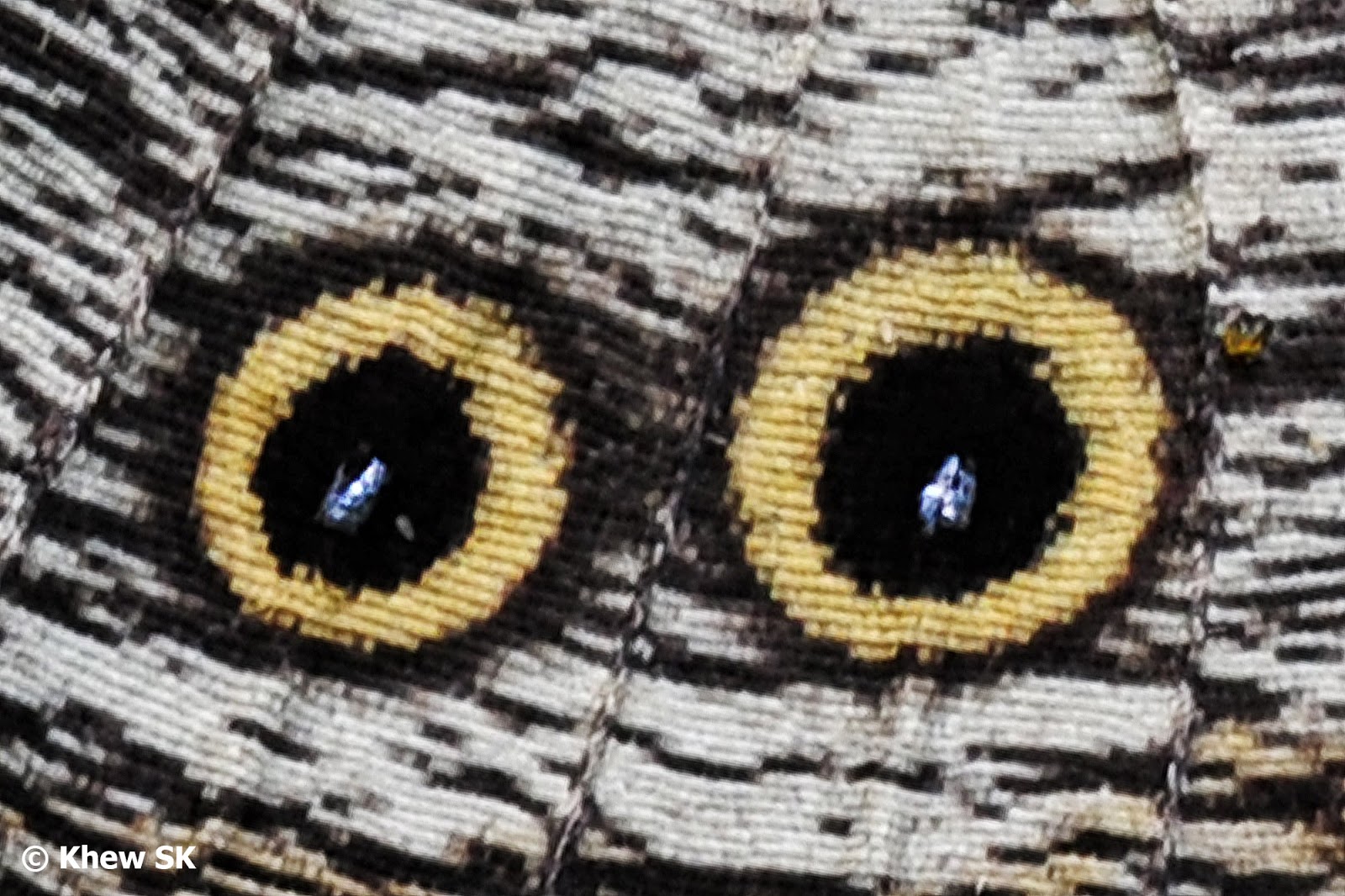
Eyespots on butterflies' wings.  Decorations or funtional?

Two anatomical articles were added to our series on the morphological and physical features of butterflies. This year, we discussed the butterfly's legs, their function in helping butterflies in their daily activities, the variation of legs across the families, colours, lengths and appendages that are found on the butterflies' legs. A second article discussed the presence of ocelli or eyespots on butterflies' wings and their possible use in mimicry and protection from predators.


Another blogpost, along the same thrust of discussing morphological features of the wings of a butterfly, took a closer look at camouflage - this time via mimicking leaf patterns and shapes. Although the highlight species featured in the article Leafy Disguises no longer exists in Singapore, another slightly less accomplished mimic of leaves, the Autumn Leaf, is still extant.


As part of citizen science contributions, ButterflyCircle members continued our participation in various surveys, particularly for the Comprehensive Ubin Butterfly Surveys (CUBS) and for the Wildlife Reserves of Singapore (WRS) for Pulau Ubin and Mandai area respectively. Our earlier Bukit Timah Nature Reserve surveys culminated in a paper that was included in the Gardens Bulletin that was launched at the Festival of Biodiversity 2019.


This year, we featured one of our butterfly photography locations in the northern part of Singapore. The Sg Buloh Wetland Reserve, which is a more well-known nature park for migratory bird watching, is also unique for some butterfly species preferring the mangrove habitats.


Another blogpost discussed the use of buffer parks as a conservation strategy to help to reduce visitorship pressure on the nature reserves by providing interesting alternative venues for the public to enjoy nature-related activities. The development of these nature parks is part of a holistic approach to strengthen the conservation of the biodiversity in Singapore’s nature reserves.


We celebrated Singapore's 54th National Day in Aug 2019 by featuring red-and-white butterflies of Singapore - the national colours of Singapore's Flag. In another blogpost, showcasing the monochrome butterflies, we highlighted some simple and inconspicuous black-and-white butterfly species that call Singapore their home.


Some ButterflyCircle members went on three overseas trips to neighbouring countries to check out the butterflies there. The butterfly travelogues featured the trips to Mahua, Sabah in East Malaysia and Ipoh in West Malaysia. We also did another of our "pilgrimage" trips to meet our good Italian friend Antonio in Thailand, again visiting Chiangmai and Chiangdao for our annual butterfly "fix".


Two butterfly books were also featured, sharing these excellent work by their respective authors on the butterflies of their countries. The first, Butterflies of Australia by Dr Albert Orr and Prof Roger Kitching, is unique in that all the illustrations of butterflies in the book are hand-drawn. The second book is a recent acquisition for me - the Butterflies of South Africa by Steve Woodhall. This is another book that is a must-have for visiting butterfly enthusiasts to South Africa. A 2nd edition is in the works and will be launched next year.


We took a look at butterfly species whose caterpillars feed on various species of bamboos in the two-part article on Bamboo Feeders. Bamboos are important host plants for a wide variety of butterflies and should continue to be cultivated and conserved in our environment. Then we had a blogpost on adult butterflies that are attracted to overripe fruits in the blogpost Fruit Feeders.


A discussion on a simple citizen science suggestion on relative abundance indicators was the subject of another blogpost. We discussed the use of simple terminology to describe the relative "rarity" of the status of butterflies instead of the more scientifically rigorous IUCN definitions. This was more to simplify understanding for the layman enthusiast rather than replace any scientific nomenclature.


We then ended the year's blogposts by showcasing some occasional visitors to Singapore. Bringing the number of blogposts to 958 with Occasional Visitors since I started this blog back in 2007, we ended the year on a positive note that butterflies, unlike us humans, respect no boundaries nor political divides. They fly far and free and we hope that more will visit our little island in the sun in the coming decade.


Chinese New Year Teacup of 2019, the fifth in the series, featuring the Orange Emigrant by Loh Mei Yee

And there we have it, a busy 2019, and I would like to wish all our readers a Happy 2020 and a successful and peaceful year ahead for all. And to a great year ahead for butterflying and to our butterflies, live long and prosper!

Text by Khew SK : Photos by Bob Cheong, Chng CK, Foo JL, Federick Ho, Huang CJ, Khew SK, Loh MY, Jonathan Soong, Horace Tan and Anthony Wong,