Butterfly Photography 101
Part 1 - Hardware and Equipment
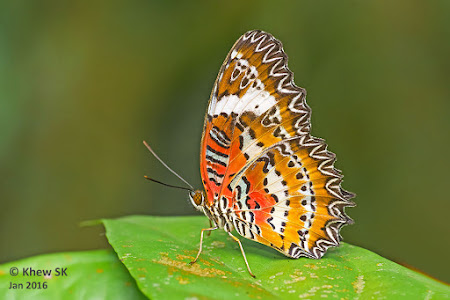 Plain Lacewing - Shot with Nikon D750 and Sigma 180mm macro lens
For a long time after we set up ButterflyCircle's website, forums and blog, we have had quite a number of questions from newbies and nature enthusiasts on how they could take better pictures of butterflies in the field. In terms of photography, questions like "what camera or lens do you guys use?", "Why do you use flash in broad daylight?" or "Which aperture should I use for butterfly photography?" were quite typical of what beginners would like to find out.
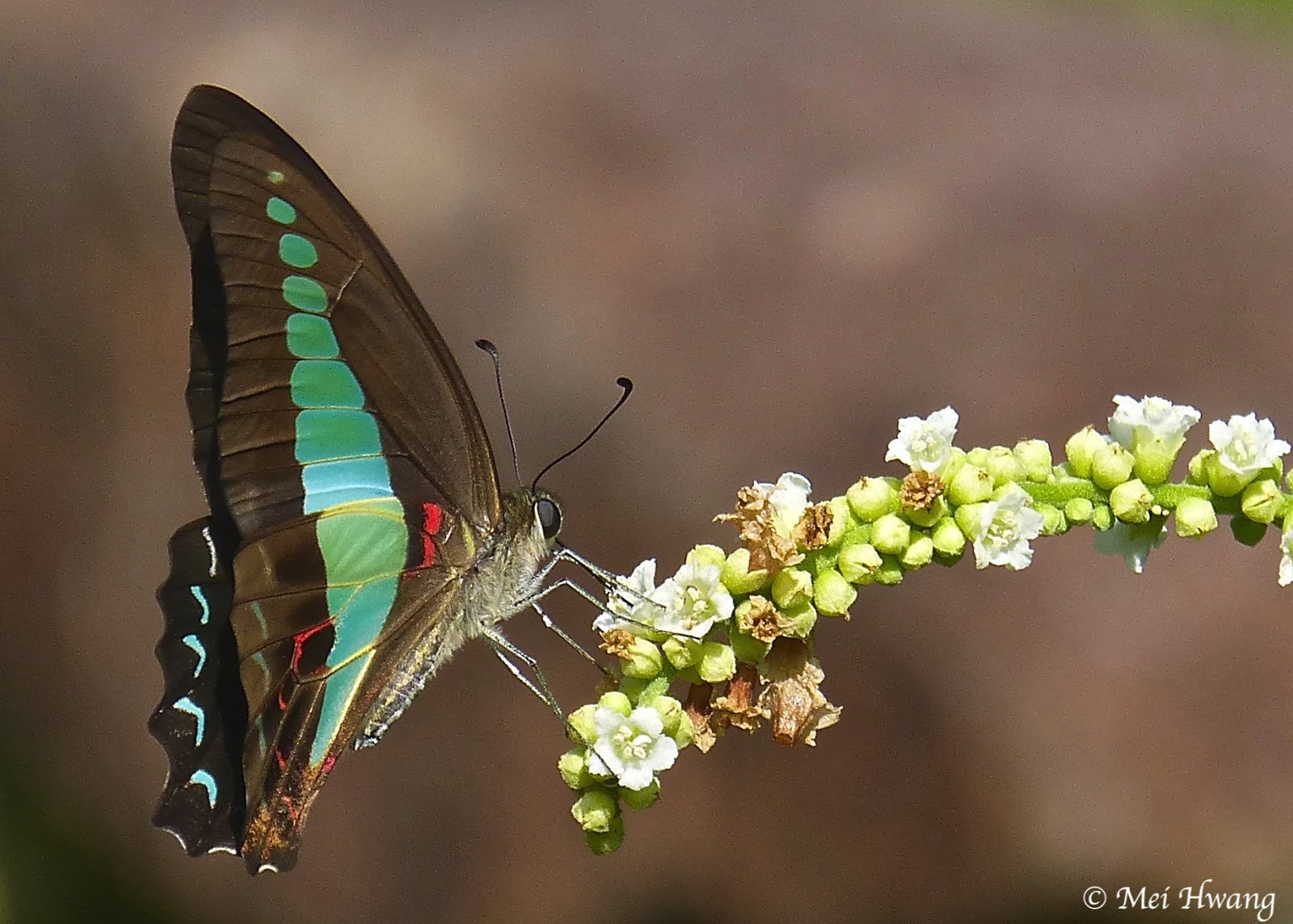
 Blue Glassy Tiger shot with Panasonic Lumix PNS camera
This mini-series on butterfly photography will hopefully answer some of these questions. The articles will focus on various aspects of butterfly photography, from technical equipment, composition, using flash, exposure and depth of field and a number of other "how-to's" that would be shared with our readers to hopefully benefit their journey into the world of butterflies and butterfly photography.
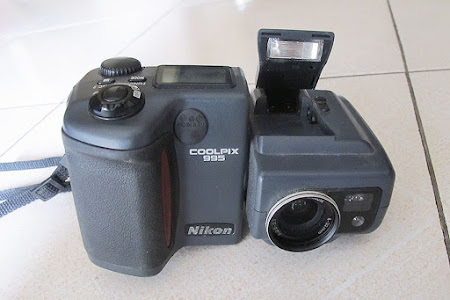 My first digital camera which I used 16 years ago, the Nikon Coolpix 995
These articles are not meant to be high-level professional advice, but merely sharing ButterflyCircle members' years of experience in the field and learning about butterfly photography through trial-and-error and managing our equipment in the field. Advice given is by no means cast in stone, and the important outcome is that each photographer experiments with his/her own techniques, improves and is happy with his/her own work.
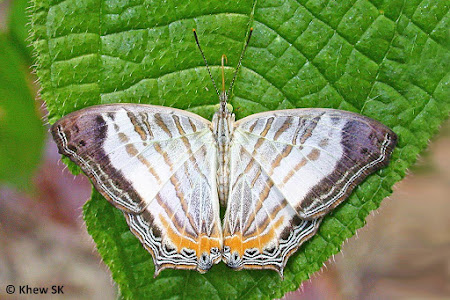 A shot of a Little Mapwing taken with the Nikon Coolpix 995
Readers should also remember that whilst you can read and arm yourselves with a lot of theory, nothing beats grabbing your camera equipment and going out into the field to practise, practise and practise. Review your own work critically, and then ask yourself how you can make the shot better. In butterfly photography, you can rarely control the way your subjects behave. This is nature. Unlike shooting human models where you can tell your subjects to look a certain way or shift to another position, in butterfly photography, you take whatever, however and whenever a butterfly comes your way.
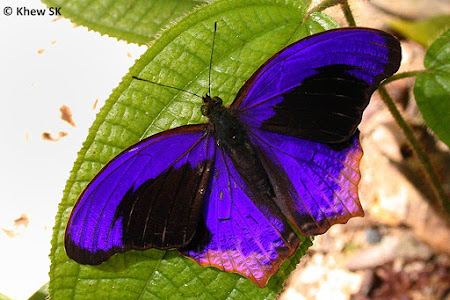 Another shot taken with the Coolpix 995
Part 1 of this mini-series deals with the fundamentals of choosing your hardware - i.e. camera equipment. Suffice to say that if money were not an issue (and it usually is!), then all of us would buy the most expensive and sophisticated equipment that money can buy. However, this is not necessarily the case when you want to start on butterfly photography. Whilst it cannot be denied that good equipment helps, it is the person behind the camera that is the most important part of butterfly photography.
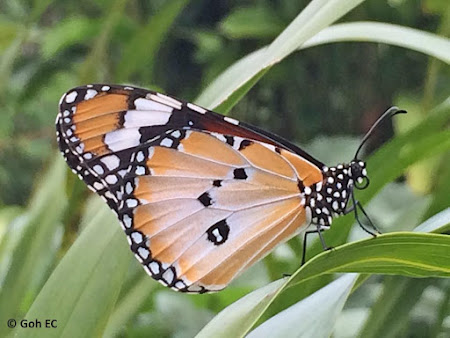 A close up Plain Tiger shot with an iPhone 5s - a photographer has to acknowledge the limitations of the small sensor on a smartphone
So what are the types of cameras that are available for reasonably good butterfly photography? Let us assume that we are talking about digital devices only, as the debate about analog film cameras has long abated, and we do not need to delve into nostalgic discussions on whether film or digital cameras are better. Taking price points as a base for looking at digital cameras, we can start at the lower band of cameras, being the basic point-and-shoot (PNS) digital cameras.
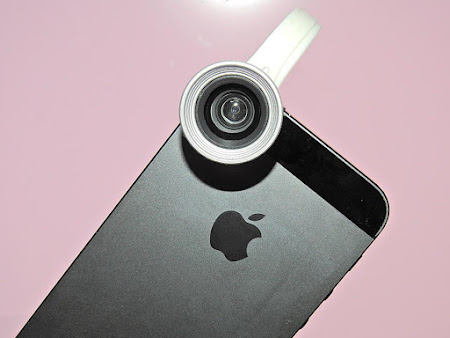 An external macro lens attachment on an iPhone 5s can work as a butterfly shooter in the absence of any other equipment
For a start, even a smartphone with a macro attachment on the built-in camera can take quite decent shots of butterflies. However, you may have to move in so close to the subject that it can be frustrating to even get a simple shot of a butterfly (before it flies away). In the absence of proper equipment, a simple handphone shot can sometimes save the day, especially when you suddenly encounter a species that is rare or not often seen.
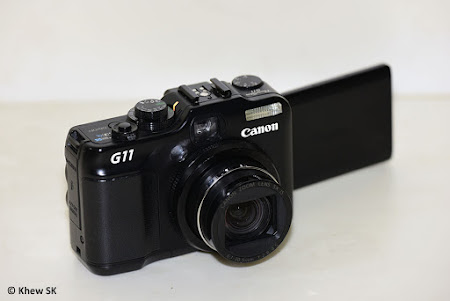 My small "backup" PNS camera, the Canon G11 with a swivel LCD screen, which served me well for many years
Moving up the scale, would be the typical compact PNS cameras. There are probably thousands of brands and models out there that a photographer could choose from. The range is mind-boggling, and the capabilities of each camera are so diverse that it would be quite futile to discuss the merits of each PNS camera for butterfly photography. However, I have seen shots from a range of these cameras that would put more expensive and dedicated macro equipment to shame.
 A shot of the Postman (Heliconius melpomene) taken with the Canon G11 using the macro-mode on the camera
Firstly, be aware of the limitations of a PNS camera. The sensor is usually much smaller than the professional devices, and the outputs from PNS cameras are best suited to posting your shots on social media or online. The depth-of-field (DOF) of such devices are extremely good, and you can often get sharp shots, but the background and subject are usually all in focus. This may not be what you desire in your shot, if you want to focus on the subject and make the background creamy and out-of-focus.
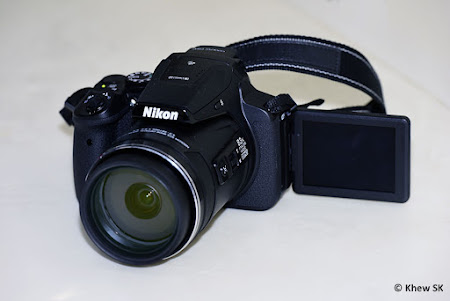 The very versatile Nikon P900, which has an optical zoom equivalent to a 24mm - 2000mm lens!
The benefits of PNS cameras are that they are usually small, light and easy to carry about. For those with a long zoom, you can shoot anything from macros to landscapes to birds. An all-in-one camera if you can call them that. For beginners with a limited budget, you can consider a compact PNS camera and move up from there after you are convinced that your interest butterfly photography is something that you can sustain and are keen on, for the longer term.
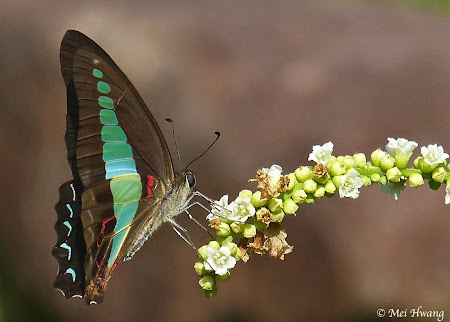 A Common Bluebottle feeding, taken with the Panasonic Lumix
However, the quality of shots from a simple PNS camera cannot be under-estimated. For example, butterfly enthusiast Mei Hwang, wielding a simple "packaged deal" PNS camera, a Panasonic Lumix DMC-FZ60 non-interchangeable lens camera, can deliver quite admirable butterfly photos. Many of her shots deliver the typical quality of higher end equipment - sharp subjects, clean backgrounds and punchy but natural colours.
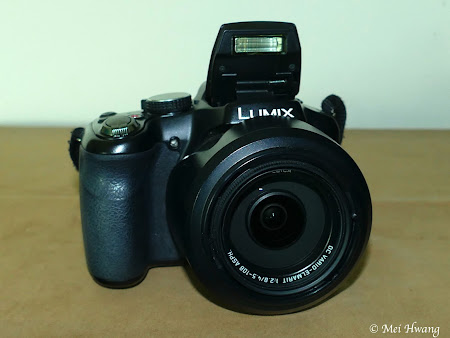
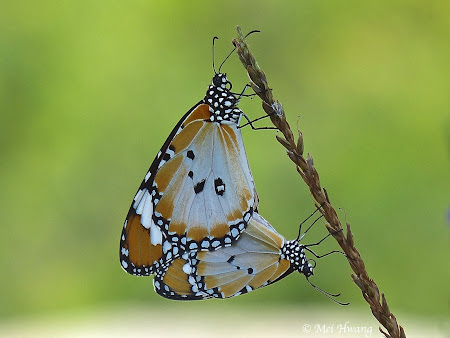
 Shots taken with the Panasonic Lumix DMC FZ60 by Mei Hwang. The butterfly photos are as good as any taken with much more sophisticated equipment
We leave the PNS cameras for now, and move on to the higher end of digital cameras - the Digital Single Lens Reflex (DSLR) cameras. Even within the realm of DSLR cameras, there is a relatively wide spectrum from the entry-level DSLRs to the high-end professional DSLRs that can make a big hole in your wallet! Whilst I am not advocating any particular brand, I will use Canon and Nikon DSLRs as examples of decent camera bodies for butterfly photography as these brands are the more popular brands amongst butterfly photographers.
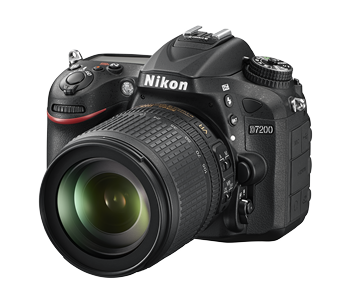
 Some entry-level offerings from Nikon and Canon - the D7200 and EOS700D
Entry-level DSLRs are relatively good, when coupled with proper "magnifying equipment" i.e. proper lenses, close-up filters, teleconverters or extension tubes. For a butterfly photographer who is just starting out using DSLRs, he/she can consider many of the capable entry-level models. As mentioned earlier, it is important to feel comfortable with the system and camera chosen, and then going out in the field to use the camera as much as possible.
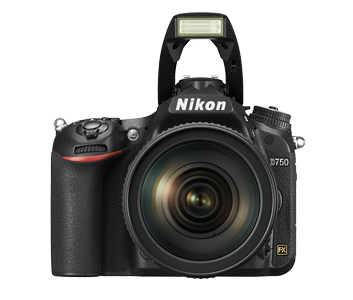
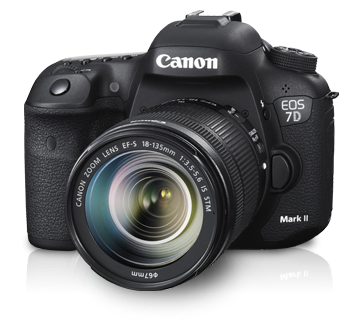 Two mid-range DSLRs from Nikon and Canon - the D750 (full frame sensor) and the EOS7D MkII (cropped frame 1.6x sensor)
The advantages of DSLRs camera bodies are :
- Larger sensors with higher Megapixel count. Although high MP is not the be-all and end-all of digital photography, having more MPs can make a difference whether a cropped shot of a butterfly is usable or not. For the full-frame DSLR bodies (36x24mm format) the amount of detail one can get out of it, is far superior than most cameras, if you plan to enlarge your shot significantly.
- The focusing and metering accuracy of the higher end models often gives a butterfly photographer an edge when chasing after these skittish subjects. The ability to track and accurately lock on a subject makes a difference between a nice shot, and those destined for the trash folder.
- Higher frames-per-second (FPS) does tend to help in nailing a sharp shot especially when a butterfly moves constantly when feeding, or flaps its wings unpredictably, even when puddling on the ground.
- Better noise control is another plus point for the DSLRs. Very often, butterfly photographers have to contend with shooting a butterfly in a dimly lit forest understorey using high ISOs. The ability of the sensor to handle high ISOs also make a difference between a "keeper" (usable shot) and those that would be deleted.
The downsides of DSLRs would of course be the cost, bulkiness, and weight. Not every photographer endears themselves with lugging around 2-3kg of equipment, hand-held, and hiking long distances to shoot butterflies. So make your decision based on the various pros and cons of choosing between a good DSLR system or a preference for simple PNS equipment in your butterfly-shooting forays.
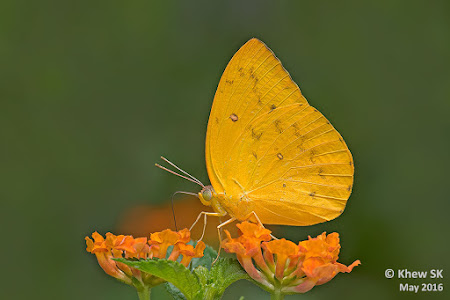 An Orange Emigrant shot with the full-frame Nikon D750 and a Sigma 180mm macro lens
In recent times, the appearance of premium compact PNS cameras, mirrorless interchangeable-lenses cameras and more and better offerings in the market is changing the photography market rapidly, and it is anybody's guess what we will be using to shoot butterflies in the coming years.
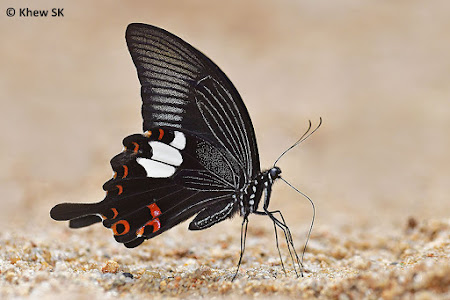 A Red Helen shot with the cropped frame (1.5x) Nikon D500 with a Sigma 180mm macro lens
In the next part of this series, we will share our thoughts on the "magnification equipment" and recommend different lenses and equipment to shoot butterflies.
Text by Khew SK : Photos by Goh EC, Khew SK and Mei Hwang