Origin of Common Names of Butterflies
Nymphalidae : Some English Common Names

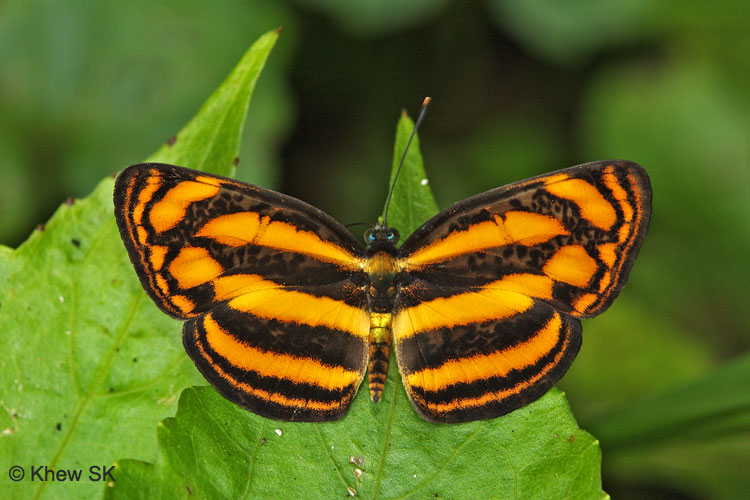
A Commander having a meal at the Officers' Mess!
The study and the naming convention of butterflies date back several centuries, to the 18th century naturalist Carolus Linnaeus (Carl von Linne). Linnaeus pioneered the binominal and trinominal taxonomic naming convention in classic work Systema Naturae - a catalog of all the names of known animals and plants.

The study and the naming convention of butterflies date back several centuries, to the 18th century naturalist Carolus Linnaeus (Carl von Linne). Linnaeus pioneered the binominal and trinominal taxonomic naming convention in classic work Systema Naturae - a catalog of all the names of known animals and plants.

A Cruiser anchored in harbour
In 1758 came the 10th edition of Systema Naturae, which is usually regarded as the starting point for the biological classification of animals by family, genus and species. As more and more amateur hobbyists picked up collecting butterflies, and the general layman began to appreciate nature's flying jewels around them, the widespread use of English common names became more prevalent.
In 1758 came the 10th edition of Systema Naturae, which is usually regarded as the starting point for the biological classification of animals by family, genus and species. As more and more amateur hobbyists picked up collecting butterflies, and the general layman began to appreciate nature's flying jewels around them, the widespread use of English common names became more prevalent.

An Archduke surveys over his domain
The English common name given to butterflies, however, is always a subject for debate, as these names are coined by amateurs and layman enthusiasts. The well-meaning intention is to give an easier and less daunting name for the general public which they can appreciate and endear themselves to. The downside of this is that we often end up with different common names for the same species across different countries, causing confusion. Hence although English Common Names are ideal for the general enthusiasts, scientific names should always remain at the core of butterfly identification.

The English common name given to butterflies, however, is always a subject for debate, as these names are coined by amateurs and layman enthusiasts. The well-meaning intention is to give an easier and less daunting name for the general public which they can appreciate and endear themselves to. The downside of this is that we often end up with different common names for the same species across different countries, causing confusion. Hence although English Common Names are ideal for the general enthusiasts, scientific names should always remain at the core of butterfly identification.

A Dot-Dash Sergeant alert!
How then, did these English Common Names start? In the Asian region, where amateur collectors spent their time amassing large collections of insects, amongst which butterflies were undoubtedly a favourite, many of these collectors were British, and particularly from the military. Renown collectors who described new species and wrote articles and books on butterflies in the Indian subcontinent and Malaysia & Singapore were either from the military or were civilians working in the region who were interned during the Japanese occupation during World War II.
Amongst some of these collectors who were military men were :
How then, did these English Common Names start? In the Asian region, where amateur collectors spent their time amassing large collections of insects, amongst which butterflies were undoubtedly a favourite, many of these collectors were British, and particularly from the military. Renown collectors who described new species and wrote articles and books on butterflies in the Indian subcontinent and Malaysia & Singapore were either from the military or were civilians working in the region who were interned during the Japanese occupation during World War II.
Amongst some of these collectors who were military men were :
- Brigadier William Harry Evans - a British officer who spent most of his commission in India
- Lt Col John Eliot - the 'guru' who revised the 4th edition of the definitive book about butterflies of the Malay Peninsula by Corbet & Pendlebury
- Captain M K Godfrey
- Captain Stackhouse Pinwill
- Major J M Kerr
- Lieutenant A M Goodrich
- Lieutenant H Roberts
Others, who were in the service of British companies in East India and the far east, were :
- Alexander Steven Corbet, a soil chemist and bacteriologist with the Rubber Research Institute of Malaya
- H Maurice Pendlebury, Director of Museums, Federated Malay States, and who was interned at Changi Prison during the war
- W A Fleming, a Scotsman who worked for a London-based rubber company and who was also interned during the war.
- R Morrell, who was also interned at Changi during the war


A Colonel with two Sergeants in attendance. Left : Colour Sergeant, Right : Malay Staff Sergeant
It is therefore understandable that many of the English common names of butterflies were coined after British origins. In the first category, we have, obviously, the military titles and ranks - old world and new! For the butterflies in Singapore we have the Commander, the various Sergeants, Knight, Colonel, Lascars and Sailors.


It is therefore understandable that many of the English common names of butterflies were coined after British origins. In the first category, we have, obviously, the military titles and ranks - old world and new! For the butterflies in Singapore we have the Commander, the various Sergeants, Knight, Colonel, Lascars and Sailors.


A platoon of Lascars - clockwise from top left : Malayan, Perak, Burmese and Common Lascars
Whilst some of these ranks are clearly recognised, I had to do a bit of research into the origins of some others. The Lascar, for example is an Indian sailor, army servant, or artilleryman. Interesting, because some of the British collectors were indeed militarymen stationed in India, where they would have come across such titles.
Whilst some of these ranks are clearly recognised, I had to do a bit of research into the origins of some others. The Lascar, for example is an Indian sailor, army servant, or artilleryman. Interesting, because some of the British collectors were indeed militarymen stationed in India, where they would have come across such titles.


Ahoy! the Navy - Sailors and a Yeoman. Top to Bottom : Chocolate Sailor, Banded Yeoman & Short Banded Sailor
Amongst the definitions of the Yeoman, was this : a naval petty officer who performs clerical duties. The Sailors, too, generated some debate, as there are some quarters who believe that the common name should be "Sailers" - which originate from the way the Neptis species "sails" in flight. Of course, given the family of names of the armed forces, it could well be possible that there was every intention to call these species "Sailors" instead, so that the officers of the British Navy could also be recognised, and the butterflies named for posterity. And finally of course, we have to salute the Indian Red Admiral. as the highest ranking officer in the navy.


An Admiral and his Cruiser?
Another possible military association for a butterfly name is the Cruiser. Amongst the definition is : a large fast moderately armored and gunned warship.


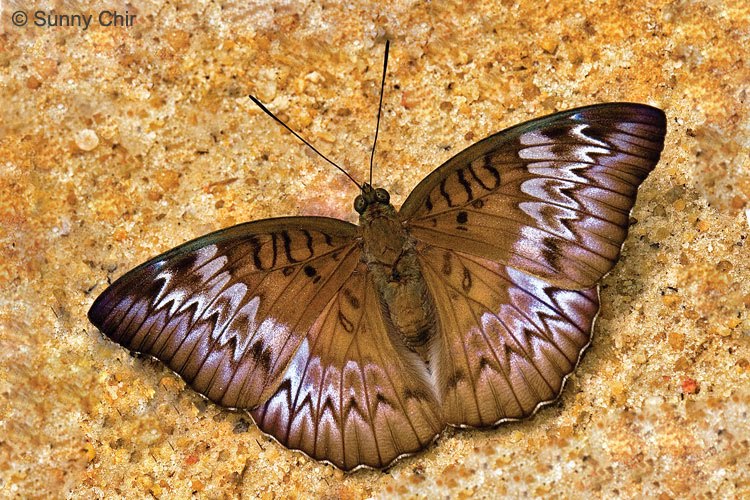
Said the Viscount to the Duke "Where are the ladies?" Top : Malay Viscount Bottom : Purple Duke
In another category of common names, would be titles from Peerage - a system of titles in the UK, representing the upper ranks of British nobility and aristocracy. Peers are of five ranks in descending order of heirarchy :
- Duke
- Marquess (or Marquis)
- Earl
- Viscount
- Baron


Aristrocratic gentry : Clockwise from top left : Baron, Green Baron, Horsfield's Baron, Malay Baron and White-Tipped Baron
The title Archduke may be the odd one out, as it is an aristocratic title that originates from the European countries. And for the Nawab (or Nabob) the definition would be : a provincial governor of the Mogul empire in India. Another from Indian origin, would be the Rajah : the bearer of a title of nobility among the Hindus


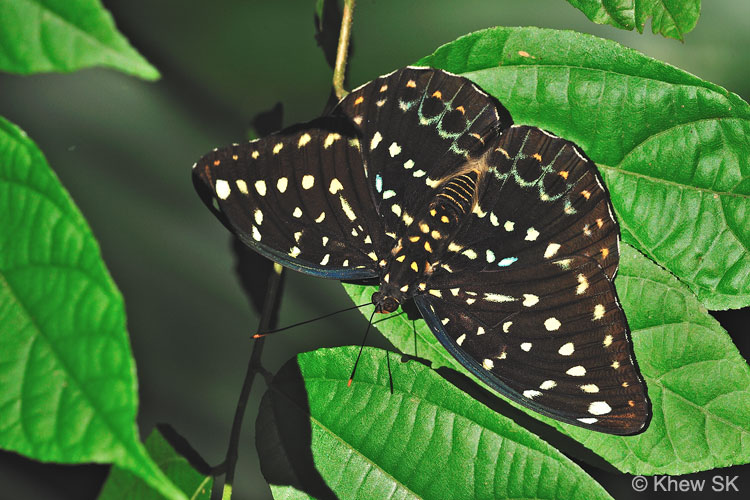


In the world of Archdukes and Nawabs : Top : Yellow Archduke, Blue Nawab, Archduke, Black-Tipped Archduke and Plain Nawab.
So now we postulate some of the possible origins behind some of the English common names behind these butterflies, and why these early collectors may have coined these names for our beloved winged beauties!
So now we postulate some of the possible origins behind some of the English common names behind these butterflies, and why these early collectors may have coined these names for our beloved winged beauties!
Text by Khew SK : Photos by Sunny Chir, Khew SK, Koh Cher Hern, Neo Chee Beng, Horace Tan, Tan Ben Jin, Anthony Wong & Mark Wong


