Showing posts sorted by relevance for query Prosotas dubiosa lumpura. Sort by date Show all posts

27 November 2022

Butterfly of the Month - November 2022

Butterfly of the Month - November 2022
The Tailless Line Blue (Prosotas dubiosa lumpura)

A mating pair of Tailless Line Blues perched on the top of a leaf

The atmosphere of Christmas is in the air, as we stand on the threshold of December. Shopping malls and offices in Singapore are beginning to be decorated with festive paraphernalia and Christmas songs are being played over the audio systems. The cooler (and wetter) weather at this time of the year also reminds us that the monsoon rains are upon us, and the final month of 2022 is nigh.

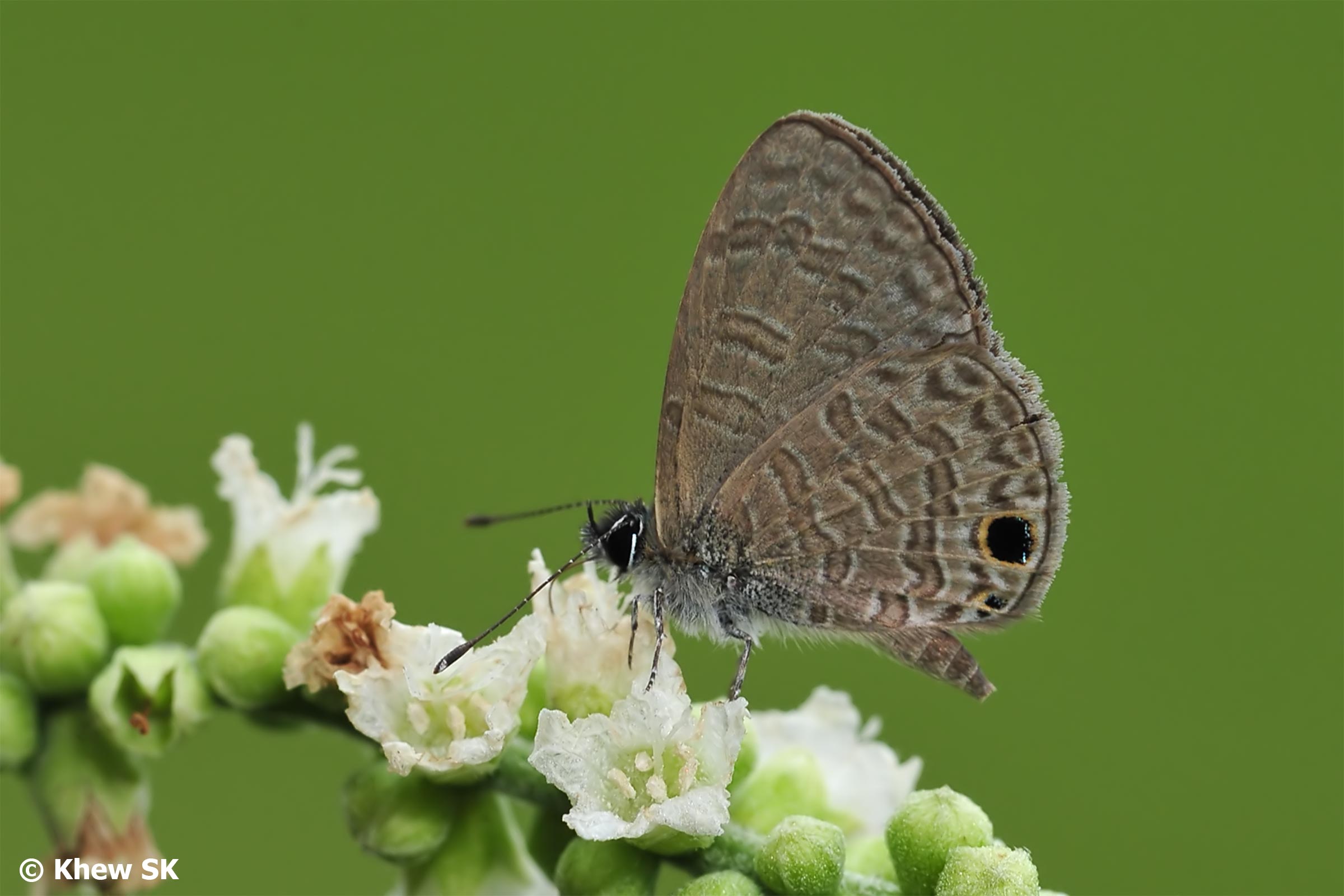
A Tailless Line Blue feeding on the flower of the Stringbush (Cordia cylindristachya)
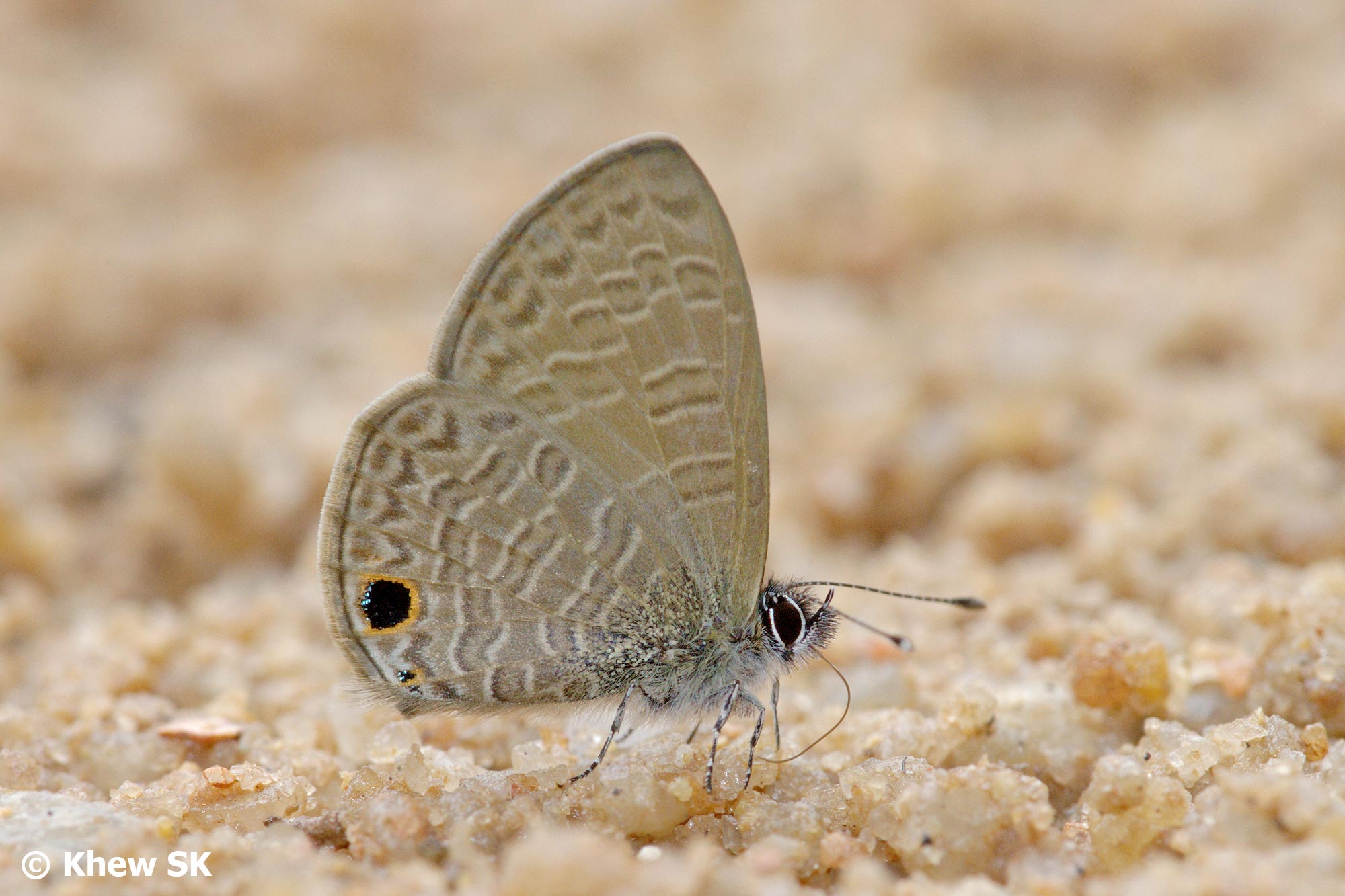
A Tailless Line Blue puddling at a damp footpath

There was much excitement with the election fever gripping our northern neighbour as Malaysians waited with bated breath, anticipating who would be proclaimed Malaysia's 10th Prime Minister. As expected, the results of the elections were not conclusive, and it was left to the Yang DiPertuan Agong to decide who would lead Malaysian politics into the coming years. As it came to be, the 75-year old Anwar Ibrahim become Malaysia's next PM.

A Tailless Line Blue feeding on the remains of a dragonfly nymph
A Tailless Line Blue puddling at a red brick path

With his colourful history, particularly having served a prison sentence before, PM Anwar is a shining example of "never give up" spirit. Not many would have given him a chance of ever being Malaysia's PM after so many attempts to return to power, and the intriguing twists and turns in his political fortunes - one that would make a very interesting plot for a drama!

A pair of Tailless Line Blues puddling together
A Tailless Line Blue feeding on the flower of the Spanish Needle (Bidens alba) in Hong Kong

Over in Qatar, soccer fans were treated to their first FIFA World Cup ever to be held in the Arab world. Held once every four years, the 2022 edition of the FIFA World Cup supposedly costs over US$220B to host - a sum that would even be significant to the wealthy emirate with the 4th highest GDP per capita in the world. This edition of the World Cup is being held in the "winter" months as the unbearable heat and humidity in the region would have posed challenges to playing soccer in the summer months.


Back home in Singapore, the rising interest rates, rents and general cost of living and the impending adjustment of the Goods and Services Tax by 1% in 2023 and another 1% in the following year was cause for concern for the residents. For example, rentals of residential units rose by an eye-watering 46% from 2019, and is set to continue on its trajectory upwards. This would certainly put a severe strain on the working population, particularly the foreign workforce in Singapore. Already, there is talk of an imminent recession in the months ahead, adding to the woes of Singaporeans.


Back to our butterfly world, we introduce our 181st Butterfly of the Month since the start of this series.  For the month of November 2022, we feature the diminutive Tailless Line Blue (Prosotas dubiosa lumpura). This tiny species, with a wingspan of just over 20mm, is widely distributed across Singapore, and is sometimes abundant where several dozens may be flying around and dogfighting amongst the shrubbery.

A Tailless Line Blue taking in perspiration from a human
It can be found in Singapore's urban parks and gardens as well as in the nature reserves. It has a weak but erratic flight but is skittish and waiting for an individual to stop and perch for a good photograph is often challenging. Amongst its caterpillar host plants are Bridelia tomentosa and the non-native Acacia auriculiformis.

A glimpse of the upperside of a male Tailless Line Blue
A female Tailless Line Blue sunbathes on the top of a palm leaf

The Tailless Line Blue is bluish purple on top with an almost imperceptible border in the male. The female is brown on top with blue discal patch and wing bases. The underside is greyish with the usual striations of the genus. At the tornal area is a large black spot that is crowned with orange. There are also some light greenish blue iridescent scales on the tornal spot.

Puddling Tailless Line Blues on various food sources

The eyes are jet black and large, and the antennae black-and-white banded. As its common name suggests, it is tailless, unlike many of the other tailed species in the genus. It can be encountered feeding at small flowers and can easily be approached when puddling on damp sandy streambanks and decomposing organic material.

Text by Khew SK : Photos by Janice Ang, David Chan, May Chan, David Ho, Khew SK, Koh CH, Ann Kong, Loh MY, Michael Soh and Zick Soh.

25 January 2014

New Record of a 4th Prosotas species

New Record of a 4th Prosotas in Singapore
Discovery of Prosotas aluta nanda 


The Lycaenidae and Hesperiidae species often pose a great challenge to identification, with many lookalikes with very similar features. The challenge of identifying the many lookalikes can sometimes be mitigated with research into their early stages, (where the physical appearances and diagnostic features of the caterpillars can be a great aid to separating the species,) or with voucher specimens to scrutinise.


Field shots are often not the best for reliable identification, especially those where colour or size are diagnostic features, or where the physical markings may be difficult to be used to distinguish between two species, due to perspective distortions of the photographs. In some cases, where the field-shot individual is not pristine or with significant wear and tear on the wings, identification may also be problematic.


Hence for some of these lookalikes, it is often prudent to research and analyse carefully, before jumping to conclusions about the identity of a species. Over the years, ButterflyCircle has had some misidenfications, and has now adopted greater rigour in validation before establishing the identity of a species for inclusion into the Singapore Checklist. In recent years, the identification of the more challenging species has been made less onerous with the invaluable help of experts like Dr TL Seow, Dr L.G. Kirton and others.


So we now announce the inclusion of the fourth Prosotas species to the Singapore Checklist. This latest addition, Prosotas aluta nanda had been recorded several times over the past years, but its identity was kept under consideration until a higher level of confidence could be accorded to its ID. Recently a voucher specimen was obtained from a location in the nature reserves of Singapore, and the specimen scrutinised to validate the ID.


The first record shot of the Barred Line Blue by Horace Tan on 26 Feb 2008

From photographic records in ButterflyCircle's forums, the earliest posted shot of this species was documented by Horace Tan, who shot this species on 26 Feb 2008, feeding on a flower of the Bandicoot Cherry (Leea indica) in the nature reserves. There were many subsequent sightings and photos of this species, usually found puddling at sandy streambanks, that followed in subsequent years.


ButterflyCircle member Mark Wong recorded this individual on 15 Mar 2008

This Line Blue joins three others in the genus Prosotas that are extant in Singapore - Common Line Blue (Prosotas nora superdates), Tailless Line Blue (Prosotas dubiosa lumpura) and Banded Line Blue (Prosotas lutea sivoka).  The last named was only recently discovered in Singapore in Oct 2012. Both these recently-discovered Prosotas were not previously recorded in Singapore before.


This species has been given the common English name "Banded Line Blue" in most Indian and South Asian references, but since this common name has already been assigned to the species Prosotas lutea sivoka in South East Asia (ref : Butterflies of Thailand by Pisuth Ek-Amnuay Vol 2), it would generate more confusion to refer to it by the similar name. In his book, Pisuth has coined the name "Barred Line Blue" for Prosotas aluta nanda. Whilst it would be interesting to understand why "Barred" was coined to refer to this species, we see no reason not to use this common name for Prosotas aluta in the South East Asian region covering Thailand, Malaysia and Singapore - until someone comes up with a better alternative for the English common name of this species!


An annotated visual identification comparison between P. aluta and a N.berenice highlighting the diagnostic features of P.aluta

The Barred Line Blue has been described as "confined to the forested plains and is usually taken singly". It closely resembles the berenice group of the genus Nacaduba. In C&P4, the authors also added that "most examples can be recognised by having the post-discal spot in space 3 on the forewing below shifted in(wards) very slightly basad of the spot in space 4". The striae are also described as "clear white" in Prosotas aluta.


The upperside of the males of this species is blue with a narrow black border whilst the female is brown with a shining greenish-blue discal patch on the forewing. Another consistent feature that separates this species from the other lookalikes (but must be used in combination with the post-discal spot in space 3 of the forewing), is that the marginal spots, particularly the one next to the tornal orange-crowned eyespot, are arrow-shaped or distinctly pointed. In most individuals, the striae in space 4 of the forewing are also dislocated, and distinctly angled towards the termen.


The Barred Line Blue has an erratic flight and is usually skittish, as is the case with the other species in the Prosotas and Nacaduba genera. Thus far, all the sightings of this species have been in the forested nature reserves, and more often, males are encountered puddling at sandy streambanks on hot sunny days, usually attracted to decomposing animal matter or excretions.

And so we add the Barred Line Blue as species #309 to the Singapore Checklist. At this point in time, there are several other Lycaenidae and Hesperiidae that are awaiting further validation, either from their life histories, or with voucher specimens, before adding them to the Singapore Checklist. However, we are in no hurry to do so, until we have a high level of confidence on the ID and concurrence amongst the expert advisers to ButterflyCircle.

Text by Khew SK : Photos by Chng CK, Huang CJ, Khew SK, Horace Tan & Mark Wong

References :


  • [C&P4] The Butterflies of The Malay Peninsula, A.S. Corbet and H.M. Pendlebury, 4th Edition, Malayan Nature Society, 1992.
  • Butterflies of Thailand, Pisuth Ek-Amnuay, 2nd Edition, 2012

04 July 2020

Singapore's Line Blues - Part 1

Singapore's Line Blues - Part 1
Featuring the Line Blue Butterflies of Singapore


A male Common Line Blue puddling at a sandy streambank

The "Line Blue" butterflies are a group of rather small species that belong to the subfamily Polyommatinae of the family Lycaenidae. The Polyommatinae are often referred to as the "Blues". A large number of the species in this subfamily are small and delicate butterflies with many of them sporting thin filamentous white-tipped tails on their hindwings. Many species, particularly the males, have blue uppersides, hence the English common name for the group.


A Pointed Line Blue perched on top of a leaf

This blogpost introduces the seven extant species found in Singapore that carry the English common name "Line Blue" in their names. All these species feature a series of striations across the undersides of both the fore- and hindwings. They have the typical "eyespot" at the tornal area of the hindwing and, in some of the species, coupled with the thin tails, form a decoy to fool predators into attacking a less critical part of their wings.


A Tailless Line Blue feeding on the flower of the Stringbush

In this article, we introduce three of the seven species that are found in Singapore. Ironically, of these "Line Blues" found in Singapore, four are new discoveries. Based on reference literature, these four were not recorded in Singapore by the early authors. We will feature these four "exotics" in Part 2 of the article next weekend. We will now highlight the three native, and relatively common species in Singapore.

1. The Pointed Line Blue (Ionolyce helicon merguia)


A puddling Pointed Line Blue

The Pointed Line Blue is the sole representative of the genus Ionolyce in the region. It is relatively common and widespread in distribution across the island. It can be found in urban parks and gardens, and sometimes in the forested nature reserves as well. Males are regularly found puddling at damp streambanks and muddy footpaths, and are partial to human perspiration as well.


It is a fast flyer, and flies erratically, and is often skittish, until it comes down to puddle on the forest floor. Once it is a feeding mood, it can also be coaxed to feed on a sweaty finger. The forewings of the males are more pronounced and pointed than other lookalike species in the subfamily.


A male Pointed Line Blue opens its wings to sunbathe

The male Pointed Line Blue is a deep purple-blue on top, with a very thin black margin and unmarked. The female is predominantly brown on her uppersides with the discal areas and wing bases overlaid with bluish-purple. The undersides are dull greyish-brown with narrow whitish wavy lines across both wings. There is an orange-crowned eye spot at the tornal area of the hindwing and a black filamentous tail which is tipped with white at vein 2 of the hindwing.

2. The Common Line Blue (Prosotas nora superdates)


A Common Line Blue feeding on the Spanish Needle flower

The Common Line Blue is a small butterfly that has a wingspan of around 25-28mm and considered moderately common. It can be found in urban parks and gardens but can also be found in the forested nature reserves. Males of the Common Line Blue are attracted to damp footpaths and streambanks where they come down to puddle for salts.


A male Common Line Blue puddling with its wings opened

The male Common Line Blue is bluish-purple on the upper surfaces with a thin black border, whilst the upperside of the female is dark brown and unmarked.  The underside of the male appears orangey whilst the base colour of the female is greyish buff.


A mating pair of Common Line Blue.  Left : Male Right : Female

The underside features white-edged dark lines across both wings with the interstitial spaces orange in the males, and grey with orange speckles in the female. There is a large orange crowned black eyespot at the tornal area of the hindwing below, with iridescent greenish scales. At vein 2 of the hindwing is a filamentous white-tipped tail.

3. The Tailless Line Blue (Prosotas dubiosa lumpura)


A Tailless Line Blue puddling

The Tailless Line Blue is a closely related species from the same genus as the Common Line Blue. But as its name suggests, there is no tail on the hindwing of this species. It is common, and sometimes seasonally abundant where two dozen individuals or even more, can be observed, frolicking amongst the shrubbery.


A male Tailless Line Blue opens its wings to sunbathe

The male Tailless Line Blue is bluish-purple on top with an almost imperceptible border. The female is brown on the uppersides with a blue discal patch. The underside is greyish, with the usual white-edged dark lines across both wings. There is a large tornal spot on the underside of the hindwing with some iridescent pale green scales.


A mating pair of Tailless Line Blues

Males are sometimes found puddling at damp footpaths, drains and wet areas. Females are more often found at flowering plants like the Stringbush. The species is widely distributed and is common throughout Singapore in urban parks and gardens.

Text and Photos by Khew SK

21 October 2009

Parasitic Mites on Butterflies

Parasitic Mites on adult butterflies
What are they?


An Arhopala sp with a rather large mite attached to its eye

Occasionally, when out in the field photographing butterflies, members of ButterflyCircle encounter strange red globular attachments to adult butterflies - usually at the head or eye of the butterfly. Curious as to what these little critters are, I searched the internet and found that butterflies do fall victim to certain parasitic mites.


A Tailless Line Blue (Prosotas dubiosa lumpura) with a red mite attached to its head

Another Arhopala sp with a red mite attached to its head

Interestingly, the majority of these encounters affect the smaller butterflies in the Lycaeninae family, even though there are examples from the Riodinidae and Hesperiidae families. So far, we have not encountered these mites on the larger species of butterflies yet. Although theoretically, there should be no reason why these mites could not attach themselves to larger butterflies as well. But by far, there have been more observations of these mites on Arhopala spp than any other butterfly genus.


Parasitic mites on the thorax of a Marbled White in the UK © Adrian Hoskins

In his excellent and informative website Learn about Butterflies, ButterflyCircle member Adrian Hoskins wrote about these mites on the British butterfly the Marbled White (Melanargia galathea), and in the example shown, a number of these mites were attached to the thorax of the butterfly rather than the eye or head, as is the more common occurrence in Singapore. Adrian noted that these mites were of the species Trombidium breei and that "studies have shown that these mites are harmless to the butterfly, having no detectable effect on the flight performance, orientation ability or lifespan".


A parasitic mite on a Hesperiidae. Even fast-flying skippers cannot shake off its little red passenger.

It is interesting to learn that despite being parasitic in nature, these mites have little effect on the lifespan of the butterfly. However, it is not known if the mites found on butterflies here in Singapore are of the same species of mites. Perhaps if a reader of this blog who is an authority on mites may want to contribute his or her knowledge about what these little stowaways are and if they cause any harm to the host butterfly.


Close-up shot of a mite attached to the eye of an Arhopala sp

Indeed, where a butterfly is encountered with one of these mites attached to its eye or head, the flight of the butterfly did not seem abnormal, nor did the butterfly display any discomfort or make any attempt to remove the mite with its legs. These butterflies observed seemed to be able to carry out their normal activity like feeding and flying around without much hindrance.


A mite on the eye of a Branded Imperial (Eooxylides tharis distanti)

In two of the cases shown here, the mites are rather 'skinny' where the legs can be seen. It is not known if the mites actually grow fatter as it feeds off the butterfly or if these are of a different species of mites.


Parasitic mite on the eye of Abisara geza niya. Inset : Close up of the mite. Is this a different species from the fatter mites?

It is likely that these mites lurk on flowers and vegetation where these butterflies frequent, and are able to quickly attach themselves to the butterflies when they stop to rest or feed at flowers. However, why they appear to generally attach themselves to the head/eye region of the butterflies observed in Singapore remains a mystery.


The fact that most of the encounters over the years by ButterflyCircle members show this phenomenon of a single mite attached to a butterfly's head or eye appears to reflect the consistency in which this happens in the field here in Singapore.


Similar-looking mites also parasitise other invertebrates like the Harvestman as is shown at this link.

So when you're out there in the field, observing and photographing butterflies, keep a look out for these little red dots on the butterflies, and record your observations and findings. If you have any clue as to what these species of mites are or how they affect the butterflies that they parasatise upon, do share your views with us.


Text by Khew SK : Photos by Adrian Hoskins, Anthony Wong, Federick Ho, Jason Ng, Horace Tan, Simon Sng, Sum CM & Tan CP.