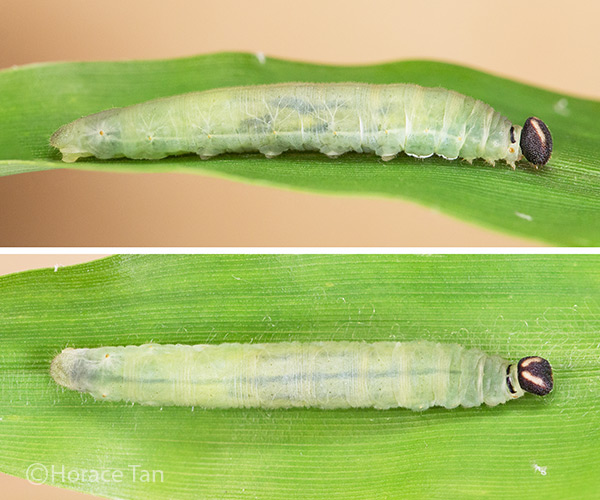
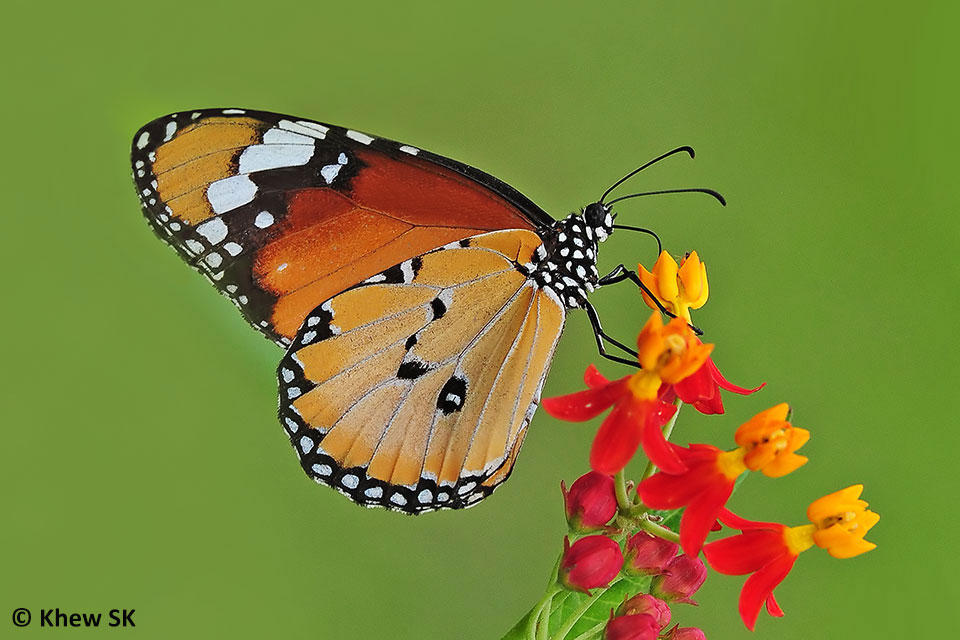
Showing posts sorted by relevance for query Potanthus ganda ganda. Sort by date Show all posts

30 September 2017

Life History of the Ganda Dart

Life History of the Ganda Dart (Potanthus ganda)


Butterfly Biodata:
Genus: Potanthus Scudder, 1872
Species: ganda Fruhstorfer, 1911
Wingspan of Adult Butterfly: 21-24mm
Caterpillar Local Host Plant: Centotheca lappacea (Poaceae, common name: Sefa).


Physical Description of Adult Butterfly:
On the upperside, the wings are dark brown with orange-yellow markings. On the hindwing, a spot is present in space 7, but usually none or a small spot in space 6. On the forewing, the postdiscal band is dislocated at vein 6, and the spot in space 3 barely overlaps with the spot in space 4. On the underside, the wings are black but heavily dusted with orange-yellow scales and adorned with orange-yellow bands as above. On both upperside and underside, the veins crossing the yellow bands in the hindwing are not, or minimally, darkened.


Field Observations of Butterfly Behaviour:
Ganda Dart is a recent addition to the Singapore Checklist and is typically found in forested ares in the nature reserves. It has a similar appearance as the more commonly found Lesser Dart (Potanthus omaha). The adults fly with the usual fast and skittish manner, and can be found sunbathing in sun-lit environments and visiting flowers for nectar in the nature reserves.


Early Stages:
Centotheca lappacea, commonly found in the nature reserves, have been recorded as the local larval host for Ganda Dart. The caterpillars of the Ganda Dart feed on leaves of the host plant, and live in shelters made by joining edges of a leaf or cut segment together with silk threads. As with other skipper species, the caterpillars have the habit of forcefully ejecting their frass pellets.

Local host plant: Centotheca lappacea.

The eggs are typically laid singly on the underside of a leaf of the host plant. Occasionally eggs can also be found on the upperside and near the leaf base. Each dome-shaped egg is whitish-yellow with numerous, fine longitudinal straitions. The base diameter is about 0.85mm with a height of about 0.75mm.

Two views of an egg of the Ganda Dart.

Two views of a maturing egg of the Ganda Dart.

It takes about 4.5-5 days for the egg to hatch. The young caterpillar eats just enough of the shell to emerge, and will devour the rest of the egg shell after emergence. The newly hatched has a length of about 2mm. Its whitish body has a tuff of long setae at the posterior end. The head capsule is entirely black and there is a black collar just behind the head on the dorsum of the prothorax.

Two views of a newly hatched caterpillar of the Ganda Dart.

A newly hatched caterpillar of the Ganda Dart, in the midst of constructing its first leaf shelter at the leaf tip.

The newly hatched constructs its leaf shelter at the leaf tip soon after it is done with the egg shell. The body color changes to pale yellowish green after a few feeding sessions on the leaf. The 1st instar takes about 5 days to complete with body length increases to about 4mm.

Two views of a 1st instar caterpillar, length: 3.3mm.

Two views of a late 1st instar caterpillar, dormant prior to its moult, length: 3.8mm.

Leaf shelter of an early instar caterpillar of the Ganda Dart.

The 2nd instar caterpillar is yellowish green with a black head capsule. The black prothoracic collar is still present. This instar lasts about 5-6 days with the body length reaching about 7-7.5mm.

Two views of a 2nd instar caterpillar, newly moulted.

Two views of a 2nd instar caterpillar, length: 5.5mm.

Two views of a late 2nd instar caterpillar, dormant prior to its moult, length: 7mm.

The 3nd instar caterpillar resembles the 2nd instar caterpillar closely but with its anal plate turning brown to black in most specimens. This instar lasts about 5-6 days with the body length reaching about 11-12mm.

Two views of a 3rd instar caterpillar, length: 8.5mm.

Two views of a 3rd instar caterpillar, length: 10.8mm.

Two views of a late 3rd instar caterpillar, dormant prior to its moult, length: 10.5mm.

The 4th instar caterpillar bears a strong resemblance to the 3rd instar caterpillar but with the anal plate now broad and dominantly black. This penultimate instar lasts about 5-6 days with the body length reaching up to 17-18mm.

Two views of a 4th instar caterpillar, newly moulted.

Two views of a 4th instar caterpillar, length: 17mm.

Two views of a late 4th instar caterpillar, dormant prior to its moult, length: 17.5mm.

The 5th instar ushers in a drastic change in the appearance of the head capsule. It is dark brown along frontal cleavage lines and the periphery, but whitish coloration fills in the area between the two. The body is pale yellowish green, and the anal plate not longer as in the previous instar. This final instar takes about 7-8 days to complete with the body length reaching up to about 31-33mm.

A newly moulted 5th instar caterpillar of the Ganda Dart.

Two views of a 5th instar caterpillar, length: 33mm.

Two views of another 5th instar caterpillar, late in this stage, length: 26.5mm.

Towards the end of the 5th instar, the body of the caterpillar shortens and its coloration changes uniformly to whitish-yellow. Typically the basal part of the leaf is devoured bare of any lamina and the pupation shelter is constructed by folding and sealing the remaining part of the leaf blade. Within the shelter, it spins a silk pad to secure itself. Whitish waxy substance is deposited on the inner wall of the shelter in moderately large quantity. It stays dormant in the prepupatory phase which lasts for about 1 day.

A pre-pupatory larva of the Ganda Dart.

A pupation shelter of the Ganda Dart.

The pupa is secured within the tight confine of the pupation shelter. Its long, slender body is mostly pale yellowish brown and coated with the white waxy substance. There are two rather large, reddish brown "eye" markings at the anterior end. Length of pupae: 15.5-18mm.

Two views of a pupa of the Ganda Dart.

On the last day of the pupal period, the pupa becomes mostly dark brown to black. The next day, after about 9 days of the pupal phase, eclosion takes place with the adult emerging from the pupal case.

Two views of a mature pupa of the Ganda Dart.

A newly eclosed Ganda Dart.

References:
  • [C&P4] The Butterflies of The Malay Peninsula, A.S. Corbet and H.M. Pendlebury, 4th Edition, Malayan Nature Society, 1992.
  • Butterflies of Thailand, Pisuth Ek-Amnuay, 2nd Edition, 2012.
  • A Field Guide to the Butterflies of Singapore, Khew S.K., Ink On Paper Communications, 2010.
Text by Horace Tan, Photos by Koh Cher Hern, Khew SK  and Horace Tan

22 April 2017

Featuring some recent additions to the Singapore Checklist

Butterflies of Singapore Checklist
Featuring some recent additions 


In our blog article on the the review of the year 2016, we referred to some seven new additions to the Singapore Checklist, bringing the total number of butterfly species observed in Singapore to 331. This weekend's article features four of these species and offers some insights on the status of these species in Singapore. Very often, we have migratory species that make their occasional appearance in Singapore and due to their seasonality, these are classified as 'seasonal migrants' in the Singapore Checklist.


However, there are still some lookalikes that are hard to distinguish, except perhaps with physical voucher specimens or even using DNA barcoding to establish a distinct species that occurs in our environment. Then there is always the possibility that some species have eluded observation by hiding deep in Singapore's forested nature reserves. They are probably rare, but resident species, yet to be discovered or re-discovered.


A dead Dark Jungle Glory (Thaumantis noureddin noureddin) found at NTU

Amongst one of the surprising finds last year, was the Dark Jungle Glory (Thaumantis noureddin noureddin). A relatively pristine individual was found by NIE lecturer Assistant Prof James Lambert on the premises of the Nanyang Technological University. The butterfly was found dead with its wings spread open.


The Dark Jungle Glory is described as being dark brown on the upperside with the wing bases a shining purple-blue, with a fascia of diffuse white spots on the forewing. The dark-greyish brown underside has a white post-discal line which is shaded with dark brown and a number of ocelli on the hindwing. The species is often found in bamboo thickets and fly close to the ground in dark heavily shaded habitats.


A Dark Jungle Glory in its typical habitat amongst dead leaf litter on the forest floor

It is curious that this species, considered a re-discovery is still found in Singapore after all these years. We do not believe that this is a seasonal migrant, as the Dark Jungle Glory stays in shaded habitats close to its likely caterpillar host plant of bamboos. It is probably rare, but has remained extant in Singapore in very limited habitats. It should be looked for in future, particularly in the NTU area which still has pockets of undisturbed heavily shaded forested areas.


The next large species that has been observed in Singapore over the past years, is the Dark Blue Tiger (Tirumala septentrionis septentrionis). This butterfly, which resembles the Glassy Tigers of the Danainae subfamily, has been observed from time to time, and it was not until a confirmed shot by Chung Cheong was recorded recently. It was probably missed due to its resemblance to the Glassy Tigers and proved elusive.


A Dark Blue Tiger shot in Singapore in 2006

The Danainae have been known to be strong flyers and display migratory tendencies. That the Dark Blue Tiger has been sighted several times in Singapore, is therefore not surprising, as the tough "Tiger" can survive rough conditions that would have been fatal to other more delicate species. The species is not uncommon in Malaysia, and is often seen in butterfly enclosures where it is one of the farmed species for display. The Dark Blue Tiger is a large butterfly with narrow elliptical bluish markings. It resembles other species in the Parantica and Ideopsis genus but it appears much bluer in flight.


A Ganda Dart with the hindwing patch with the veins not darkened

The next two species to be discussed are skippers from the Hesperiidae family. It is often challenging to identify skippers from field shots - particularly amongst the lookalike species, of which several species can be very similar in appearance. Amongst these are the species from the genus Potanthus and Telicota. These orange-black skippers are small, skittish and appear frustratingly identical to butterfly watchers.


The species referred to as the Ganda Dart (Potanthus ganda). This species is of the same size and appearance as the more commonly found Lesser Dart (Potanthus omaha). However, the Ganda Dart prefers the forested areas in the nature reserves in Singapore whilst the Lesser Dart is more widespread and can be found in urban parks and gardens.


The Ganda Dart differs from the Lesser Dart in that the veins on the yellow band on the hindwing above are not blackened. It is also described to have deeper orange colouring (but a rather unreliable characteristic when comparing weathered individuals with pristine ones). Both the Ganda Dart and Lesser Dart flies with the usual skittish skipper habits and often stop with their wings opened in the typical skipper fashion. Photos of the Ganda Dart appeared online as early as 2010 but was not validated until recently, with breeding records.


The next skipper of interest is the rare species from the genus Zographetus. These are forest-dependent butterflies and are rarely, if ever, found outside the sanctuary of the nature reserves in Singapore. Three species have been listed as extant in Singapore by the early authors. However, only one - Zographetus doxus (Spotted Flitter) has been recorded with certainty.


A Rusty Flitter perches in the shaded understorey in the nature reserves

Over the years, another closely related species, the Rusty Flitter (Zographetus ogygia) has been photographed but not included in the Singapore Checklist due to the uncertainty relating to their superficial features. However, as more and more evidence appeared, the confidence level of distinguishing these two species has risen and therefore the 2nd species Zographetus ogygia has been added to the Singapore Checklist. A 3rd species, Zographetus rama, recorded previously in Singapore, should be looked for.


It is highly likely that there continues to be discoveries or re-discoveries in our Singapore's forests where rare species have eluded observation till now. Many of these species may be cryptic in appearance, with several species looking very similar to each other. The skippers, in particular, the brown ones, tend to be difficult to identify from a single field shot and specimens may need to be collected to establish the ID of the species with greater certainty.

Text by Khew SK : Photos by Chung Cheong, Khew SK, Koh Cher Hern, James Lambert, Bobby Mun, Kurt Orion, Nelson Ong, Jonathan Soong, Tai LA and Horace Tan

Note : The English Common Name of Zographetus ogygia follows the Butterflies of Thailand 2nd Edition by Pisuth Ek-Amnuay. Elsewhere it is known by other common names but we will accept the Southeast Asian name as "Rusty Flitter".

31 December 2016

2016 - Looking Back...

ButterflyCircle 2016 - Looking Back...
The Year in Review


2016 will probably be remembered as a year of surprising disruptions around the globe. It was also a year in which many talented musicians and artistes left us, leaving only fond memories of their achievements in music, film, art and so on. As I pen this final blog article for 2016 on the last day of the year, we take a look at the year's worth of information that was shared with the nature and butterfly-loving community.
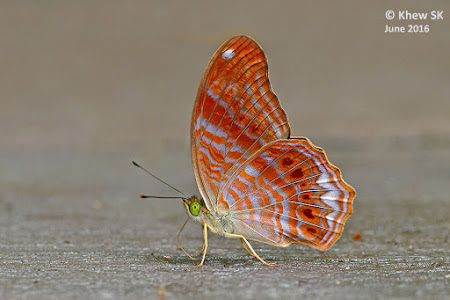


The year started out pretty well for the butterflies, and was admittedly much better than 2015. However, there seems to be a perceptible decline in both numbers and diversity in Singapore compared to, say, a decade back. The environmentalists will probably point at the irreversible damage done by the relentless development across the island.
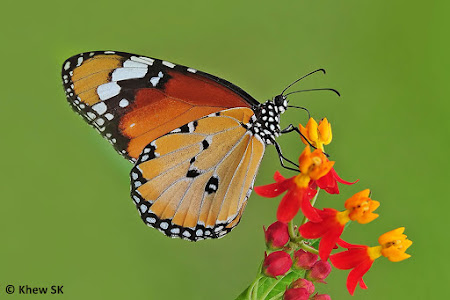


But then again, there are promising signs preserving more greenery in our environment and efforts in habitat enhancement and biodiversity conservation initiatives. I recall in the mid 1990's when I was doing butterfly surveys for the National Parks Board, the Plain Tiger (Danaus chrysippus chrysippus) was actually quite uncommon! The intentional planting of its caterpillar host plants in urban parks and gardens has made this species quite common today, and one can regularly see this pretty butterfly fluttering slowly in our parks and gardens.
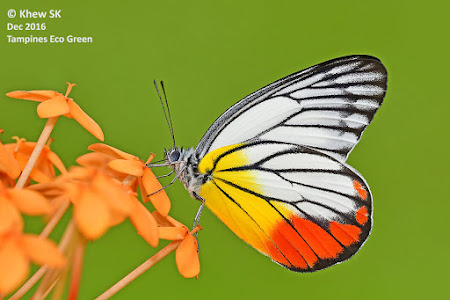


Could climate change be another factor? After all, we did experience the 'hottest day' on record here (and globally) in 2016. With the constant increase in average ambient temperatures, how would the butterflies' ecological survival be under threat? Fortunately, the annual scourge called the "haze" didn't affect us much this year, as it appears that some concerted effort by the Indonesian government did some good to minimise the burning of forests by large corporations driven by commercial gain.


A butterfly survey at Pulau Ubin in 2016

In our review for 2015, we take a look back at the key activities that ButterflyCircle contributed to - from butterfly education, conservation and awareness-promoting activities. Our efforts continued to feature prominently in collaboration with NParks and community activities. This year, our buddy group from Nature @ Seletar Country Club lent a much-needed helping hand to our activities.


Our social media platform, the Butterflies of Singapore FaceBook Group, continues to be very active, with members from all over the world coming in to share their photos and passion for butterflies. Membership is almost 6,500 on the group, and there are many daily posts from enthusiasts from all over. The sharing and learning is useful to everyone who is keen to find out more about butterflies.



ButterflyCircle's forum is still maintained to store a repository of information, photos and discussions all the way back to 2004 when it was first started. Despite not being as active as before, historical discussions and identifications of new discoveries are useful to look back on for reference, as new information surfaces. We have to thank Dr TL Seow, whose expertise and keen eye for details has helped in a big way, in the identification of cryptic and hard-to-ID species. Thanks also to Anthony Wong, who helped set up the forum and maintaining it all these years.


The Butterflies of Singapore Blog continued to be a repository of butterfly-related articles which shared information, not only with the community in Singapore, but around the world . The blog, now into its 9th year, has featured over 800 informative articles to anyone with more than just a fleeting interest in butterflies - from biology to ecology to life histories to plants and photography.
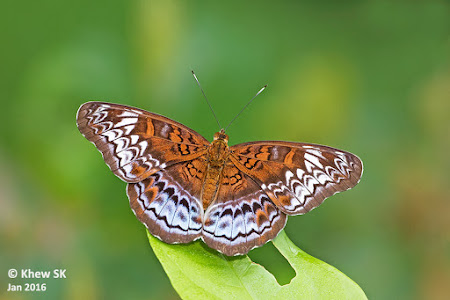


To have the endurance and determination to maintain the blog takes a lot of effort. The research, sourcing for and selecting photographs, composing and writing takes quite a bit of single-mindedness and focus. Maintaining a steady flow of at least one article per week for 9 years is not easy. This is where I must always acknowledge the help of Horace Tan, who has penned so many articles in this blog, especially for his ever-popular life histories series.
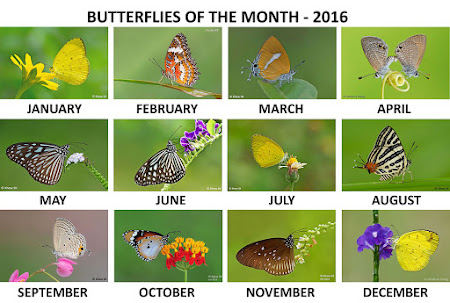


The regular Butterfly of the Month series continues into its ninth year in 2016, and has thus far featured a total of 110 butterfly species. Every article features multiple photos of each species (featuring the excellent work by ButterflyCircle members) with a write-up that weaves in personal stories and observations, and more detailed descriptions of the feature butterfly of the month.
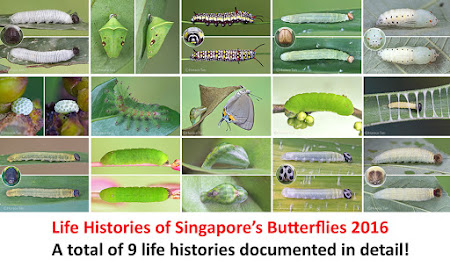


Our early stages expert, Horace Tan added nine more detailed and meticulous documentation of the life histories of Singapore butterflies this year. A total of 193 fully documented life histories are now featured on this blog - an awesome digital library of the early stages of butterflies that are "made in Singapore". Work on Vol 2 of the Caterpillars of Singapore's Butterflies is in progress.
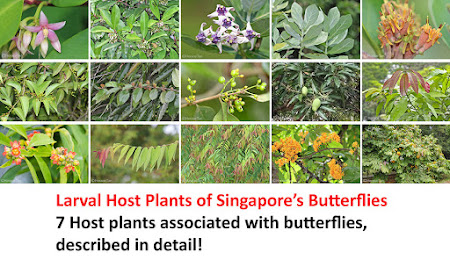


Horace's series on the larval host plants of butterflies continues in 2016, with the detailed documentation of 7 local host plants that the caterpillars of various species of butterflies feed on. Each article comes with more detailed botanical data on the plant, as well as how the plant serves as a host for the caterpillars of various butterflies.
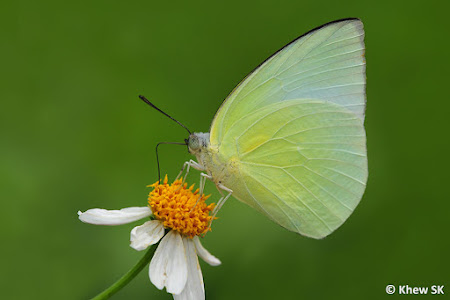
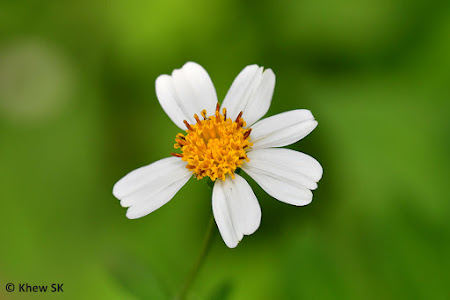
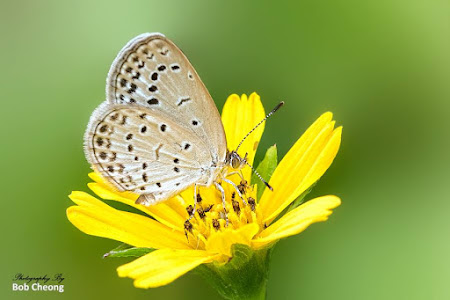


Two favourite butterfly nectaring plants in Singapore

We also featured two species of our butterflies' favourite nectaring plants - the Spanish Needle and Singapore Daisy. Both are considered "invasive weeds" but nevertheless packed with nectar that our winged jewels love. These two plants are found more commonly than before, as creators of new butterfly gardens in Singapore add them to their palette of butterfly-attracting plants.



ButterflyCircle's overseas outing group shots in 2016 (Beer usually features prominently at our meal sessions)

ButterflyCircle group outings also brought members to Fraser's Hill, Chiangdao, Betong and other places further up north. It has always been exciting to photograph new species and for that moment of euphoria when encountering that 'lifer' amongst the rarities that can be found in the forests of our neighbouring countries.  Special thanks, as always to Antonio our friendly Italian giant for facilitating our butterfly tours in Thailand.
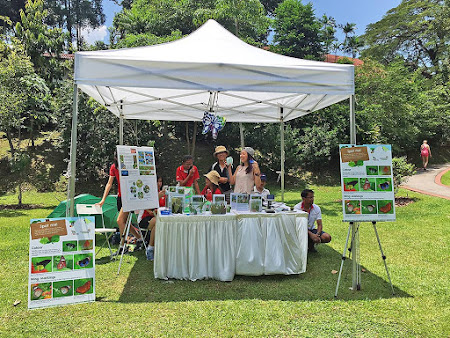

Nature @ Seletar CC and ButterflyCircle at FOB2016

Our community engagement and education activities continued in 2016. This year, with added reinforcements from Mr Foo and his enthusiastic bunch from Nature @ Seletar CC group, we co-participated in many surveys, outings and talks. The 5th Festival of Biodiversity was helmed by Mr Foo and his gang, who put up a butterfly ID station as part of the activities of FOB2016.
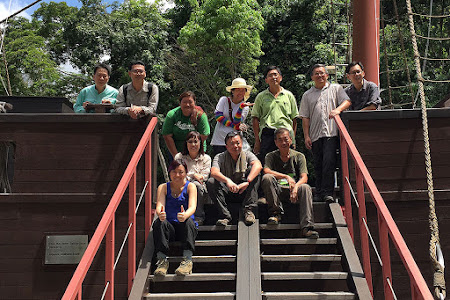
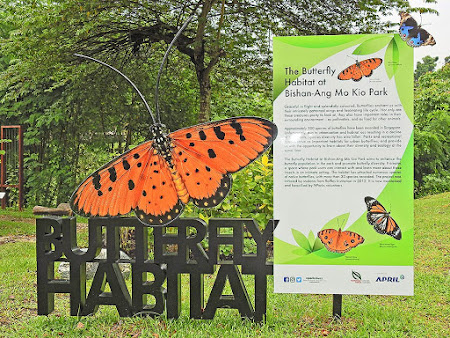

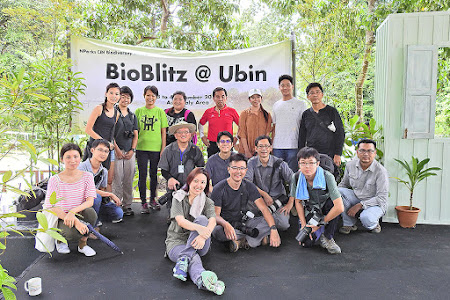
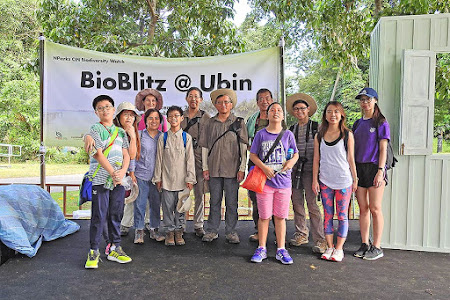

Group outings and surveys in 2016

Together, ButterflyCircle and Nature@SCC also participated in the OBS Ubin Field Survey, Ubin Day 2016, a "Planting for Butterflies" talk at NParks' Parks Festival in November and the Ubin BioBlitz survey in early December. It was also encouraging to see the younger generation who are passionate about nature conservation and green issues, coming forward and being more active in environmental protection initiatives and projects.
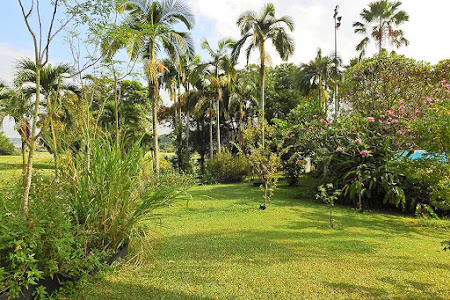
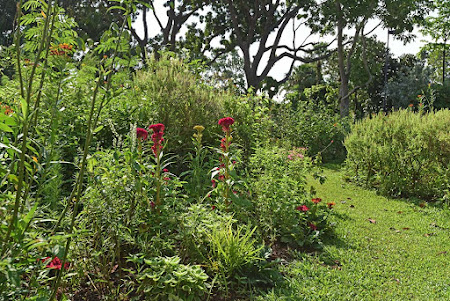

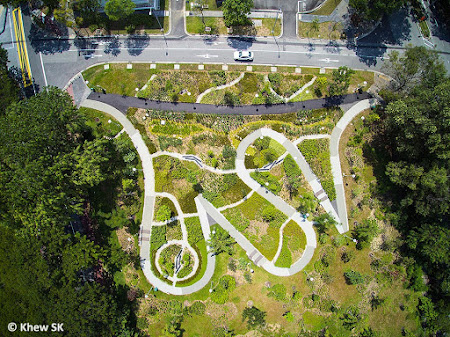

Some of our featured butterfly watching/photography locations in Singapore

In our Butterfly Photography locations in Singapore, we introduce 4 good destinations for butterfly watching and photography this year - Seletar Country Club, Gardens by the Bay (Meadows), Fusionopolis North and Upper Seletar Reservoir Park. A separate article also discussed the "fall" of a previously good butterfly garden at Alexandra Hospital, which deteriorated badly due to the use of pesticides and neglect (from the butterfly habitat point of view).

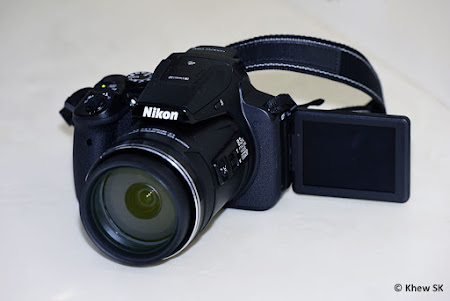


Two articles about butterfly photography were also posted in 2016, as a primer to introduce butterfly photography to the community. These two articles featured the hardware that are used by ButterflyCircle members to capture the beauty of butterflies in scintillating and minute detail. More articles are being prepared and will be presented next year.
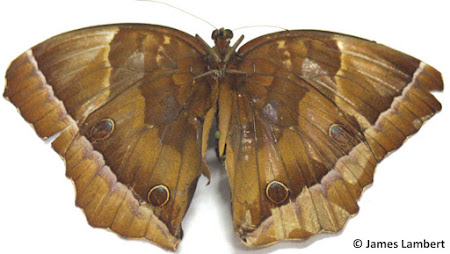
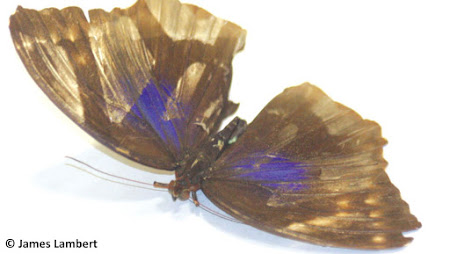

Latest discovery of the Dark Jungle Glory with indisputable evidence by Asst Prof James Lambert of the NIE

In terms of species addition to the Singapore checklist, a paper that is jointly written by Anuj Jain is currently under review and should be available in the scientific journal Biotropica in the coming year. In the paper, more species (mainly vagrant or single-sightings) were added to the checklist. One more species found in 2016, by Asst Prof James Lambert was a dead Dark Jungle Glory (Thaumantis noureddin noureddin) in Nanyang Technological University.
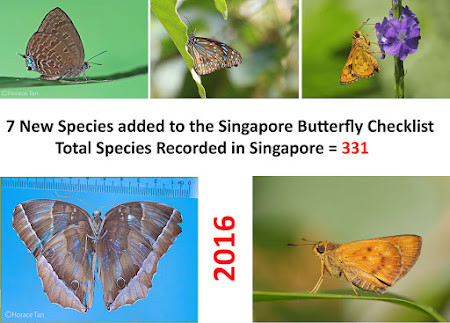

Some of the new additions to the Singapore Checklist in 2016

Over the years, Dr TL Seow has helped us identify a number of cryptic Arhopala and Hesperiidae and the following will be added to the checklist together with the larger species found in 2016 :

  1. The Bright Oakblue (Arhopala sublustris ridleyi) - bred by Horace Tan and ID'ed by Dr Seow TL
  2. The Large Cornelian (Deudorix staudingeri) by Anuj Jain
  3. The Purple Spotted Flitter (Zographetus ogygia ogygia) - recorded by Jerome Chua and Jonathan Soong in Sep 2012 and ID'ed by Dr Seow TL.
  4. The White Club Flitter (Hyarotis microsticta) by Yong Yik Shih
  5. The Ganda Dart (Potanthus ganda ganda) - spotted as early back as in 2011 on BC's forum and identified by Dr Seow TL.
  6. The Dark Blue Tiger (Tirumala septentrionis septentrionis) - finally a photographic evidence by Chung Cheong although this species has been seen before, but with no photo/specimen record.
  7. The Dark Jungle Glory (Thaumantis noureddin noureddin) by James Lambert
With these additions, further sightings and/or voucher specimens are necessary to validate their status in Singapore, under the paper's definitions of extant, migratory or vagrant. Although in the cases of the Bright Oakblue, Purple Spotted Flitter and Ganda Dart, these three are probably resident species which were overlooked due to their cryptic appearance. With these additions, the Singapore checklist now records a total of 331 species (up from 324 in 2015).
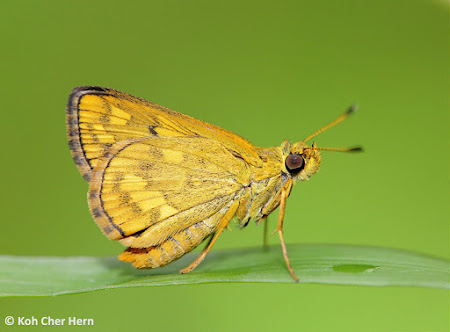
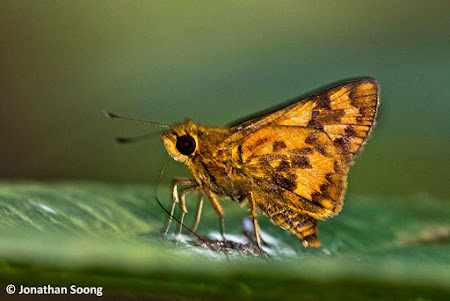
Two new cryptic Potanthus species - possibly P. juno (top) and P. mingo (bottom) which requires further investigation before being added to the Singapore Checklist in due course

There have been other cyptic Potanthus spp. that have been identified by Dr Seow TL as P. mingo, P. confucius, and P. juno, either bred or photographed and discussed in ButterflyCircle's forums, but we will leave these species out for the moment, until we have researched more into their IDs, and these, together with some Arhopala may be added to the checklist after further validation in due course.


Let's leave the bad memories of 2016 behind...

And on this final day of 2016, we look back at a rather tumultuous year with mixed feelings and wait in anticipation of a better and more peaceful 2017 ahead. I would like to take this opportunity to wish everyone a resounding...
Happy New Year
... and may the world be a better place for everyone in 2017!

Text by Khew SK : Photos by Chng CK, Chung Cheong, Antonio Giudici, Huang CJ, Khew SK, James Lambert, Simon Sng, Jonathan Soong and Horace Tan