An Outing to Various Locations near Ipoh, Malaysia

A male Rajah Brooke's Birdwing puddling on the hot damp sand at Kuala Woh
After our recent butterfly outing to Mahua Waterfall in Sabah, East Malaysia, in April this year, our butterfly-shooting wanderlust called again. This time, at the suggestion of Cheng Ai, our latest newbie in the group, we headed off to Ipoh, and to visit our favourite shooting locations at Gua Tempurung, Kuala Woh and the area around Gopeng in the Malaysian state of Perak.

And off we go!

Our journey from Singapore started at an unearthly hour of 5:30am in the morning, to take advantage of the cooler hours of the day and to primarily to avoid any jams at the border crossings into Malaysia. After clearing customs and immigration at Tuas Checkpoint, we were happily on our way north. After a short break for a quick bite at one of the highway pitstops, Cheng Ai zoomed all the way northwards, staying within the speed limit (most of the time!).


The iconic landscape of sheer limestone cliffs are an indication that we are near Ipoh
Along the N-S Expressway, the karst landscape that appeared on both sides of the road signalled that we were nearing our destination. The limestone outcrops and sheer vertical hill surfaces on the hills covered with lush vegetation are typical of the natural landscape in the state of Perak in Malaysia. Karst is landscape underlain by limestone which has been eroded by water through dissolution, producing various formations, these include the limestone hills and caves.
Day 1 : Gua Tempurung


The environment around Gua Tempurung
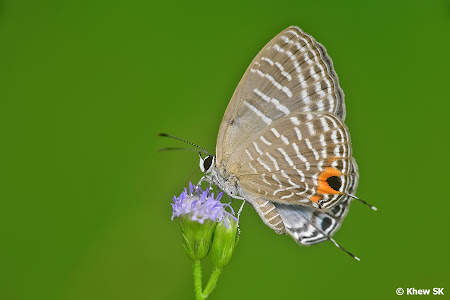
After lunch at Gopeng town, we headed for one of our target locations for shooting around the tourist attraction of Gua Tempurung. This cave is one of the longest cavern networks in Peninsular Malaysia and runs 1.6km in the heart of a large limestone hill. Taking advantage of the forested areas around the cavern network, and the stream that comes out of the caves, the area proved to be quite fruitful for butterfly-shooting on many of our earlier trips to this area. In particular, the White Dragontail (Lamproptera curius curius) makes a regular appearance in this area.

The signature White Dragontail that is often found around Gua Tempurung's stream banks
This time again, the White Dragontail did not disappoint, but only one appeared and posed for us to shoot, complete with opened wings and feeding on the flower of the White Weed. As it was past the annual peak season for butterflies, the Pieridae that we saw on previous outings were glaringly absent. There were fewer butterflies around than our earlier trips here, and the overcast sky didn't help one bit. A favourite spot where we used to encounter many species had been cleared of vegetation, and added to the low butterfly count.
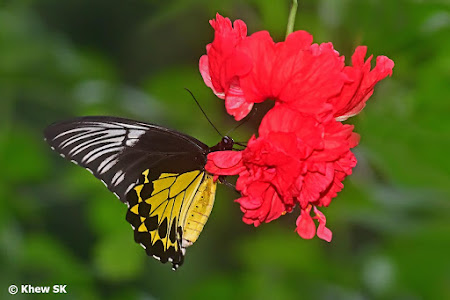
A female Malayan Birdwing feeding on nectar from a Hibiscus flower
Nevertheless, it is an area that is worth visiting again in future, as there will always be something unexpected that may turn up, as many of our earlier visits proved. As it started to drizzle a bit, a large female Malayan Birdwing (Troides amphrysus ruficollis) came down to the Hibiscus bush to feed on the bring red flowers. As the weather looked like more rain, we called it a day and headed to Ipoh town, and after checking into our boutique hotel with its interesting decor, we headed out for dinner. It was an early night for all of us, as it had been a long day of driving and shooting, and we settled in for a much-needed rest.
Day 2 : Gopeng
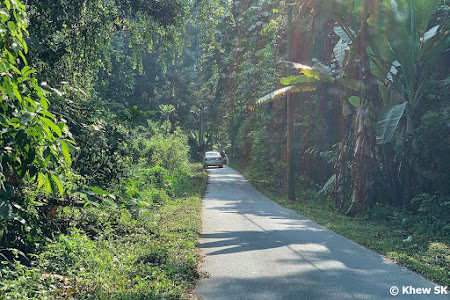
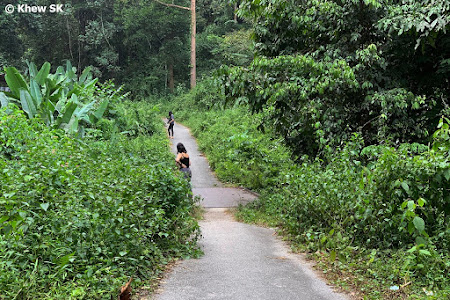
Butterfly-hunting near Gopeng
The next morning, after a generous breakfast, we met up with Steve Tan, who happens to be the son of a renowned butterfly collector in Malaysia, the late Tan Ah Sah. In my school days, I had always marvelled at the unique tailed form of the Great Mormon female f-tanahsahi, which was named after Steve's father.
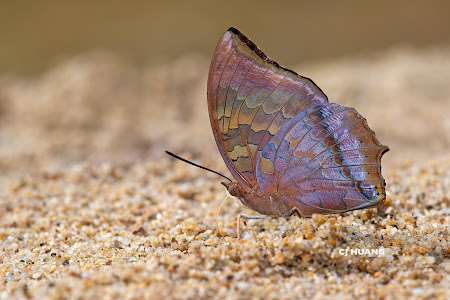
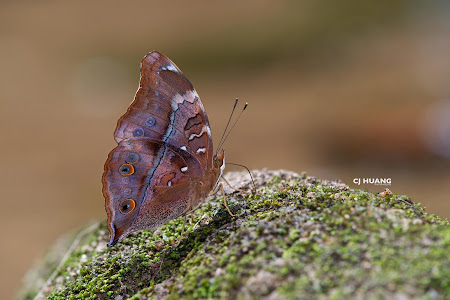
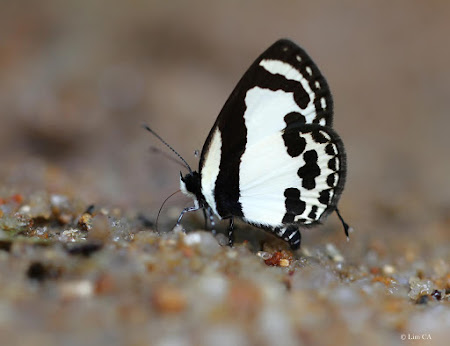

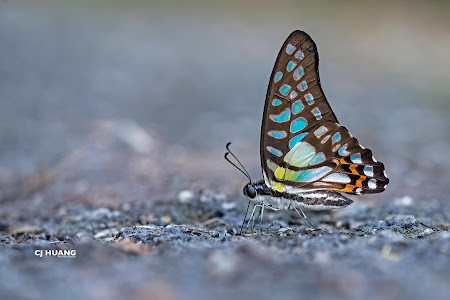
A selection of the butterfly species found at the Gopeng forests
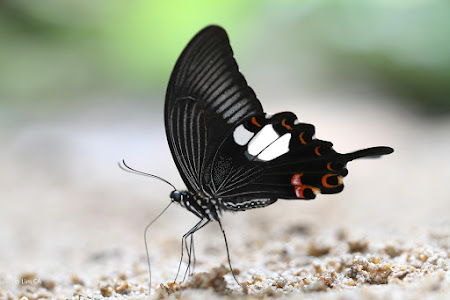
Steve brought us to a forested area near Gopeng where we were treated with a number of Hesperiidae that came out to feed at the roadside flowers. Near a streambank, we also encountered several puddling species that were slightly more cooperative and allowed us to approach them.

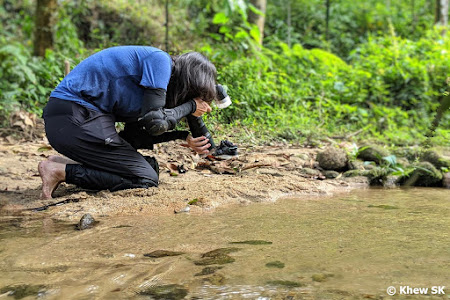
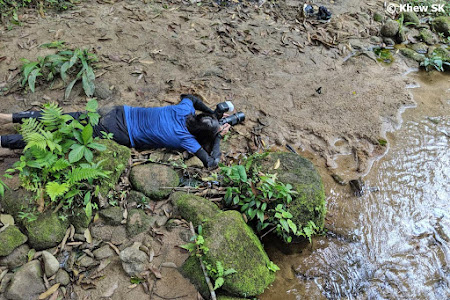
Cheng Ai hard at work at a streambank puddling ground
As it was durian season, we also managed to help ourselves to a couple of fruits that we bought off the local villagers. All too soon, it was back in Ipoh for dinner and a good rest before our final day of shooting at Kuala Woh.
Day 3 : Kuala Woh Recreational Forest


The large pristine forest around the Kuala Woh Recreational Park. We hardly walked about 1-2 km radius from the main visitor centre
I recall that in the past two visits to Kuala Woh in 2011 and 2014, there were always Rajah Brooke's Birdwings (Trogonoptera brookiana albescens) flying around and puddling in numbers. We weren't disappointed this time around. As we made our way to the banks of Sungei Batang Padang, we were greeted with several cruising Rajah Brooke's Birdwings, fluttering with nonchalance with their black and emerald wings shimmering in the bright sunshine.
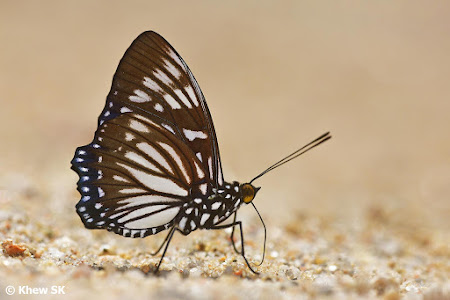
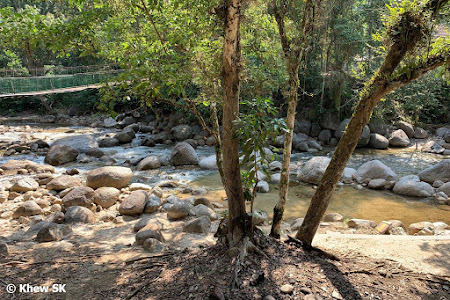
It was a Monday morning, and the usual weekend picnickers and crowds were thankfully absent. The environment was quiet with just a few visitors around. Over at the sandbanks across the river, we saw a few clusters of puddling Rajah Brooke's Birdwings in the distance. It was rather quiet with not many butterflies flying around compared to our previous trips, but a male Courtesan came down to puddle for a while.
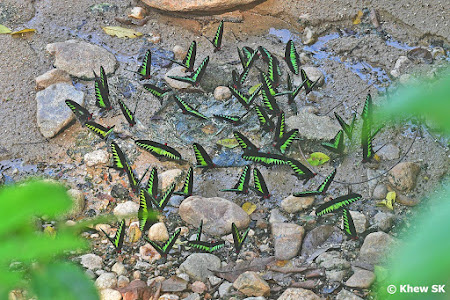
A congretation of Rajah Brooke's Birdwings. How many can you count?
We crossed the suspension bridge over the river and went over to check the Rajah Brooke's congregation on the sandy banks across. This time around, there appeared to be different congregations of larger numbers. In one of the larger clusters, we counted at least 50 of these magnificent 'kings' puddling together.
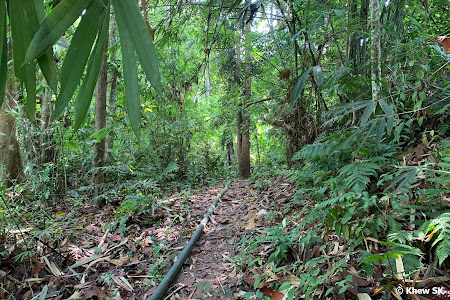

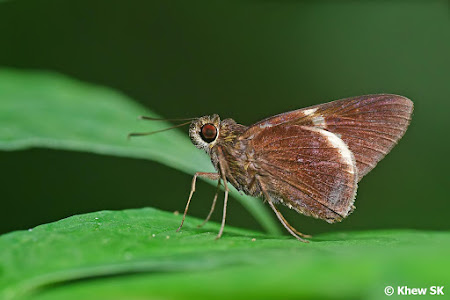
A rare White-Tipped Palmer in the bamboo forest at Kuala Woh
After having our fill of these birdwings, we took a walk around the forested area. Other than the usual forest species, we were happy to encounter a rare White-Tipped Palmer (Lotongus calathus) lurking amongst the bamboo groves. There were some Arhopalas around, but were too skittish to shoot.

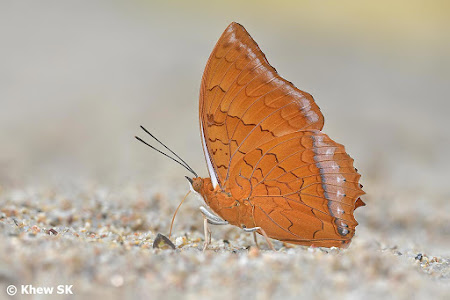
A bright orange Malay Rajah came down to puddle at the stream bank
Back at the river banks, a Malay Rajah (Charaxes distanti distanti) came down to puddle. Comparatively rarer than the Tawny Rajahs that we saw on this trip, the distinguishing feature of this species is the costal white streak on the underside of the forewing. A few other 'commoners' also came down to check on us, amongst them a Blue Glassy Tiger, Magpie Crow and a Dark Banded Ace.

It is interesting to note that the Rajah Brooke's Birdwings puddle at the areas where the sand is hot to the touch and the water temperature can sometimes be almost scalding. It is likely to be going after the sulphurous minerals from the hot springs in the area.
Just after 3pm, the skies turned dark and it started pouring. But we were happy that our date with the "king" was successful, and we had our fill of shots (and videos) once again of the impressive Rajah Brooke's Birdwings at Kuala Woh.
Day 4 : Back Home

We set out on the road after breakfast heading off to the N-S Expressway and a 6-hour drive back to Singapore. As we were making good time, we decided to take a detour in to Ayer Keroh near Malacca to visit the Malacca Butterfly and Reptile Sanctuary. This eco-attraction was opened in 1991 and has continued to evolve over the past 28 years.

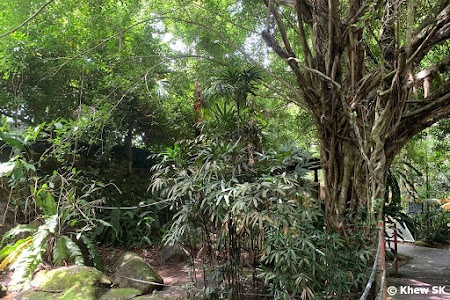
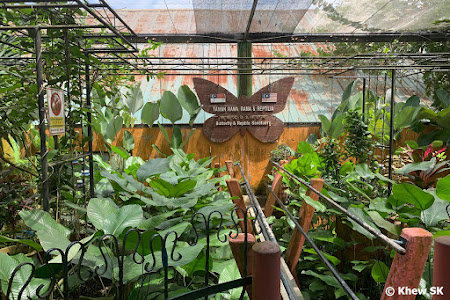
The environment has aged well, with the vegetation lush and well integrated into the facilities and insects and animals that the Sanctuary showcases. Of particular interest is its butterfly breeding programme, which has successfully achieved a sustained breeding of the Tree Nymph (Idea lynceus) for a long time. The Sanctuary's conservation programme and breeding methodology is the brainchild of its owner, Gerard Wong and his team.

The signature Tree Nymph (Idea lynceus) at the Malacca Butterfly and Reptile Sanctuary
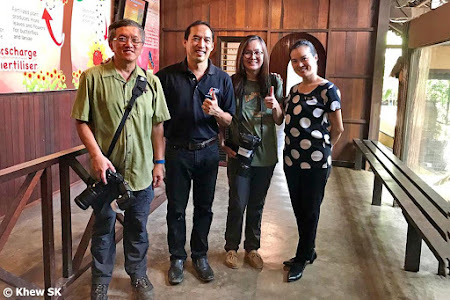
A group shot with Gerard and Elaine at the Malacca Butterfly and Reptile Sanctuary
We also managed to get Gerard and his wife Elaine to show us around the Sanctuary and shared stories about the breeding of various species of butterflies. As we needed to head back home, we promised to return to the Sanctuary for a longer visit the next time around!
It was a good trip up north an enjoyable 4-day break for us, and we finally crossed the Tuas Checkpoint into Singapore just past 6:30pm after heaving a sigh of relief over the drama at the Malaysian side of the link. Note to Cheng Ai (and everyone else) - if you need to hide your passport for safekeeping, please do not hide it so well, that you cannot find it when the immigration officer is waiting for us at the checkpoint! :)
And so ends another butterfly adventure as we look forward to the next longer trip further up north in a few months' time.
Text by Khew SK : Photos by Huang CJ, Khew SK and Lim Cheng Ai.


A female Malayan Birdwing feeding on nectar from a Hibiscus flower
Nevertheless, it is an area that is worth visiting again in future, as there will always be something unexpected that may turn up, as many of our earlier visits proved. As it started to drizzle a bit, a large female Malayan Birdwing (Troides amphrysus ruficollis) came down to the Hibiscus bush to feed on the bring red flowers. As the weather looked like more rain, we called it a day and headed to Ipoh town, and after checking into our boutique hotel with its interesting decor, we headed out for dinner. It was an early night for all of us, as it had been a long day of driving and shooting, and we settled in for a much-needed rest.
Day 2 : Gopeng


Butterfly-hunting near Gopeng
The next morning, after a generous breakfast, we met up with Steve Tan, who happens to be the son of a renowned butterfly collector in Malaysia, the late Tan Ah Sah. In my school days, I had always marvelled at the unique tailed form of the Great Mormon female f-tanahsahi, which was named after Steve's father.


A selection of the butterfly species found at the Gopeng forests
Steve brought us to a forested area near Gopeng where we were treated with a number of Hesperiidae that came out to feed at the roadside flowers. Near a streambank, we also encountered several puddling species that were slightly more cooperative and allowed us to approach them.


Cheng Ai hard at work at a streambank puddling ground

As it was durian season, we also managed to help ourselves to a couple of fruits that we bought off the local villagers. All too soon, it was back in Ipoh for dinner and a good rest before our final day of shooting at Kuala Woh.
Day 3 : Kuala Woh Recreational Forest


The large pristine forest around the Kuala Woh Recreational Park. We hardly walked about 1-2 km radius from the main visitor centre
I recall that in the past two visits to Kuala Woh in 2011 and 2014, there were always Rajah Brooke's Birdwings (Trogonoptera brookiana albescens) flying around and puddling in numbers. We weren't disappointed this time around. As we made our way to the banks of Sungei Batang Padang, we were greeted with several cruising Rajah Brooke's Birdwings, fluttering with nonchalance with their black and emerald wings shimmering in the bright sunshine.


It was a Monday morning, and the usual weekend picnickers and crowds were thankfully absent. The environment was quiet with just a few visitors around. Over at the sandbanks across the river, we saw a few clusters of puddling Rajah Brooke's Birdwings in the distance. It was rather quiet with not many butterflies flying around compared to our previous trips, but a male Courtesan came down to puddle for a while.

A congretation of Rajah Brooke's Birdwings. How many can you count?
We crossed the suspension bridge over the river and went over to check the Rajah Brooke's congregation on the sandy banks across. This time around, there appeared to be different congregations of larger numbers. In one of the larger clusters, we counted at least 50 of these magnificent 'kings' puddling together.


A rare White-Tipped Palmer in the bamboo forest at Kuala Woh
After having our fill of these birdwings, we took a walk around the forested area. Other than the usual forest species, we were happy to encounter a rare White-Tipped Palmer (Lotongus calathus) lurking amongst the bamboo groves. There were some Arhopalas around, but were too skittish to shoot.


A bright orange Malay Rajah came down to puddle at the stream bank
Back at the river banks, a Malay Rajah (Charaxes distanti distanti) came down to puddle. Comparatively rarer than the Tawny Rajahs that we saw on this trip, the distinguishing feature of this species is the costal white streak on the underside of the forewing. A few other 'commoners' also came down to check on us, amongst them a Blue Glassy Tiger, Magpie Crow and a Dark Banded Ace.

It is interesting to note that the Rajah Brooke's Birdwings puddle at the areas where the sand is hot to the touch and the water temperature can sometimes be almost scalding. It is likely to be going after the sulphurous minerals from the hot springs in the area.
Just after 3pm, the skies turned dark and it started pouring. But we were happy that our date with the "king" was successful, and we had our fill of shots (and videos) once again of the impressive Rajah Brooke's Birdwings at Kuala Woh.
Day 4 : Back Home

We set out on the road after breakfast heading off to the N-S Expressway and a 6-hour drive back to Singapore. As we were making good time, we decided to take a detour in to Ayer Keroh near Malacca to visit the Malacca Butterfly and Reptile Sanctuary. This eco-attraction was opened in 1991 and has continued to evolve over the past 28 years.


The environment has aged well, with the vegetation lush and well integrated into the facilities and insects and animals that the Sanctuary showcases. Of particular interest is its butterfly breeding programme, which has successfully achieved a sustained breeding of the Tree Nymph (Idea lynceus) for a long time. The Sanctuary's conservation programme and breeding methodology is the brainchild of its owner, Gerard Wong and his team.

The signature Tree Nymph (Idea lynceus) at the Malacca Butterfly and Reptile Sanctuary

A group shot with Gerard and Elaine at the Malacca Butterfly and Reptile Sanctuary
We also managed to get Gerard and his wife Elaine to show us around the Sanctuary and shared stories about the breeding of various species of butterflies. As we needed to head back home, we promised to return to the Sanctuary for a longer visit the next time around!
It was a good trip up north an enjoyable 4-day break for us, and we finally crossed the Tuas Checkpoint into Singapore just past 6:30pm after heaving a sigh of relief over the drama at the Malaysian side of the link. Note to Cheng Ai (and everyone else) - if you need to hide your passport for safekeeping, please do not hide it so well, that you cannot find it when the immigration officer is waiting for us at the checkpoint! :)
And so ends another butterfly adventure as we look forward to the next longer trip further up north in a few months' time.
Text by Khew SK : Photos by Huang CJ, Khew SK and Lim Cheng Ai.