06 August 2016

Butterfly of the Month - August 2016

Butterfly of the Month - August 2016
The Club Silverline (Spindasis syama terana)


The hot humid weather at the height of the summer months seems to have brought out a relatively good season of butterflies across the region. There has been a good series of butterfly postings on our FaceBook Group from Vietnam to Thailand, Malaysia and Singapore. It would be interesting to trace butterfly activity over the years and ascertain the effect weather patterns have on the abundance and diversity of species across the region.


Reading the headlines on news portals over the past few weeks can be rather depressing as the series of terrorist and other disastrous events caused by psychotic individuals (or groups) continued to hit the news. First it was Orlando. Then Nice. And Bavaria. Munich. Kabul. Fort Myers. Sagamihara. And the coup in Istanbul. One author calls it 'toxic masculinity'. She goes on to say "Toxic masculinity finds expression in fascism, sexism, white supremacy, Islamophobia, xenophobia, jingoism, capitalism, homophobia, rape culture and patriarchy, in the glamourisation of military culture."


And then there was the recent arrest of 6 suspects who were in the process of launching a rocket from nearby Batam island in Indonesia towards Singapore. Whilst some netizens laughed it off as "additional fireworks" for Singapore, as our island nation celebrates our National Day next week, authorities are not amused. The threat is indeed real, and I recall one retired Minister saying "it's not the size of the explosion that is of concern, but the signature of the blast". Food for thought... as far as our hitherto safe Little Red Dot is concerned.


Our Prime Minister's visit to the US made the news in the past week, showcasing the close diplomatic ties and support between the US and Singapore over the years. All the more apt, as the US is on the threshold of a change in the Presidency and no one can predict how the world's biggest economic power will view our part of the world, as far as its future foreign policy is concerned, particularly towards Asia. It's something that will be closely watched as Americans go to vote soon.


Interestingly, an unlikely dinosaur-themed denim pouch stole the news limelight after Ho Ching carried it to the official arrival ceremony at the White House in Washington DC. The S$14.80 pouch, designed by Seetoh Sheng Jie, who has autism, created more buzz on the news portals than one could ever imagine such a humble pouch would! Goes to show that the value and meaningfulness of one's actions and material possessions are more important than their cost and opulence.


Let's turn to our Butterfly of the Month for August 2016, which is Singapore's 51st birthday after independence. This month, we feature a small but attractive butterfly from the Aphnaeinae subfamily of the Lycaenidae family - the Club Silverline (Spindasis syama terana). This is one of two species of the Silverlines that are found in Singapore.


Both the Club Silverline and its closely-related cousin, the Long Banded Silverline (Spindasis lohita senama) are more often found in urban parks and gardens than in the forested nature reserves of Singapore. The Silverlines are characterised by their banded appearance on the undersides of their wings, centred with attractive silvery markings. The hindwing bears a pair of delicate filamentous white-tipped tails.


Club Silverlines feeding on the flowers of Leea rubra and Cordia cylindistrachya

Both species can be considered 'moderately common' and often frequent the same locations. The caterpillars feed on a variety of plants. The Club Silverline is a fast-flyer and is regularly seen feeding on the flowers of the Red Tree Shrub (Leea rubra) and StringBush (Cordia cylindristachya). At times, if disturbed, it flies off quickly and perches on the underside of a leaf to hide itself.


An aberrant Club Silverline with the forewing sub-apical markings distinctly detached

The Club Silverline usually stops and rests with its wings folded upright and sometimes observed stopping on a blade of grass, with its head facing downwards. At certain times of the day, however, it can be observed stopping with its wings opened flat to sunbathe. This behaviour, although not common, is observed in both the male and female of this species.


Male and female Club Silverline sunbathing, showin the uppersides of their wings

The male is deep aquamarine blue on the upperside with broad black apical borders on the forewing. The female is a dull steely-blue above and generally unmarked, although the underside markings can often be perceptible through the wings. The underside is an whitish-cream ground colour with black streaks infilled with silvery streaks.  In some individuals, the black streaks may be replaced with burgundy streaks instead (more like the Long Banded Silverline)


A Club Silverline with the bands in red rather than the usual black

The distinguishing markings between this species and its closely-related cousin, the Long-Banded Silverline, can be found in the basal area on the underside of the forewing. The basal streak is L-shaped in the Long Banded Silverline, but club-shaped in the Club Silverline. The hindwing has two white-tipped tails emerging from a prominent orange tornal patch


On behalf of ButterflyCircle members, we would like to take this opportunity to wish all our Singaporean readers a Happy 51st Birthday on our National Day on 9 Aug 2016!

Majulah Singapura!


Text by Khew SK : Photos by Sunny Chir, Huang CJ, Khew SK, Koh CH, Loke PF, Bobby Mun, Anthony Wong, Mark Wong and Benjamin Yam

30 July 2016

Life History of the Chocolate Royal v2.0

Life History of the Chocolate Royal (Remelana jangala travana)


Butterfly Biodata:
Genus: Remelana Moore, 1884
Species: jangala Horsfield, 1829
Subspecies: travana Hewitson, 1865
Wingspan of Adult Butterfly: 31-35mm
Caterpillar Local Host Plants: Ixora 'Super Pink' hybrid/cultivar. of Ixora chinensis (Rubiaceae, common name: Ixora, chinese name: 龙船花), Eurya acuminata (Theaceae, chinese name: 尖叶柃), Bridelia tomentosa (Phyllanthaceae, common names: Kenidai, Kernong, Kernam, chinese name: 土蜜树).


A female Chocolate Royal.

Physical Description of Adult Butterfly:
On the upperside, the male is deep lustrous purple with broad brown border on both wings; the female is paler purple and different from the male in having basal areas of spaces 2 and 3 entirely purple. On the underside, both sexes are brown with conspicuous cell-end bars and post-discal series of dark brown striae on both wings. The prominent black tornal spot and the black marginal spot in space 2 are bothcrowned with brilliant metallic green/blue scaling. Between and beyond the two spots, the marginal area of spaces 1a, 1b and 3 is also covered with same metallic scaling. There are two pairs of white-tipped tails at the end of veins 1b and 2.


Field Observations:
This species is moderately rare in Singapore and can be found in forested areas of the nature reserves. There are also infrequent sightings of this species in urban parks and gardens. Adults are fast flyers and make rapid sorties among foliage. Both sexes have been observed to visit flowers of various plants for nectar. The male has also been observed to puddle on wet grounds.

23 July 2016

Butterfly Photography 101 - Part 2

Butterfly Photography 101
Part 2 - Macro Photography and Magnification Devices


In my earlier article, we introduced a variety of image-capturing equipment that can take pictures of butterflies. These range from a humble smartphone with a camera, to a wide spectrum of point-and-shoot digital cameras, to the high end Digital Single Lens Reflex (DSLR) cameras with full-frame or APS sized (cropped frame) sensors.


Some serious (!) DSLR equipment with dedicated lens, multiple flashes, tripod and tripod for macro photography

In Part 2 of the series, we leave the lower end digital cameras aside, and assume that you have now jumped onto the DSLR bandwagon and are looking for the appropriate magnification devices to start you on your journey to butterfly photography. As you may have already been researching on the internet, the range of equipment to couple with your DSLR camera body can be quite mind-boggling. Learning more about each different device, you may end up having more unanswered questions!


A 1:1 magnification shot of a Cycad Blue

Firstly, let us define what we typically refer to as "macro photography" with reference to butterfly photography. The term "macro" has often been loosely used to market a whole range of equipment, ranging from general purpose lenses, close-up filters to the true specialised macro lenses. So let us define the basic parameters of what constitutes a good macro device. A macro lens or any photographic combo in macro photography begins with a one-to-one ratio (depicted frequently as 1:1 ratio).


A 1:1 macro shot of a large butterfly, the Saturn (Zeuxidia amethystus amethystus)

So what is a 1:1 ratio? A lens or a combination of devices attached to any lens that can achieve a 1:1 ratio means that the lens or lens combo is "capable of projecting the real life size of a subject onto the sensor of the camera body". Not all macro lenses nor those which are labelled as "macro lenses" are capable of this 1:1 ratio. For example, the Sigma 18-200mm F3.5-6.3 DC Macro OS HSM is touted as a "macro" lens, but if you look at the technical specifications of the lens, the maximum magnification of the lens is only 1:3. This means that you can only get one-third of the actual size of a subject on the sensor at the minimum focusing distance.


A simple graphical comparison and explanation of magnification ratios © Nancy Rotenberg and Michael Lustbader

The slide above shows the various magnification ratios from 1:1 to 2:1. So when you pick an all-in-one "macro" lens for your butterfly photography, take a look at the technical specifications of the lens and check to see what its maximum magnification is. Whilst a non 1:1 lens works for general butterfly photography of larger butterflies, you will be hard-pressed to get the details and actual size of a small butterfly with a lens that has a magnification ratio that is 1:2 or 1:4. This is particularly so, when the subject itself is smaller than the sensor of your camera.

So what other photographic devices or attachments that can get you close to 1:1 ratio? A list of possible equipment (from cheapest to the most expensive) is :

  • Reversing Rings with prime/zoom lens combo
  • Stacked lenses via adaptor filter rings
  • Extension tubes
  • Closeup (or diopter) filters
  • Teleconverters
  • Dedicated macro lenses


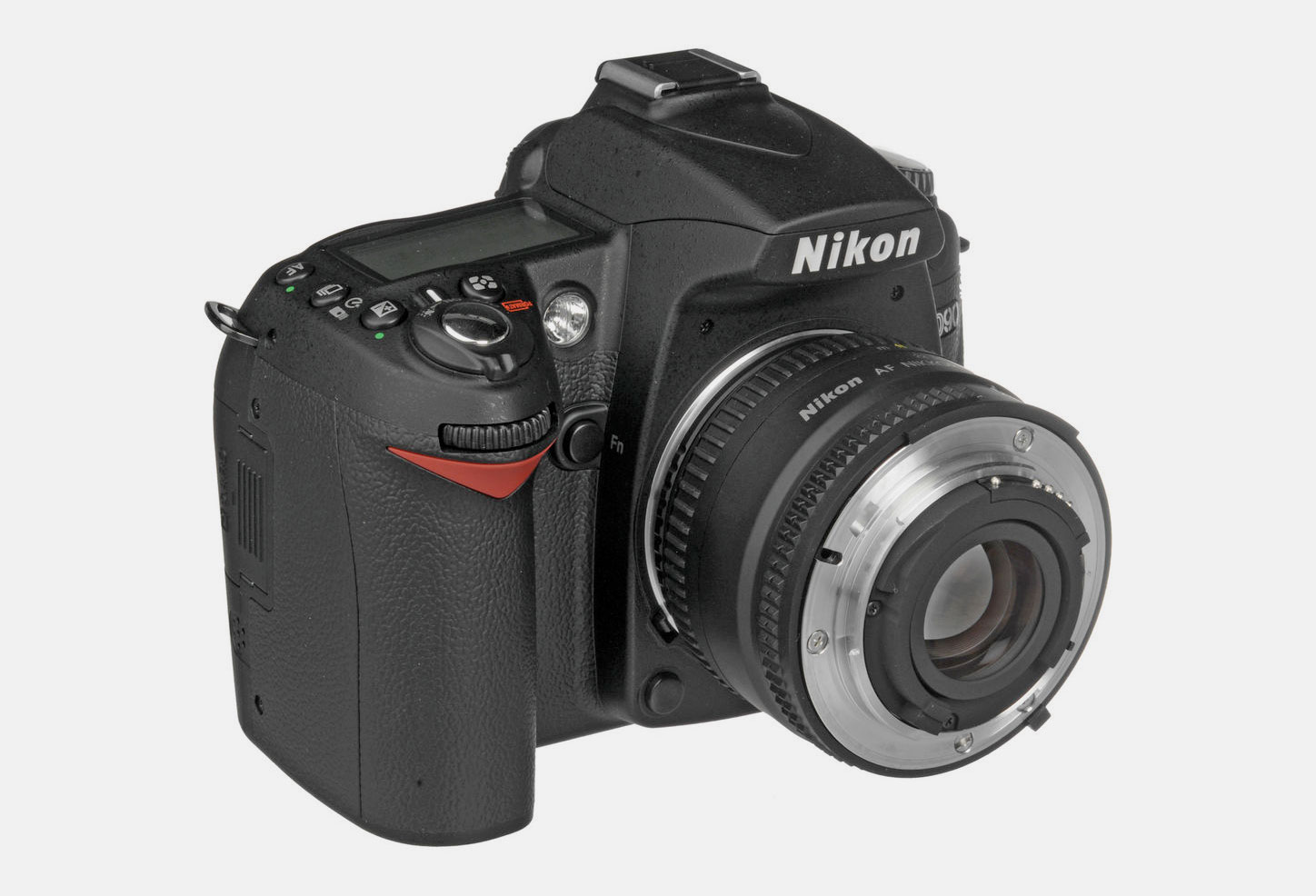
A Nikon system using a reversing ring to reverse an 18-55mm standard zoom lens for close-up photography

Reversing Ring

For enthusiasts who have bought a basic DSLR with a kit lens (e.g. 18-55mm), it is possible to get 1:1 magnification ratio (or even more) by simply purchasing a reversing ring and attaching it to your camera body with the lens reversed. A reversing ring is essentially a simple device that has the camera mount on one side, and screw mount on the other. This allows your lens to be mounted backwards onto your camera.


Using a reversing ring and how a prime lens would look like, from the front, when reversed

This is probably the cheapest option you have, to get larger-than-life images with your existing equipment, without having to spend exorbitant amounts of money on specialised equipment. However, be aware that you lose all electronic controls over aperture, AF and so on, and you will have to manage everything in manual mode. The depth of field is also very shallow, and you may not get the quality of image that you hoped for. A basic article describing how to use a reversing ring for Canon cameras can be found here.

Stacked Lenses


Stacking a Sigma macro lens with a prime lens for high magnification photography

Equally cheap and probably as effective in getting higher magnification on your subjects, is combining two lenses, with one of them reversed. This is possible by using a male-to-male filter coupler. This allows two lenses to be attached facing each other. Combining two short focal length prime lenses give the best results. The formula for calculating the magnification that you can get from stacking lenses is focal length of prime lens divided by focal length of reversed lens. Some explanation on the use of stacked lenses can be found here.

Extension Tubes

Next device up the list is the extension tube. An extension tube works by creating more space between the lens and the digital sensor. By "extending" the lens away from the camera body, you enable yourself to get closer to the subject. As you increase the size of the extension tube, you increase the ability to move even closer. The relationship between the focal length of a lens and the dimension of an extension tube determines how close you can get to a subject while achieving focus. The closer you can get, the greater the magnification.


Extension tubes from 3rd party manufacturer, Uniplus.  Note electrical contacts that allow the primary lens to electronically communicate with the camera body, therefore retaining autofocus and aperture controls

For many lenses, the minimum focusing distance can be reduced by attaching an extension tube (or several extension tubes in tandem) to increase the magnification of the lens. This allows the photographer to go in closer to get a magnification ratio that would otherwise not be possible just with the lens. However, the lens can no longer focus to infinity and you will have to move in and out to get within the focusing distance of the lens with the extension tube combo.


Attaching a 25mm extension tube to a Nikkor 105mm macro lens for greater than 1:1 magnification

If you use extension tubes, buy those with the electrical contacts that still allow the camera body to communicate with the lens. Third party extension tubes are adequate, and these often come in a set of three - 12.5mm, 25mm and 50mm tubes, and cost in the region of SGD$180-$250. As extension tubes have no glass elements in them, there is minimal or no effect on the optics of your existing lenses. Additional information explaining the use of extension tubes, including a magnification ratio calculator can be found here.

Close-Up Filters


A Nikon dual-element close up filter and a standard Hoya +2 diopter close-up filter

The next device that a photographer may want to consider, is a close-up filter. In very layman terms, this is equivalent to using a magnifying glass in front of your eyes to enlarge something that you are looking at. The close-up filter screws in front of your lens, and enlarges the image onto the camera's sensor. As there are many types of such close-up filters with a wide range of diopters, choose the dual element types as these correct for optical aberrations and give you decently sharp images.

Teleconverters

Slightly further up on the list of magnification devices (cost-wise), is the teleconverter (or tele extender). This is basically a magnifying lens that is attached between your camera body and the lens in use. Teleconvertors come in various magnifications like 1.4x, 1.7x, 2.0x and even up to 3.0x. A 2.0x teleconvertor would enable a macro lens that does 1:1 magnification the ability to do 2:1 at the same working distance or 1:1 at twice the working distance.


Two brands of 3rd party 1.4x teleconverters - Left : Sigma APO 1.4x teleconverter.  Right : Teleplus 1.4x teleconverter

The downside of using a teleconvertor is that putting additional glass elements between the primary lens and the camera's sensor implies that there may be some image degradation. Furthermore, the amount of light reaching the sensor is reduced and you will have to increase the aperture to get the correct exposure. A good branded teleconvertor may also set you back about SGD$400 or more!


A Sigma 1.4x teleconverter attached to a Sigma 150mm f/2.8 macro lens

The unique features of using each of these magnifying devices mentioned above can also be combined - i.e. using extension tubes with teleconverters, or teleconverters with close up filters or even all three! However, the combo may be heavy, lopsided and impractical for shooting butterflies in the field.

Dedicated Macro Lenses

The "ideal" lens for photographing butterflies is the dedicated macro lens. Usually more costly than standard lenses, the macro lens is designed for close-up work and most can achieve a 1:1 magnification ratio. The focal lengths of macro lenses can range from 50mm to a high of 200mm. Remember that all these can achieve 1:1 magnification ratio. The longer the focal length of the macro lens, the better the working distance between you and the subject. In the case of butterflies, which may be skittish, a longer working distance makes a difference between getting a good shot of the butterfly, or getting a good shot of the leaf on which the butterfly sat - after it had flown off!


Working distance comparison amongst various 1:1 macro lenses

A table showing a list of the popular 1:1 macro lenses and the working distance (the distance between the subject and the camera's sensor at the closest focusing distance). Note that the choice of lenses will also determine how much you can afford to spend on these specialised lenses. The longer the focal length of the lens, the higher the price. The cost of a dedicated macro lens can range between SGD$600 to SGD$2,200.


Various dedicated macro lenses that feature 1:1 magnification ratios. From left to right : Nikkor 105mm f2.8 Macro, Sigma 150mm F2.8 EX DG OS HSM APO Macro, Tamron SP AF 180mm F/3.5 Di LD[IF] Macro and Sigma APO Macro 180mm F2.8 EX DG OS HSM Macro

Many ButterflyCircle members use the Tamron 180mm macro lens. This is a very capable lens with accurate colour rendition and bokeh. It is relatively light compared with the 180-200mm range of macro lenses from Canon, Nikon and Sigma, although the AF could be better. However, it is an excellent workhorse, robust in design and is a good all-round lens for butterfly photography.


© Tamron Website : Tamron SP AF 180mm F/3.5 Di LD[IF] Macro - an excellent "standard issue" weapon of choice for butterfly shooters

Shorter macro lenses are less expensive and those in the 90-100mm range are quite usable for the more cooperative butterflies. Anything below these focal lengths for macro lenses would not be too practical for shooting butterflies as you will have to go really close to the subject and more often than not, scare the butterfly off before you can take a shot. In recent years, new macro lenses have incorporated gyro-stabilisers into the lenses (IS, OS, VR, VC equivalent) to help deal with motion blur. This feature tends to increase the weight and dimensions of the lenses, and obviously, the price.


And there you go, a very basic article to help photographers who would like to shoot butterflies, decide on the variety of devices that are available to start off their journey in butterfly photography using a DSLR system.

Text and Photos by Khew SK

Butterfly Photography 101 Series :

Part 1 : Hardware and Equipment

References : 

  • The Complete Guide to Close-up and Macro Photography by Paul Harcourt Davies ISBN 0 7153 0800 9
  • How to Photograph Close-ups in Nature by Nancy Rotenberg and Michael Lustbader ISBN 0 8117 2457 3


16 July 2016

Larval Host Plant for Butterflies: Mango

Butterflies' Larval Host Plants #10
The Mango (Mangifera indica)


This 10th instalment of our Butterflies' Larval Host Plants series features Mangifera indica (Mango), a species of the family Anacardiaceae (Cashew or Sumac or Poison Ivy family). This family includes 83 genera and 860 known species, several of which are of economic importance (eg. Cashew, Sumac and Mango). The genus Mangifera contains about 69 species which occur mainly in subtropical and tropical South and Southeast Asia, and a fair number of them bear edible fruits. The species name "indica" has the Latin meaning "of India".

A young, cultivated Mango tree in the Jurong Eco Garden.

Mango is known as the national fruit of India, Pakistan and Philippines. Originated in South Asia and domesticated in India at around 2000 BC, cultivated varieties of Mango have been brought to other tropical and frost-free subtropical regions in East Asia, Southeast Asia, Africa and South America. In mainland Singapore, Mango trees used to be a common sight in fruit farms or rural villages, but nowadays they are more likely found as   wayside trees, as cultivated plants in public parks and gardens,  or in  households on landed properties. Some wild specimens can also be found in abandoned farmlands, wastelands and along the fringes of nature reserves.

Besides the obvious use of the Mango fruits as food, various parts of Mango have been used in traditional medicine for their anti-diuretic, anti-diarrheal and anti-emetic properties. On the flip side, the fruit peel contains allergenic urushiol which could causes skin rash for persons sensitive to such allergens.

Plant Biodata :
Family : Anacardiaceae
Genus : Mangifera
Species : indica
Synonyms : M. amba, M. anisodora, M. austro-yunnanensis, M. domestica.
Country/Region of Origin :  South Asia
English Common Name : Mango, Mango Tree
Other Local Names :  Cuckoo's joy, Mangga, Mammuang, Manga, 芒果.
Larval Host for Butterfly Species: Euthalia aconthea gurda (Baron), Rapala pheretima sequeira (Copper Flash).

A flowering Mango tree in a public housing estate in Jurong.

A large Mango tree found in Mount Faber Park.

Mango is an evergreen tree with a dark green and spreading crown. It can grow to a large tree up to 38-45m in height with its trunk 60-120cm in diameter. The dark grey bark is rough with vertical fissures. It is astringent and is employed against rheumatism and diphtheria in India. The wood has been used in plywood and low-cost furniture.

Both young and mature leaves of a Mango tree.

The leaves are elliptic, elliptic-lanceolate or linear-oblong in shape, 9-40cm in length and 2.5-8 cm in width. They are simple and alternately arranged, and clustered at the tips of branches. Young leaves are initially reddish brown, then turning yellowish green to dark green when fully matured. In some places, young and tender leaves are used to make an infusion for treating early diabetes.

A closer view of a branch of a Mango tree bearing both young and maturing leaves.

The clustered arrangement of leaves at the tip of a branchlet of a Mango tree.

Flowers of Mango are small, 5mm in diameter, white-yellowish, and occur in terminal panicles. These bisexual flowers attract pollinators such as bees, flies, ants and bats.

A terminal panicle bearing flowers and flower buds.

Closer view showing flowers and flower buds of a Mango tree.

A close-up view of a flower of Mango.

Each mango fruit is a green-yellowish-red drupe (a fleshy fruit with thin skin and a central stone containing the seed) with edible flesh, 5-15cm long. The shape could vary from round, oval to kidney-shaped, depending on the cultivated varieties. Young fruits are green in colour while mature fruits are yellow to orange. The soft pulp is typically sweet and juicy. Each fruit bears a single, inedible seed encased in a fibrous coat. Both the seeds and flowers of Mango have been used in the treatment of diarrhea.

Tiny young fruits of Mango.

Developing fruits of Mango, yet to reach their mature size.

Close-up view of a fully developed Mango fruit.

In Singapore, the Mango tree also serves as the larval host plant for two butterfly species: Baron (limenitid) and Copper Flash (lycaenid).

A Baron butterfly.

A Copper Flash butterfly.

Eggs of the Baron are laid on the surface of a mature leaf, whilst those of the Copper Flash are laid on the young leaves or young shoots of Mango.

Two views of an egg of the Baron found in Mount Faber Park.

A close-up view of a tiny egg of the Copper Flash.

Caterpillars of the Baron feed on mature leaves of Mango and typically rest on the leaf upperside with its body axis aligned with the main vein of the leaf. The pale dorsal band and its feathery appearance help to conceal the caterpillar from prying eyes.  Copper Flash caterpillars, in contrast, feed only on the young and tender leaves of Mango. Typically their presence is indicated by a number of attending ants.

A mature leaf of Mango in Mount Faber Park, with a final-instar Baron caterpillar resting on it. Can you spot it?

A closer view of the final instar caterpillar of the Baron.

Two views of a final instar caterpillar of the Copper Flash resting on a young leaf of Mango.

Caterpillars of the Baron typically pupate on the underside of a Mango leaf, whereas those of the Copper Flash will do so on a leaf surface or in leaf litter.

Two views of a pupa of the Baron.

Two views of a pupa of the Copper Flash.

References:
Text and Photos by Horace Tan.