Ecological importance of Parasitic Plants

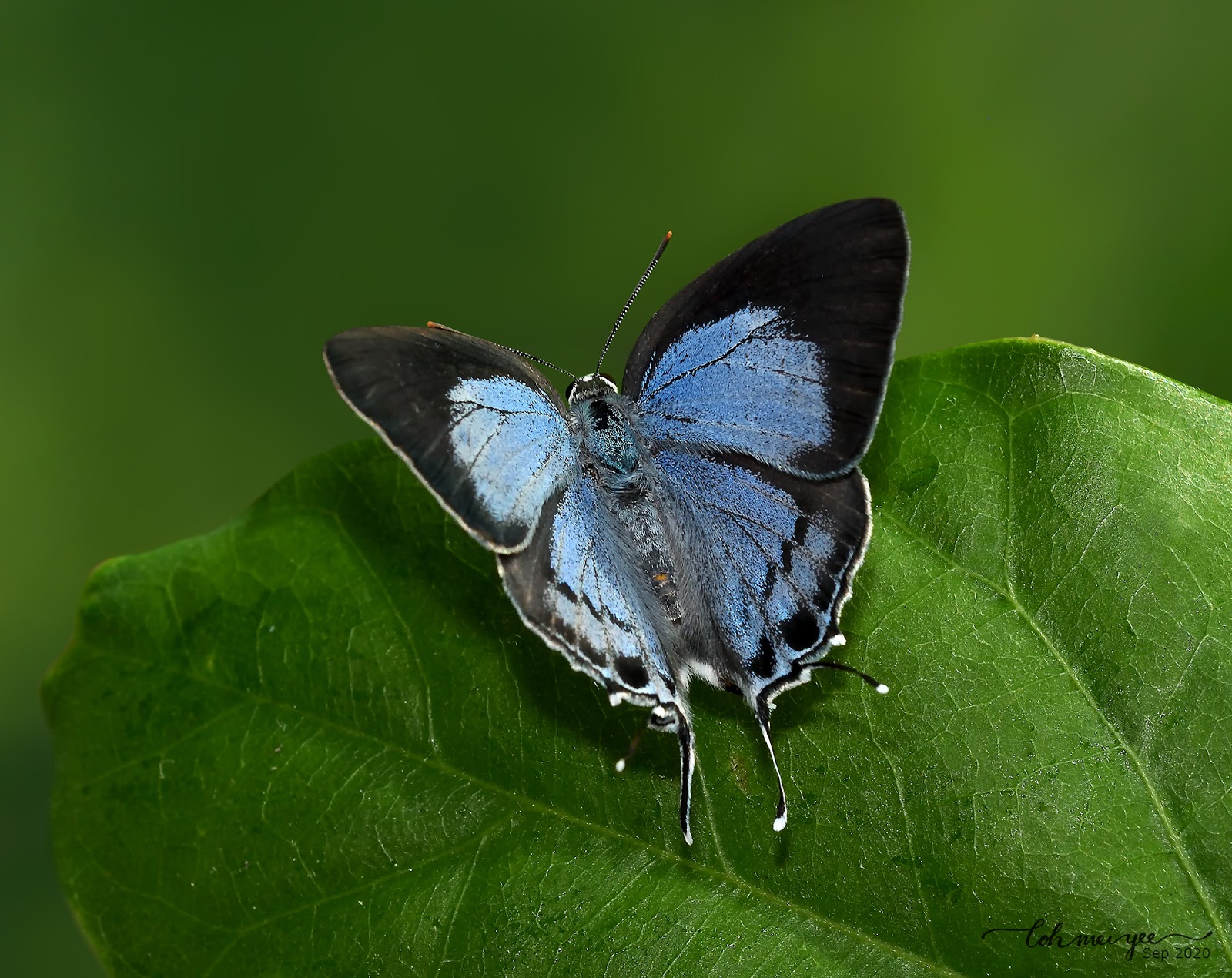
A female Banded Royal opens its wings to sunbathe. A recent addition to the number of butterfly species whose caterpillars feed on mistletoe
A parasitic plant is a plant that derives some or all of its nutritional requirement from another living plant. All parasitic plants have modified roots, called haustoria, which penetrate the host plant, connecting them to the conductive system – either the xylem, the phloem, or both. This provides them with the ability to extract water and nutrients from the host. Parasitic plants which derive water/nutrients from the hosts and are photosynthetic are known as "hemiparasites".

The large leaves of the Malayan Mistletoe are able to support the big numbers of the common urban species like the Painted Jezebel.
There are currently 10 known species of parasitic plants extant in Singapore. Quite a few of these species, commonly referred to as "mistletoes", can be seen attached to a variety of host plants - from shrubs to large trees all around Singapore. Mistletoes are believed to have medicinal properties and used in traditional medicine to cure a variety of ailments like cough, diabetes, hypertension, cancer and as a diuretic.

In the popular Asterix and Obelix comics, the druid Getafix adds mistletoe as a key ingredient in his magic potion
In the popular comic series Asterix and Obelix, the mistletoe is a key ingredient in the magic potion that endows our two heroes with superhuman strength. The druid Getafix, who makes the concoction, is often depicted in the comics cutting mistletoe, hidden amongst the lush treetops with a golden sickle that preserves the magical properties of the mistletoe.

The hemiparasitic Chinese Mistletoe attached to the host
Parasitic plants are not the most welcomed plants amongst arborists, tree maintenance personnel and gardeners. This is because, by virtue of the parasitic nature of these plants, they anchor themselves to a host shrub or tree and extract nutrients from the host. In very severe infestations, the parasitic plants may stunt the growth of the host or even kill it. However, in most cases, a host can support these parasitic plants for decades without significant adverse effect on the host. Nevertheless, these under-appreciated and misunderstood parasitic plants are often pruned and removed from the host.

The shiny leaves of the Rusty Mistletoe are reddish brown when young, but turn a deep green when mature
What then, are the ecological functions of these "parasites" of other plants? Plants research has shown that mistletoes are keystone species in forests and woodlands. A keystone species is one which has a very significant influence in an ecosystem, and if removed may cause undesirable impact to the ecology. Many birds, insects and aboreal mammals build their nests among mistletoes. A wide variety of animals and insects feed on the leaves, shoots, fruits, flowers and nectar of mistletoes.

The Singapore Mistletoe Story by Francis Lim - a book about the parasitic plants in Singapore
Amongst the species of mistletoes in Singapore, three are of particular importance to butterflies. They are host plants to a variety of common to very rare species of butterflies. This article explores these species of mistletoes which are hosts to the caterpillars of these butterflies. It is also likely that the remaining 7 species of mistletoes may be caterpillar host plants for other species of butterflies, but this has yet to be discovered and hopefully recorded in time to come.
1. Malayan Mistletoe (Dendrophthoe pentandra)

The lush green leaves of the Malayan Mistletoe with flowers on its stem
The Malayan Mistletoe is by far the most common mistletoe in Singapore. It is a familiar site on roadside trees and in urban gardens, especially where plants are neglected or unkempt. It is quite often seen on plants like the Shui Mei (Wrightia religiosa) in private gardens, as well as any urban trees where birds spread the seeds of this parasitic plant, ranging from fruit trees like mango and chiku, to a wide variety of other roadside trees.


This common parasitic plant is a caterpillar host plant to at least five different species of butterflies across three families. These are :

The distasteful Painted Jezebel's caterpillars have somehow managed to sequester the chemicals from the Malayan Mistletoe to make itself unattractive to predators
Amongst these species, it is interesting to note that the aposematic Painted Jezebel is believed to be distasteful to birds and has somehow managed to sequester the chemicals in the Malayan Mistletoe as a protection against predators. This is something that the other 3 species that feed on the same host plant are not able to do so, or at least the adult butterflies are not known to be distasteful to predators.

The flowers of the Malayan Mistletoe
The Malayan Mistletoe is most likely dispersed mainly by the birds that feed on its fruits, and then transporting the seeds to other trees where the bird droppings, which contain the seeds, are deposited on the branches of other plants. As the seeds ripen, it will extend its haustoria (specialised roots) and penetrate into the host as it takes grip and grows. The haustoria of the Malayan Mistletoe tends to grow into a ball-like form as the plant matures.
2. Chinese Mistletoe (Macrosolen cochinchinensis)

A healthy growth of the Chinese Mistletoe
The next most common species of our local parasitic plants, is the Chinese Mistletoe, which, like the previous mistletoe, is also a stem hemiparasite. It attaches itself to the branches of its host and grows into a large bush that can span 1m-2m across. Depending on the size of the host, the growth of the Chinese Mistletoe can sometimes overwhelm and smother the entire host.


The Chinese Mistletoe is a caterpillar host plant to an even wider variety of butterfly species (some of which also feeds on the Malayan Mistletoe). These are :


The flowers and fruits of the Chinese Mistletoe, on which the caterpillars of the Green Imperial and Banded Royal feed
The leaves of the Chinese Mistletoe are pinkish to red when young, turning light green and finally dark green as they mature. The mature leaves are stiff and slightly waxy. It should be noted, however, that several of the butterfly species' caterpillars actually feed on the flower buds and fruits of the Chinese Mistletoe, rather than the leaves.

A young shoot of the Chinese Mistletoe attached to its host via its specialised roots called haustoria
Like the Malayan Mistletoe, the Chinese Mistletoe is also mainly propagated by birds. Birds feed on the ripened globular fruits of the Chinese Mistletoe and once digested, the bird droppings are deposited on other plants as the bird moves in search for food. This gives a chance for the seeds to germinate and grow if a suitable host is found.
3. Rusty Mistletoe (Scurrula ferruginea)

The Rusty Mistletoe has a layer of fine brown hairs on the undersides of its leaves - giving it a "rusty" look
The last and slightly rarer species of mistletoe that plays host to butterfly caterpillars, is the Rusty Mistletoe. The leaves of this parasitic plant are green on top, but covered with a layer of fine brown hairs on the underside of the leaves, giving it a "rusty" appearance. As it grows, the main stem of the Rusty Mistletoe attaches to the host rather seamlessly, with a few side roots extending along the sides of the branch, growing the many little haustoria into the host.


The White Royal's caterpillars feed on the young shoots and leaves of the Rusty Mistletoe
This species of mistletoe is the caterpillar host plant for at least two species of Lycaenidae. These are:

A female White Royal perched on a leaf of the Rusty Mistletoe after ovipositing on the young shoots of the plant
Where it grows, the Rusty Mistletoe is not difficult to spot, as the brownish red appearance of its foliage sets it apart from its host. It grows into a relatively large bush that can measure 1-2m across. The flower of the Rusty Mistletoe has an interesting appearance of a brownish coloured hairy paw, whilst the fruit is a small hairy pseudo berry of about 1cm long.

Again, like the other mistletoes mentioned here, the Rusty Mistletoe is probably dispersed by birds that eat the fruits and then propagated by the bird droppings as the birds forage for food around the area. The seeds are also likely to stick onto branches of the host and then the haustoria anchoring the the plant to the host after the seed germinates, typical of the like the other species of stem hemiparasites.

In closing, we have taken a look at the more common mistletoes found in Singapore, and it is through keen observations with a dose of luck that we have discovered the range of species of butterflies that are dependent on these specific mistletoes for survival. If there is overzealous management of these "parasites" and their removal from their hosts, then it will critically threaten the existence of these species of butterflies (many of them rare) in Singapore. So the next time you see these parasitic plants around, leave them alone. The butterflies will thank you for that!
Text by Khew SK : Photos by Huang CJ, Khew SK, LohMY, Jonathan Soong and Horace Tan
References and Further Reading :

The large leaves of the Malayan Mistletoe are able to support the big numbers of the common urban species like the Painted Jezebel.
There are currently 10 known species of parasitic plants extant in Singapore. Quite a few of these species, commonly referred to as "mistletoes", can be seen attached to a variety of host plants - from shrubs to large trees all around Singapore. Mistletoes are believed to have medicinal properties and used in traditional medicine to cure a variety of ailments like cough, diabetes, hypertension, cancer and as a diuretic.

In the popular Asterix and Obelix comics, the druid Getafix adds mistletoe as a key ingredient in his magic potion
In the popular comic series Asterix and Obelix, the mistletoe is a key ingredient in the magic potion that endows our two heroes with superhuman strength. The druid Getafix, who makes the concoction, is often depicted in the comics cutting mistletoe, hidden amongst the lush treetops with a golden sickle that preserves the magical properties of the mistletoe.

The hemiparasitic Chinese Mistletoe attached to the host
Parasitic plants are not the most welcomed plants amongst arborists, tree maintenance personnel and gardeners. This is because, by virtue of the parasitic nature of these plants, they anchor themselves to a host shrub or tree and extract nutrients from the host. In very severe infestations, the parasitic plants may stunt the growth of the host or even kill it. However, in most cases, a host can support these parasitic plants for decades without significant adverse effect on the host. Nevertheless, these under-appreciated and misunderstood parasitic plants are often pruned and removed from the host.

The shiny leaves of the Rusty Mistletoe are reddish brown when young, but turn a deep green when mature
What then, are the ecological functions of these "parasites" of other plants? Plants research has shown that mistletoes are keystone species in forests and woodlands. A keystone species is one which has a very significant influence in an ecosystem, and if removed may cause undesirable impact to the ecology. Many birds, insects and aboreal mammals build their nests among mistletoes. A wide variety of animals and insects feed on the leaves, shoots, fruits, flowers and nectar of mistletoes.

The Singapore Mistletoe Story by Francis Lim - a book about the parasitic plants in Singapore
Amongst the species of mistletoes in Singapore, three are of particular importance to butterflies. They are host plants to a variety of common to very rare species of butterflies. This article explores these species of mistletoes which are hosts to the caterpillars of these butterflies. It is also likely that the remaining 7 species of mistletoes may be caterpillar host plants for other species of butterflies, but this has yet to be discovered and hopefully recorded in time to come.
1. Malayan Mistletoe (Dendrophthoe pentandra)

The lush green leaves of the Malayan Mistletoe with flowers on its stem
The Malayan Mistletoe is by far the most common mistletoe in Singapore. It is a familiar site on roadside trees and in urban gardens, especially where plants are neglected or unkempt. It is quite often seen on plants like the Shui Mei (Wrightia religiosa) in private gardens, as well as any urban trees where birds spread the seeds of this parasitic plant, ranging from fruit trees like mango and chiku, to a wide variety of other roadside trees.


This common parasitic plant is a caterpillar host plant to at least five different species of butterflies across three families. These are :
- Painted Jezebel (Delias hyparete metarete)
- Green Baron (Euthalia adonia pinwilli)
- (Tajuria dominus dominus)
- Peacock Royal (Tajuria cippus maxentius)
- Great Imperial (Jacoona anasuja anasuja)

The distasteful Painted Jezebel's caterpillars have somehow managed to sequester the chemicals from the Malayan Mistletoe to make itself unattractive to predators
Amongst these species, it is interesting to note that the aposematic Painted Jezebel is believed to be distasteful to birds and has somehow managed to sequester the chemicals in the Malayan Mistletoe as a protection against predators. This is something that the other 3 species that feed on the same host plant are not able to do so, or at least the adult butterflies are not known to be distasteful to predators.

The flowers of the Malayan Mistletoe
The Malayan Mistletoe is most likely dispersed mainly by the birds that feed on its fruits, and then transporting the seeds to other trees where the bird droppings, which contain the seeds, are deposited on the branches of other plants. As the seeds ripen, it will extend its haustoria (specialised roots) and penetrate into the host as it takes grip and grows. The haustoria of the Malayan Mistletoe tends to grow into a ball-like form as the plant matures.
2. Chinese Mistletoe (Macrosolen cochinchinensis)

A healthy growth of the Chinese Mistletoe
The next most common species of our local parasitic plants, is the Chinese Mistletoe, which, like the previous mistletoe, is also a stem hemiparasite. It attaches itself to the branches of its host and grows into a large bush that can span 1m-2m across. Depending on the size of the host, the growth of the Chinese Mistletoe can sometimes overwhelm and smother the entire host.


The Chinese Mistletoe is a caterpillar host plant to an even wider variety of butterfly species (some of which also feeds on the Malayan Mistletoe). These are :
- Green Baron (Euthalia adonia pinwilli)
- Centaur Oakblue (Arhopala centaurus nakula)
- Peacock Royal (Tajuria cippus maxentius)
- Banded Royal (Rachana jalindra burbona)
- Felder's Royal (Tajuria mantra mantra)
- Green Imperial (Manto hypoleuca terana)
- Great Imperial (Jacoona anasuja anasuja)
- Semanga superba deliciosa.


The flowers and fruits of the Chinese Mistletoe, on which the caterpillars of the Green Imperial and Banded Royal feed
The leaves of the Chinese Mistletoe are pinkish to red when young, turning light green and finally dark green as they mature. The mature leaves are stiff and slightly waxy. It should be noted, however, that several of the butterfly species' caterpillars actually feed on the flower buds and fruits of the Chinese Mistletoe, rather than the leaves.

A young shoot of the Chinese Mistletoe attached to its host via its specialised roots called haustoria
Like the Malayan Mistletoe, the Chinese Mistletoe is also mainly propagated by birds. Birds feed on the ripened globular fruits of the Chinese Mistletoe and once digested, the bird droppings are deposited on other plants as the bird moves in search for food. This gives a chance for the seeds to germinate and grow if a suitable host is found.
3. Rusty Mistletoe (Scurrula ferruginea)

The Rusty Mistletoe has a layer of fine brown hairs on the undersides of its leaves - giving it a "rusty" look
The last and slightly rarer species of mistletoe that plays host to butterfly caterpillars, is the Rusty Mistletoe. The leaves of this parasitic plant are green on top, but covered with a layer of fine brown hairs on the underside of the leaves, giving it a "rusty" appearance. As it grows, the main stem of the Rusty Mistletoe attaches to the host rather seamlessly, with a few side roots extending along the sides of the branch, growing the many little haustoria into the host.


The White Royal's caterpillars feed on the young shoots and leaves of the Rusty Mistletoe
This species of mistletoe is the caterpillar host plant for at least two species of Lycaenidae. These are:
- Great Imperial (Jacoona anasuja anasuja)
- White Royal (Pratapa deva relata)

A female White Royal perched on a leaf of the Rusty Mistletoe after ovipositing on the young shoots of the plant
Where it grows, the Rusty Mistletoe is not difficult to spot, as the brownish red appearance of its foliage sets it apart from its host. It grows into a relatively large bush that can measure 1-2m across. The flower of the Rusty Mistletoe has an interesting appearance of a brownish coloured hairy paw, whilst the fruit is a small hairy pseudo berry of about 1cm long.

Again, like the other mistletoes mentioned here, the Rusty Mistletoe is probably dispersed by birds that eat the fruits and then propagated by the bird droppings as the birds forage for food around the area. The seeds are also likely to stick onto branches of the host and then the haustoria anchoring the the plant to the host after the seed germinates, typical of the like the other species of stem hemiparasites.
In closing, we have taken a look at the more common mistletoes found in Singapore, and it is through keen observations with a dose of luck that we have discovered the range of species of butterflies that are dependent on these specific mistletoes for survival. If there is overzealous management of these "parasites" and their removal from their hosts, then it will critically threaten the existence of these species of butterflies (many of them rare) in Singapore. So the next time you see these parasitic plants around, leave them alone. The butterflies will thank you for that!
Text by Khew SK : Photos by Huang CJ, Khew SK, LohMY, Jonathan Soong and Horace Tan
References and Further Reading :


