Featuring : Kent Ridge Park

The Canopy Walk at Kent Ridge Park, surrounded by lush greenery at tree canopy level
On our rambles around Singapore's parks and gardens in search of butterflies, we explore the series of parks that make up the Southern Ridges. Starting from west and moving towards east, the Southern Ridges comprises Kent Ridge Park, Hort Park, Telok Blangah Hill Park and Mount Faber Park. All the four parks are connected via walkways and overhead bridges. In this blogpost, we visit the western-most entrance of the Southern Ridges, Kent Ridge Park.

A map of the Southern Ridges parks, comprising Kent Ridge Park, Hort Park, Telok Blangah Hill Park and Mount Faber Park.

A larger map of the 47 Ha Kent Ridge Park, stretching from Science Park to Pasir Panjang Road to the southwest boundary of the park
Kent Ridge Park is a wartime historical park, where one of the last battles for Singapore was fought during the Japanese Occupation. A war memorial plaque stands in Kent Ridge Park, erected to honour Lt Adnan Saidi, a lieutenant of the Malay Regiment's 1st Battalion, who died fighting the Japanese in one of the fiercest battles in Singapore in World War II. He led his men in the Battle of Opium Hill (Bukit Chandu), off Pasir Panjang, frustrating the Japanese efforts to take the ridge. He motivated his troops to try and fend off the Japanese, even though they were grossly outnumbered and undersupplied.

The main access road, Vigilante Drive, that leads up to Kent Ridge Park

The main carpark at Kent Ridge Park. Public amenities like rest rooms and drinking fountains are also located at this main area

A large shelter at Kent Ridge Park

Lush vegetation and towering trees are typical at Kent Ridge Park
Access to Kent Ridge Park on the eastern boundary, is via the winding South Buona Vista Road, turning left onto Vigilante Drive, up a steep incline to the ridge. There is a fairly large main carpark of about 40 lots and a smaller one near the entrance along Vigilante Drive. Parking is free. Covering a total area of 47 Ha, Kent Ridge Park features lush natural vegetation, tall mature trees and is rich in biodiversity.


Butterfly Row - a delightful row of butterfly-attracting nectaring plants to watch butterflies!
There are many trails starting from this point, leading in all directions around the ridge and enough biodiversity to satisfy the nature buff and those out for some fresh air and exercise. Just beyond the main carpark and a short walk along the ridge, is a row of butterfly-attracting nectaring plants like Shanghai Beauty (Jatropha integerrima), Snakeweed (Stachytarpheta indica), Red Tree Bush (Leea rubra) and many others.


Pansies and Skippers can be found feeding on the flowers
This "Butterfly Row" is a good place to visit to find butterflies fluttering around and feeding on the nectar from these flowering plants. In the morning hours, one can expect to find several species of skippers flitting from flower to flower, the sun-loving pansies, Chocolate Albatross, Lemon Emigrant and a variety of hill-topping Lycaenidae, if one is lucky.

A Bush Hopper that can be found amongst the grasses at the verge of the pond

A view of the pond at the eastern boundary of Kent Ridge Park
On the eastern side of Kent Ridge Park is a large pond abutting the boundary of Science Park. Starting from the low-point at this pond, there are many meandering footpaths that weave through the vegetation and rising in elevation towards the highest lookout points in the park. There are many dragonflies and damselflies around the pond, and amongst the grasses, species like the Bush Hopper and other skippers flit around.

Wide paths and lush greenery on both sides to cheer the nature lover and fitness enthusiast. Compare the scale of the joggers with the heights of the trees flanking the path

Expect some steep climbs and lots of staircases!

But don't worry if you run out of breath! There are sturdy shelters and stone seats for you to take a break.
Expect lots of staircases and steep climbs as the paths lead from the pond upwards towards the ridge. The paths are either of tarmac or concrete, and are flanked by lush greenery and a variety of plants. Look out for the bird and insect life - there is always something to interest you.

The Scarce Silverstreak is sometimes seen ovipositing at the roadside hedge

The Transparent Sixline Blue can be encountered in the late afternoon, basking in the sun

The Ambon Onyx is occasionally encountered at Kent Ridge Park. This individual was shot at the vegetation along the ridge
Back up at the main carpark, is a long hedge of Ficus microcarpa. This is the caterpillar host plant of the Scarce Silverstreak (Iraota rochana boswelliana), and if you are at the right place at the right time, you will be able to see the females of this species coming down to lay their eggs on this plant. Do keep a lookout for other Lycaenidae like the Transparent Sixline Blue (Nacaduba kurava nemana) and the occasional Ambon Onyx (Horaga syrinx maenala) amongst the vegetation in this area.


Views of the Pasir Panjang Container Port through the tall vegetation at Kent Ridge Park
Do take in the views of the southern waterfront from the Lookout Points along the ridge. At this point in time, the Pasir Panjang Container Port is still in operation the the views may be marred by these unsightly industrial equipment. In the near future, there are plans to transform this industrial area into the Greater Southern Waterfront with housing, parks, entertainment and commercial areas!

Forest bathing anyone?
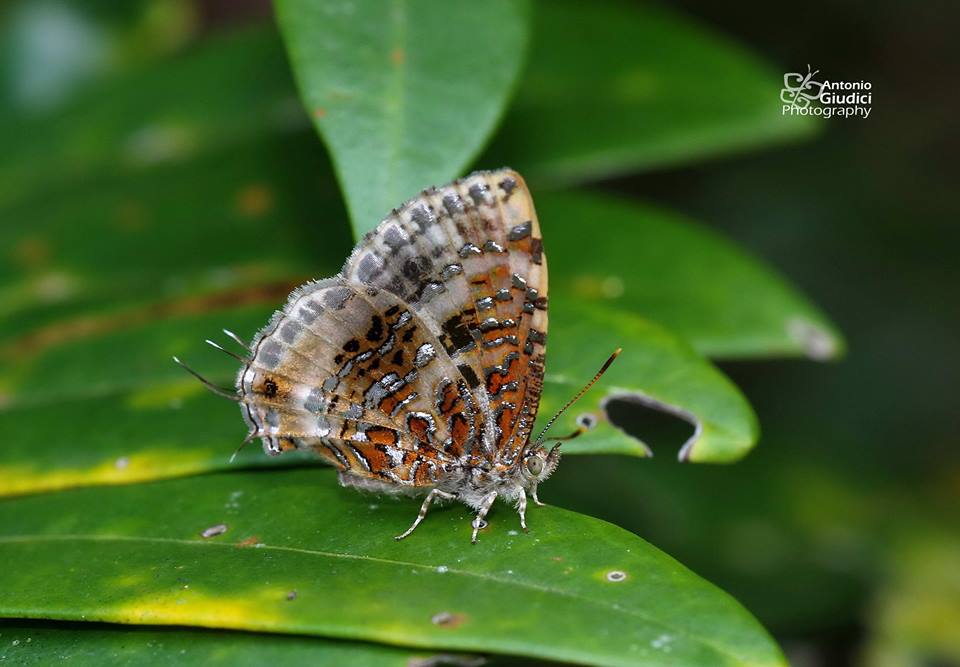
Continue your walk westwards towards the Canopy Walk. Along the way, marvel at the towering Tembusu and Casuarina trees flanking the path. It is a tranquil walk and one can truly experience the therapeutic effects of "forest bathing" along this route. Do look out for the Miletinae amongst the shrubbery. Species like the Apefly (Spalgis epius epius) and Pale Mottle (Logania marmorata damis) are sometimes encountered here.

A mating pair of Pale Mottle
At the western end of Kent Ridge Park is the 280m long Canopy Walk - an elevated walkway that was designed to avoid felling any of the mature trees in the area, weaving amongst the tree canopies. The Canopy Walk ends at the wartime museum, Reflections At Bukit Chandu. This area before reaching the Canopy Walk is lined with tall Tembusu trees, offering shade from the hot sun and shelter for birds, butterflies, and a myriad of Mother Nature's creations.

The elevated Canopy Walk, which is one of the key attractions of Kent Ridge Park


The shelter at the mid-point of the Canopy Walk

A view from the Canopy Walk towards the Pasir Panjang Nursery and the city skyline beyond

Looking down at the tree canopies below
Along the Canopy Walk, the visitor can take in breath-taking views of NParks' Pasir Panjang Nursery and the city skyline beyond. From this elevated vantage point, one can look down at the tree canopies below, and also be at eye-level with the treetops of some of the tallest trees in the area. There is also a small shelter mid-way along this elevated walkway to take cover from the hot afternoon sun to enjoy the scenic view.


Some butterfly species that can be found at Kent Ridge Park - Malayan Plum Judy, Dark Brand Bush Brown and Plain Nawab.
Down below the Canopy Walk, there is also a shaded forested path, where sometimes the Malayan Plum Judy (Abisara saturata kausambioides) can be spotted amongst the low shrubbery. This Riodinidae species usually displays its twist-and-turn behaviour and stops on the uppersurfaces of the vegetation with half-opened wings. Other species like the Dark Brand Bush Brown (Mycalesis mineus macromalayana) and the Plain Nawab (Polyura hebe plautus) may also be spotted here (the last named so, because its caterpillar host plant, the Red Saga, is common at Kent Ridge Park)
How to Get There :
By bus: 92, 92A along Science Park Drive
Alight opposite the Rutherford (Bus Stop ID : 18289) and access Kent Ridge Park via the pond area
Or 200
Alight outside National Leadership Institute, (Bus stop ID: 15099) walk northwards along South Buona Vista Road until Vigilante Drive)
By Car : From South Buona Vista Road. Turn into Vigilante Drive and up the slope to Kent Ridge Park. Parking is free.
Text by Khew SK : Photos by Khew SK, Lim CA and Loh MY

The main access road, Vigilante Drive, that leads up to Kent Ridge Park

The main carpark at Kent Ridge Park. Public amenities like rest rooms and drinking fountains are also located at this main area

A large shelter at Kent Ridge Park

Lush vegetation and towering trees are typical at Kent Ridge Park
Access to Kent Ridge Park on the eastern boundary, is via the winding South Buona Vista Road, turning left onto Vigilante Drive, up a steep incline to the ridge. There is a fairly large main carpark of about 40 lots and a smaller one near the entrance along Vigilante Drive. Parking is free. Covering a total area of 47 Ha, Kent Ridge Park features lush natural vegetation, tall mature trees and is rich in biodiversity.


Butterfly Row - a delightful row of butterfly-attracting nectaring plants to watch butterflies!
There are many trails starting from this point, leading in all directions around the ridge and enough biodiversity to satisfy the nature buff and those out for some fresh air and exercise. Just beyond the main carpark and a short walk along the ridge, is a row of butterfly-attracting nectaring plants like Shanghai Beauty (Jatropha integerrima), Snakeweed (Stachytarpheta indica), Red Tree Bush (Leea rubra) and many others.


Pansies and Skippers can be found feeding on the flowers
This "Butterfly Row" is a good place to visit to find butterflies fluttering around and feeding on the nectar from these flowering plants. In the morning hours, one can expect to find several species of skippers flitting from flower to flower, the sun-loving pansies, Chocolate Albatross, Lemon Emigrant and a variety of hill-topping Lycaenidae, if one is lucky.

A Bush Hopper that can be found amongst the grasses at the verge of the pond

A view of the pond at the eastern boundary of Kent Ridge Park
On the eastern side of Kent Ridge Park is a large pond abutting the boundary of Science Park. Starting from the low-point at this pond, there are many meandering footpaths that weave through the vegetation and rising in elevation towards the highest lookout points in the park. There are many dragonflies and damselflies around the pond, and amongst the grasses, species like the Bush Hopper and other skippers flit around.

Wide paths and lush greenery on both sides to cheer the nature lover and fitness enthusiast. Compare the scale of the joggers with the heights of the trees flanking the path

Expect some steep climbs and lots of staircases!

But don't worry if you run out of breath! There are sturdy shelters and stone seats for you to take a break.
Expect lots of staircases and steep climbs as the paths lead from the pond upwards towards the ridge. The paths are either of tarmac or concrete, and are flanked by lush greenery and a variety of plants. Look out for the bird and insect life - there is always something to interest you.

The Scarce Silverstreak is sometimes seen ovipositing at the roadside hedge

The Transparent Sixline Blue can be encountered in the late afternoon, basking in the sun

The Ambon Onyx is occasionally encountered at Kent Ridge Park. This individual was shot at the vegetation along the ridge
Back up at the main carpark, is a long hedge of Ficus microcarpa. This is the caterpillar host plant of the Scarce Silverstreak (Iraota rochana boswelliana), and if you are at the right place at the right time, you will be able to see the females of this species coming down to lay their eggs on this plant. Do keep a lookout for other Lycaenidae like the Transparent Sixline Blue (Nacaduba kurava nemana) and the occasional Ambon Onyx (Horaga syrinx maenala) amongst the vegetation in this area.


Views of the Pasir Panjang Container Port through the tall vegetation at Kent Ridge Park
Do take in the views of the southern waterfront from the Lookout Points along the ridge. At this point in time, the Pasir Panjang Container Port is still in operation the the views may be marred by these unsightly industrial equipment. In the near future, there are plans to transform this industrial area into the Greater Southern Waterfront with housing, parks, entertainment and commercial areas!

Forest bathing anyone?
Continue your walk westwards towards the Canopy Walk. Along the way, marvel at the towering Tembusu and Casuarina trees flanking the path. It is a tranquil walk and one can truly experience the therapeutic effects of "forest bathing" along this route. Do look out for the Miletinae amongst the shrubbery. Species like the Apefly (Spalgis epius epius) and Pale Mottle (Logania marmorata damis) are sometimes encountered here.

A mating pair of Pale Mottle
At the western end of Kent Ridge Park is the 280m long Canopy Walk - an elevated walkway that was designed to avoid felling any of the mature trees in the area, weaving amongst the tree canopies. The Canopy Walk ends at the wartime museum, Reflections At Bukit Chandu. This area before reaching the Canopy Walk is lined with tall Tembusu trees, offering shade from the hot sun and shelter for birds, butterflies, and a myriad of Mother Nature's creations.

The elevated Canopy Walk, which is one of the key attractions of Kent Ridge Park


The shelter at the mid-point of the Canopy Walk

A view from the Canopy Walk towards the Pasir Panjang Nursery and the city skyline beyond

Looking down at the tree canopies below
Along the Canopy Walk, the visitor can take in breath-taking views of NParks' Pasir Panjang Nursery and the city skyline beyond. From this elevated vantage point, one can look down at the tree canopies below, and also be at eye-level with the treetops of some of the tallest trees in the area. There is also a small shelter mid-way along this elevated walkway to take cover from the hot afternoon sun to enjoy the scenic view.


Some butterfly species that can be found at Kent Ridge Park - Malayan Plum Judy, Dark Brand Bush Brown and Plain Nawab.
Down below the Canopy Walk, there is also a shaded forested path, where sometimes the Malayan Plum Judy (Abisara saturata kausambioides) can be spotted amongst the low shrubbery. This Riodinidae species usually displays its twist-and-turn behaviour and stops on the uppersurfaces of the vegetation with half-opened wings. Other species like the Dark Brand Bush Brown (Mycalesis mineus macromalayana) and the Plain Nawab (Polyura hebe plautus) may also be spotted here (the last named so, because its caterpillar host plant, the Red Saga, is common at Kent Ridge Park)
How to Get There :
By bus: 92, 92A along Science Park Drive
Alight opposite the Rutherford (Bus Stop ID : 18289) and access Kent Ridge Park via the pond area
Or 200
Alight outside National Leadership Institute, (Bus stop ID: 15099) walk northwards along South Buona Vista Road until Vigilante Drive)
By Car : From South Buona Vista Road. Turn into Vigilante Drive and up the slope to Kent Ridge Park. Parking is free.
Text by Khew SK : Photos by Khew SK, Lim CA and Loh MY