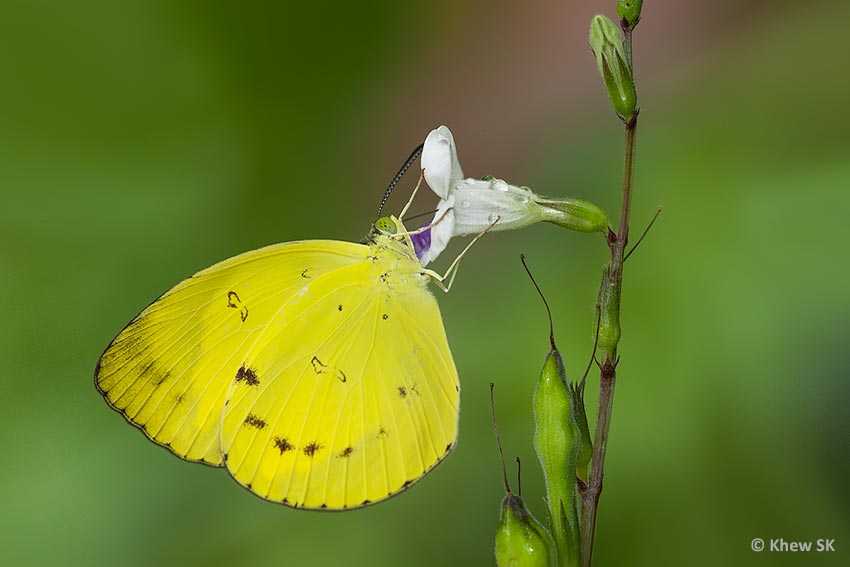
Introduction to Butterflies

A group of teachers from the IPSG session at the Deyi Secondary School butterfly garden
Last week, I was invited to give a talk about butterflies to a group of teachers at Deyi Secondary School. The Principal of the school, Mrs Lim AP, had recently set up a butterfly garden in her school grounds and thought that a sharing session amongst her teachers would be useful. Coincidentally, she had a Science Instructional Programme Support Group (IPSG) of Cluster N6 that day, so we had another group of teachers from schools within the cluster who joined the talk.

Many of the teachers had biology background and hence it was easier to use basic taxonomic terms about butterflies without having to elaborate on the technicalities of the terms. My talk was calibrated more for the layman, and covered basic topics like butterfly morphology, behaviour, ecology and conservation.


Teaching the teachers about butterflies at the sharing session
It is always interesting to observe how people are surprised to learn of the rich butterfly diversity on our little red dot. Taking into account the seasonal migrants, we have recorded 331 species in Singapore at the end of 2016. Obviously, discoveries and re-discoveries will continue - both at the technical level and also at the field observation level. There will always be surprising finds every year, and we hope that even within the 714 sq km of our little island, lurks species that have been hidden from us all these years.

Given the teacher-centric audience, I also launched my typical quiz on the identification between butterflies and moths. As with previous audiences, it was always fun to see how people have preconceived ideas of what they consider are moths, and what butterflies should look like. In so far as I've surveyed, most beginners would not get a clear "pass" on the quiz. Although biologically, both butterflies and moths fall under Lepidoptera, the layman has always been curious about the differences between a butterfly and a moth.

In the one hour talk, the audience was kept alert and intrigued about butterflies and I was glad to see that most were quite interested at the information provided. I suppose having lots of pretty pictures of butterflies helped in what could have been a 'boring' subject to some.


Some hands on experience with caterpillars. Tian reassuring the teachers that butterfly caterpillars are quite harmless
I was assisted by my two friends Tian HM and Or CK. Tian was the man behind the landscaping of the butterfly garden at Deyi Secondary School and he conceptualised the planting beds and the species of host and nectaring plants to attract butterflies to the garden. CK helped with recording the talk and her bubbly personality is always welcome at any gathering.

After the talk, we brought the group out to the butterfly garden facing Ang Mo Kio Street 42. It was a quiet corner of the school, slightly away from the buildings and partially shaded by some trees. Despite its proximity to the road, the site was slightly elevated and hence provided a relatively conducive area for butterflies to roam about.

Visiting the butterfly garden
Tian did a good job of mixing host plants, nectaring plants and other filler plants in the small area of about 250m2 that formed the butterfly garden. Even at the late hour of almost 5pm in the evening, we spotted species like the Common Grass Yellow, Chestnut Bob, Striped Albatross and Chocolate Pansy fluttering around. We also saw caterpillars of the Leopard Lacewing, Tawny Coster and Plain Tiger on the host plants.


Caterpillars in the butterfly garden, and educational signage on the plants that have been cultivated at the butterfly garden to attract butterflies
A group of students from the school was at the butterfly garden, and as expected some of them were quite freaked out by the caterpillars and dared not touch them. It is a fundamental consideration when architects and landscape designers talk about biophilic design (originating from the innate tendency of humans to seek connections with nature and other forms of life) and infusing our built environment with plants (and the biodiversity that comes with them). Though biophilia is normally considered from the human perspective, a large segment of our population tends to be rather selective at what they consider as an affiliation for "all" things nature.

I had previously observed that over the past few decades, the typical Singaporean growing up in our sanitised environment and HDB apartments tend to shun the "wilder and untidier" side of nature. This may have, in certain situations, drawn a line between biophilia and biophobia. To some, if even the totally harmless butterfly can be perceived to be a "dangerous critter" to be feared and avoided, what more an ugly looking caterpillar!

The setting up of butterfly gardens in schools is a good step in the biodiversity conservation efforts in our city in a garden. More of these school gardens, together with a growing network of community butterfly gardens, park connectors, urban parks and the nature reserves will go a long way in improving our butterfly conservation efforts in Singapore. Deyi SS should be lauded for taking the extra effort to set up their own garden, and a critical success factor is the enthusiasm behind the leadership and the teachers of such schools who are key behind the success and sustainability of such butterfly gardens in school premises.

Principal of Deyi SS, Mrs Lim AP and me. :)
In any case, I was glad to be of help in the educational efforts in biodiversity conservation, in particular the appreciation and understanding of butterflies. The journey of sharing knowledge and nurturing new advocates of butterflies and their conservation in our urban greenery is a long one. But every little bit counts as we build a society that cares for the environment as much as our human aspirations for better living conditions.
Text by Khew SK : Photos by Or Cheng Khim
Special thanks to Mrs Lim AP, Principal / Deyi Secondary School and the teachers of IPSG Science Group Cluster N6, who attended the talk. Thanks also to Tian HM and Or CK for assisting during the talk and site visit to the butterfly garden

Many of the teachers had biology background and hence it was easier to use basic taxonomic terms about butterflies without having to elaborate on the technicalities of the terms. My talk was calibrated more for the layman, and covered basic topics like butterfly morphology, behaviour, ecology and conservation.


Teaching the teachers about butterflies at the sharing session
It is always interesting to observe how people are surprised to learn of the rich butterfly diversity on our little red dot. Taking into account the seasonal migrants, we have recorded 331 species in Singapore at the end of 2016. Obviously, discoveries and re-discoveries will continue - both at the technical level and also at the field observation level. There will always be surprising finds every year, and we hope that even within the 714 sq km of our little island, lurks species that have been hidden from us all these years.

Given the teacher-centric audience, I also launched my typical quiz on the identification between butterflies and moths. As with previous audiences, it was always fun to see how people have preconceived ideas of what they consider are moths, and what butterflies should look like. In so far as I've surveyed, most beginners would not get a clear "pass" on the quiz. Although biologically, both butterflies and moths fall under Lepidoptera, the layman has always been curious about the differences between a butterfly and a moth.

In the one hour talk, the audience was kept alert and intrigued about butterflies and I was glad to see that most were quite interested at the information provided. I suppose having lots of pretty pictures of butterflies helped in what could have been a 'boring' subject to some.


Some hands on experience with caterpillars. Tian reassuring the teachers that butterfly caterpillars are quite harmless
I was assisted by my two friends Tian HM and Or CK. Tian was the man behind the landscaping of the butterfly garden at Deyi Secondary School and he conceptualised the planting beds and the species of host and nectaring plants to attract butterflies to the garden. CK helped with recording the talk and her bubbly personality is always welcome at any gathering.

After the talk, we brought the group out to the butterfly garden facing Ang Mo Kio Street 42. It was a quiet corner of the school, slightly away from the buildings and partially shaded by some trees. Despite its proximity to the road, the site was slightly elevated and hence provided a relatively conducive area for butterflies to roam about.

Visiting the butterfly garden
Tian did a good job of mixing host plants, nectaring plants and other filler plants in the small area of about 250m2 that formed the butterfly garden. Even at the late hour of almost 5pm in the evening, we spotted species like the Common Grass Yellow, Chestnut Bob, Striped Albatross and Chocolate Pansy fluttering around. We also saw caterpillars of the Leopard Lacewing, Tawny Coster and Plain Tiger on the host plants.


Caterpillars in the butterfly garden, and educational signage on the plants that have been cultivated at the butterfly garden to attract butterflies
A group of students from the school was at the butterfly garden, and as expected some of them were quite freaked out by the caterpillars and dared not touch them. It is a fundamental consideration when architects and landscape designers talk about biophilic design (originating from the innate tendency of humans to seek connections with nature and other forms of life) and infusing our built environment with plants (and the biodiversity that comes with them). Though biophilia is normally considered from the human perspective, a large segment of our population tends to be rather selective at what they consider as an affiliation for "all" things nature.

I had previously observed that over the past few decades, the typical Singaporean growing up in our sanitised environment and HDB apartments tend to shun the "wilder and untidier" side of nature. This may have, in certain situations, drawn a line between biophilia and biophobia. To some, if even the totally harmless butterfly can be perceived to be a "dangerous critter" to be feared and avoided, what more an ugly looking caterpillar!

The setting up of butterfly gardens in schools is a good step in the biodiversity conservation efforts in our city in a garden. More of these school gardens, together with a growing network of community butterfly gardens, park connectors, urban parks and the nature reserves will go a long way in improving our butterfly conservation efforts in Singapore. Deyi SS should be lauded for taking the extra effort to set up their own garden, and a critical success factor is the enthusiasm behind the leadership and the teachers of such schools who are key behind the success and sustainability of such butterfly gardens in school premises.

Principal of Deyi SS, Mrs Lim AP and me. :)
In any case, I was glad to be of help in the educational efforts in biodiversity conservation, in particular the appreciation and understanding of butterflies. The journey of sharing knowledge and nurturing new advocates of butterflies and their conservation in our urban greenery is a long one. But every little bit counts as we build a society that cares for the environment as much as our human aspirations for better living conditions.
Text by Khew SK : Photos by Or Cheng Khim
Special thanks to Mrs Lim AP, Principal / Deyi Secondary School and the teachers of IPSG Science Group Cluster N6, who attended the talk. Thanks also to Tian HM and Or CK for assisting during the talk and site visit to the butterfly garden