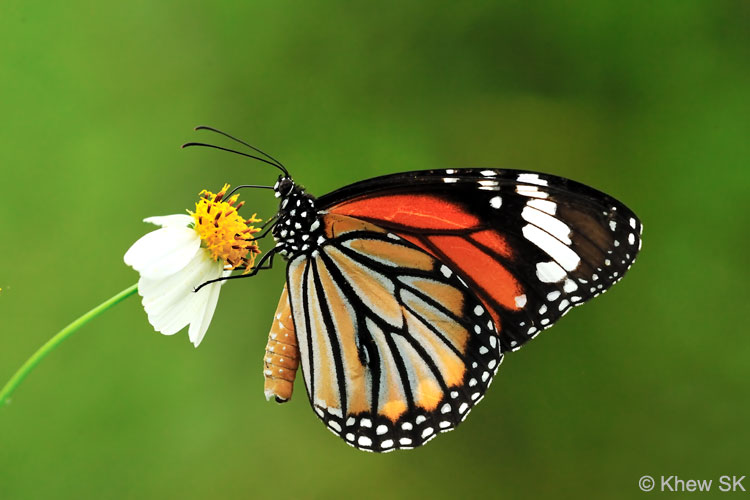
The Cycad Blue (Chilades pandava pandava)

The intermonsoon months bringing in rains riding on the south-westerly winds have given us several rather wet days this month. Often referred to as the "Sumatras", the sudden and heavy squalls can sometimes dump a lot of rain in a very short time, causing slight "ponding" in some parts of Singapore, when the thunderstorms coincide with high tides. But generally, the weather is still great (hot and humid conditions) for butterflies this time of the year.


The 2016 Summer Olympics are over, and the excitement over Singaporean Joseph Schooling's gold medal-winning, and Olympic record-breaking achievement is certainly palpable all across Singapore. It was the first time Singapore won an Olympic gold in the history of the games, and the first time ever, that Majulah Singapura was played at an Olympics medals presentation venue.


Another Singaporean swimmer, Yip Pin Xiu, who won another gold medal for Singapore in the Rio Paralympics Games, received less publicity. Her achievement was no less amazing, particularly when she broke the World Record as well, in her win in the 100m backstroke event. Congrats, Pin Xiu and Joseph, for putting our little red dot on the Olympics map and creating our little bit of history for Singapore!

Back to some domestic issues of concern - the Zika virus, which can cause microcephaly in a small number of unborn foetus of pregnant women, created a stir when it was discovered in Singapore this month. The virus, which apparently was in existence since the 1950's, is transmitted by the Aedes mosquito, just like dengue fever and Chikungunya. The locally transmitted number of cases has exceeded 300 in early September, and is likely to rise. The most effective control of the spread of the virus is eradicating the source of the vector - eliminating the Aedes mosquito's breeding grounds.


Although the symptoms of Zika is mild and in some cases, even asymptomatic, the emergence of a new "disease" always causes concern in the population, particularly amongst pregnant women. A lot still has to be learned about this virus and how it really affects humans. Like dengue fever, it is likely to stay as a seasonal disease that we will have to deal with from here on.

A Cycad Blue feeding on the flower of the Spanish Needle (Bidens alba)
Whilst the campaign by the authorities to educate the public to strive to eliminate mosquito breeding grounds is underway, the public alarm over Zika has seen widespread thermal fogging in Singapore. Though such measures are understandable, over-fogging may cause more harm than good to our biodiversity. It is hoped that the authorities are also aware of the damage to other critters from fogging and not go overboard with it. Can it be likened to carpet-bombing the entire city, just because a bunch of ISIS terrorists have been found here?

A Cycad Blue feeding on the flower of the Toothache Plant (Acmella oleracea)
This month, we feature a small and common "Blue" (from the family Lycaenidae), the Cycad Blue (Chilades pandava pandava). This species is quite widely distributed in Singapore, and is more often seen in urban parks and gardens, particularly in the vicinity of where its caterpillar host plants, Cycas spp., grow.


This species is often referred to as the Plains Cupid in most literature across Asia. However, the local common name Cycad Blue was first used in Dr Yong Hoi-Sen's 1983 book, Malaysian Butterflies - An Introduction, and has been used in several other local references and articles in Malaysia and Singapore. In Australia, the name Cycad Blue is associated with another species of Lycaenidae, Theclinesthes onycha, which is also considered a pest on Cycads.

A Cycad Blue feeding on the flower of the Honolulu Creeper (Antigonon leptopus)
This small butterfly is a bane of landscape gardeners, particularly when they cultivate the Sago Palm (Cycas revoluta) and the Malayan Fern Plant (Cycas rumphii) as their prized ornamental plants. In the Singapore Botanic Gardens' Evolution Garden, where several other species of rare Cycas are also found, the butterfly has to be "managed" to prevent the destruction of some of these plants. The caterpillars of the Cycad Blue tend to feed on young fronds of the plant, thereby preventing new growth of the plant and stunting it.


Top : Female Cycad Blue showing her broad black borders
Bottom : Male Cycad Blue with its thin black borders and purplish blue upperside
The male Cycad Blue is light purplish blue with narrow black marginal borders and a prominent black tornal spot on the hindwing. The female has broad black borders and is a paler blue with distinct marginal spots on the hindwing.

The underside is pale grey with streaks and black spots and a prominent orange-crowned black tornal spot on the hindwing. There is a white-tipped filamentous tail at vein 2 of the hindwing. The butterfly has jet-black eyes and the antennae has a banded black-and-white appearance. The cilia on both the fore and hindwings are white.

A male Cycad Blue feeding on the flower of the Yellow Creeping Daisy (Wedelia trilobata)
The Cycad Blue has a forewing length of about 12-14mm and is considered a small butterfly. The spots on the undersides can be quite variable, and rarely, aberrations may be observed as to suggest that the individual is even of a different species! It flies quite erratically, but often stops to feed at flowers with its tails twirling actively in the breeze making them appear as though they are alive.


Two examples of puddling Cycad Blues
In some instances, the Cycad Blue is also observed to puddle at damp spots on the forest floor and also feed on bird droppings. At certain times of the day, both sexes may also be encountered sunbathing with their wings opened to show their blue uppersides.

A mating pair of Cycad Blues perched on their host plant, Cycas revoluta (Sago Palm)
The caterpillars feed on various Cycas spp. and locally, they have been successfully bred on the Sago Palm (Cycas revoluta) and Malayan Fern Tree (Cycas rumphii), and the full documentation of their early stages can be found here.
Text by Khew SK : Photos by May Chan, Chng CK, Federick Ho, Huang CJ, Khew SK, Koh CH, Loke PF, Nelson Ong, Jonathan Soong, Tea Yi Kai, Anthony Wong and Benjamin Yam


Although the symptoms of Zika is mild and in some cases, even asymptomatic, the emergence of a new "disease" always causes concern in the population, particularly amongst pregnant women. A lot still has to be learned about this virus and how it really affects humans. Like dengue fever, it is likely to stay as a seasonal disease that we will have to deal with from here on.

A Cycad Blue feeding on the flower of the Spanish Needle (Bidens alba)
Whilst the campaign by the authorities to educate the public to strive to eliminate mosquito breeding grounds is underway, the public alarm over Zika has seen widespread thermal fogging in Singapore. Though such measures are understandable, over-fogging may cause more harm than good to our biodiversity. It is hoped that the authorities are also aware of the damage to other critters from fogging and not go overboard with it. Can it be likened to carpet-bombing the entire city, just because a bunch of ISIS terrorists have been found here?

A Cycad Blue feeding on the flower of the Toothache Plant (Acmella oleracea)
This month, we feature a small and common "Blue" (from the family Lycaenidae), the Cycad Blue (Chilades pandava pandava). This species is quite widely distributed in Singapore, and is more often seen in urban parks and gardens, particularly in the vicinity of where its caterpillar host plants, Cycas spp., grow.


This species is often referred to as the Plains Cupid in most literature across Asia. However, the local common name Cycad Blue was first used in Dr Yong Hoi-Sen's 1983 book, Malaysian Butterflies - An Introduction, and has been used in several other local references and articles in Malaysia and Singapore. In Australia, the name Cycad Blue is associated with another species of Lycaenidae, Theclinesthes onycha, which is also considered a pest on Cycads.

A Cycad Blue feeding on the flower of the Honolulu Creeper (Antigonon leptopus)
This small butterfly is a bane of landscape gardeners, particularly when they cultivate the Sago Palm (Cycas revoluta) and the Malayan Fern Plant (Cycas rumphii) as their prized ornamental plants. In the Singapore Botanic Gardens' Evolution Garden, where several other species of rare Cycas are also found, the butterfly has to be "managed" to prevent the destruction of some of these plants. The caterpillars of the Cycad Blue tend to feed on young fronds of the plant, thereby preventing new growth of the plant and stunting it.


Top : Female Cycad Blue showing her broad black borders
Bottom : Male Cycad Blue with its thin black borders and purplish blue upperside
The male Cycad Blue is light purplish blue with narrow black marginal borders and a prominent black tornal spot on the hindwing. The female has broad black borders and is a paler blue with distinct marginal spots on the hindwing.

The underside is pale grey with streaks and black spots and a prominent orange-crowned black tornal spot on the hindwing. There is a white-tipped filamentous tail at vein 2 of the hindwing. The butterfly has jet-black eyes and the antennae has a banded black-and-white appearance. The cilia on both the fore and hindwings are white.

A male Cycad Blue feeding on the flower of the Yellow Creeping Daisy (Wedelia trilobata)
The Cycad Blue has a forewing length of about 12-14mm and is considered a small butterfly. The spots on the undersides can be quite variable, and rarely, aberrations may be observed as to suggest that the individual is even of a different species! It flies quite erratically, but often stops to feed at flowers with its tails twirling actively in the breeze making them appear as though they are alive.


Two examples of puddling Cycad Blues
In some instances, the Cycad Blue is also observed to puddle at damp spots on the forest floor and also feed on bird droppings. At certain times of the day, both sexes may also be encountered sunbathing with their wings opened to show their blue uppersides.

A mating pair of Cycad Blues perched on their host plant, Cycas revoluta (Sago Palm)
The caterpillars feed on various Cycas spp. and locally, they have been successfully bred on the Sago Palm (Cycas revoluta) and Malayan Fern Tree (Cycas rumphii), and the full documentation of their early stages can be found here.
Text by Khew SK : Photos by May Chan, Chng CK, Federick Ho, Huang CJ, Khew SK, Koh CH, Loke PF, Nelson Ong, Jonathan Soong, Tea Yi Kai, Anthony Wong and Benjamin Yam