The Bandicoot Berry (Leea indica)

The Plane (Bindahara phocides phocides) feeding on the flower of a Bandicoot Berry
Continuing our series of butterfly-attracting nectaring plants, we feature in this fourth article, the Bandicoot Berry (Leea indica). This predominantly green and unassuming bush, which usually grows up to 3-4 metres in height, is another local "butterfly magnet", commonly found in Singapore's forests, and more recently, cultivated in our urban parks and gardens.

A Common Four Ring (Ypthima huebneri) on the flower of a Bandicoot Berry
From herbarium records, there are four species of Leea in Singapore - L. aequata, L.indica, L. rubra/guineensis and L. angulata. Thus far, only L. indica and L. rubra have recently been cultivated as part of the urban greenery in parks, natureways, gardens and park-connectors in an effort to enhance urban biodiversity in Singapore by the National Parks Board. The flowers of the plants provide nectar for butterflies, bees and wasps, whilst the ripened fruits are food for birds.
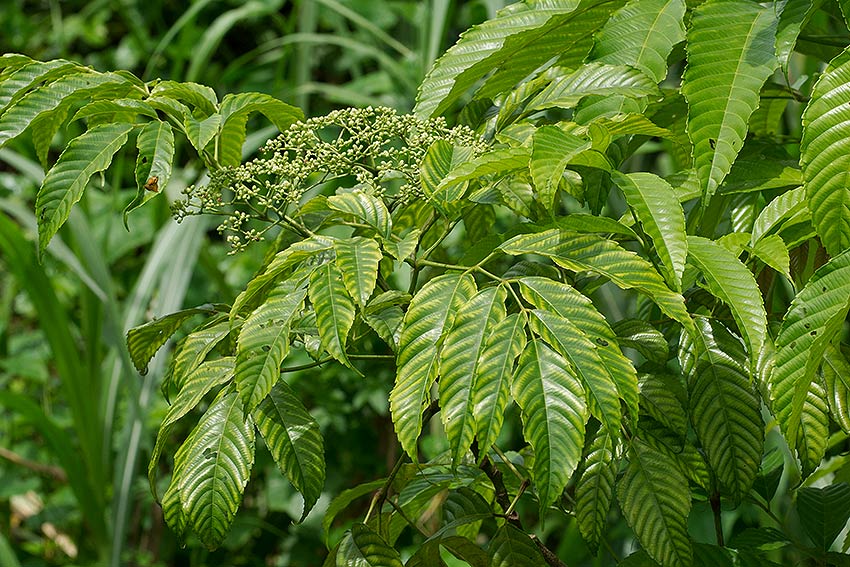
Plant Biodata :
Family : Vitaceae/LeeaceaeGenus : Leea
Species : indica
Country of Origin : Tropical Asia
English Common Name : Bandicoot Berry
Other Local Names : Common Tree Vine, 火筒树
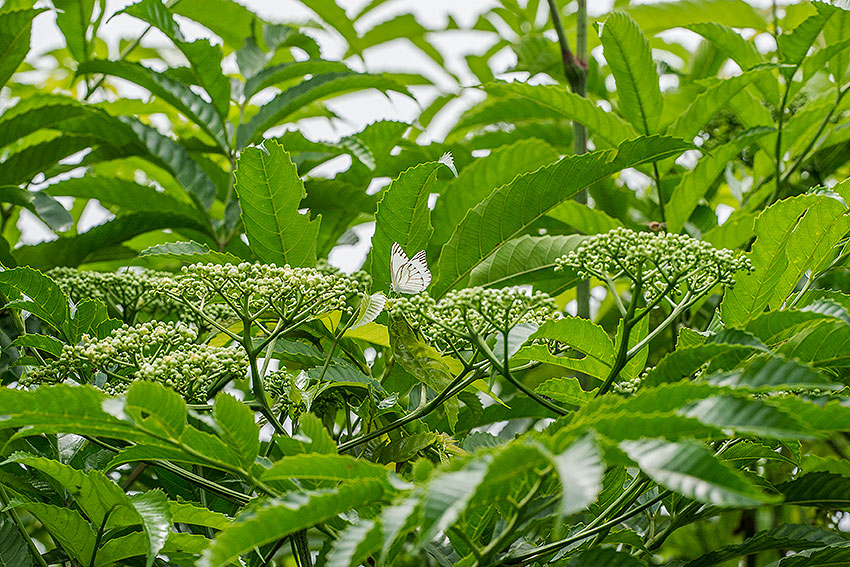
The inflorescence of the Bandicoot Berry. Can you spot the Striped Albatross?
The Bandicoot Berry is widespread throughout Singapore, and in the forested nature reserves, it appears as a common undergrowth shrub along disturbed areas and footpaths. It occurs in various habitats from deep forested areas to backmangroves and more recently, as planting material in urban parks and gardens.

A lush and healthy bush of the Bandicoot Berry at Tampines Eco Green
The plant occurs as a small shrub or treelet, ranging from 2m to as high as 4m, although there are specimens that may grow much taller. It is single-stemmed, though multi-stemmed shrubs are are also commonly encountered, whilst the stems are smooth and not thorned.

Young leaves and mature leaf of the Bandicoot Berry
The leaves are 2-3 pinnate, bearing between 5-7 leaflets per pinna. Each leaflet is ovate-lanceolate, growing up to 24cm in length and up to 9 cm wide. The young shoots of the plant are often reddish-pink when they emerge, turning yellow-green and then to the final dark green as they mature.

Young leaves and mature leaf of the Bandicoot Berry
The leaves are 2-3 pinnate, bearing between 5-7 leaflets per pinna. Each leaflet is ovate-lanceolate, growing up to 24cm in length and up to 9 cm wide. The young shoots of the plant are often reddish-pink when they emerge, turning yellow-green and then to the final dark green as they mature.

The flowers, which are attractive to butterflies, bees and wasps, are small and insignificant, greenish white, and only about 5mm in diameter. The inflorescence range between 5-25 cm across, with these small greenish white flowers spread across the inflorescence. There is no perceptible smell (to us humans) from the flowers, and the plant does not appear to use bright colours nor strong fragrance to attract its pollinators, unlike other species of flowering plants.

Butterflies and bees feeding on the flowers of the Bandicoot Berry. How many can you spot?
However, despite having rather inconspicuous flowers, the Bandicoot Berry flowers appear to be very attractive to butterflies and other insects like bees and wasps. Interestingly, despite the small size of the flowers, we have observed that the flowers are not visited by only small-sized butterflies. Butterflies like the larger Papilionidae and Danainae also feed on the diminutive flowers.

The fruits of the Bandicoot Berry
The unripened fruits of the Bandicoot Berry are apple-green and measure up to about 10mm in diameter, turning a purplish black when ripe. The fruits are attractive to birds, which are probably the main vector for the dispersal of the plants across the island.

The Bandicoot Berry is also considered a herbal plant in many Asian cultures, and has many medicinal uses, particularly in India and Sri Lanka. Herbal practitioners consider it as a natural coolant that gives a “cooling effect” to the body. Many tribal communities have been using Leea indica for treatment of diarrhoeal diseases. It is also used in cases of chronic dysentery. Other medicinal uses include skin problems, gastric ulcers, vertigo and digestive ailments. It is also believed that a paste of Leea indica roots, if applied on the affected portion of the skin gives relief from skin issues like rashes and allergic reactions.


A variety of Hesperiidae species feeding on the flowers of the Bandicoot Berry
Butterflies are attracted to the small greenish white flowers of the Bandicoot Berry. In the forested nature reserves where they usually grow in the shade of taller trees around, Hesperiidae, or skippers, are often found on the inflorescence of the plant. In certain areas, the forest-dependent skipper, Yellow Vein Lancer (Pyroneura latoia latoia) is a frequent visitor to Bandicoot Berry bushes, often in the company of other skippers like the Starry Bob, Chestnut Bob and Common Snow Flat.


Lycaenidae galore on the Bandicoot Berry's flowers
Many species of the Hairstreaks (Lycaenidae) species are also found on the Bandicoot Berry flowers, with many of them feeding greedily on the flowers and staying for long periods of time on the flowers. Despite the small size of the flowers, they must contain a relatively significant amount of nectar to be so attractive to these butterflies.


Even larger butterflies are attracted to the tiny flowers of the plant!
Contrary to the theory that only small butterflies will visit small flowers to feed, the small 5mm flowers are also surprisingly attractive to the larger species of butterflies like the Spotted Black Crow, Blue and Dark Glassy Tigers, Common Bluebottle and many other Nymphalidaes. The range of species that is attracted to the flowers of this plant is quite amazing! This does suggest that the structure of the flower and the nectar available has evolved in such a way that it is able to accommodate the thicker (and longer) proboscis and also larger appetites of larger butterflies.

A stipule from which the young leaves of the plant emerge
Besides the flowers of the Bandicoot Berry, the young shoots and the stipules of the plant appear to secrete some sort of sugary fluid that is also attractive to some species of Lycaenidae. The stems of the young plant appear to be coated with an invisible and odourless substance that attract these butterflies to feed.

A Common Posy feeds on the secretions of a young shoot of the plant
We have observed certain species like the Branded Imperial, Common Posy, Dark Posy and Pygmy Posy feeding for long periods of time on the young shoots of the plant, often staying very still if undisturbed. Ants are also attracted to the young shoots and stipules, probably also going after the same sweet substance that attract the butterflies.

A Pygmy Posy feeds on the secretions of a young shoot of the plant
More recently, the Bandicoot Berry has been added to the palette of horticultural material to be cultivated in urban parks and gardens. This is part of NParks wider strategy of planting to enhance our urban biodiversity and to rejuvenate our urban environment with more "life" - with greenery that provides food for birds, butterflies and other creatures that share our island with us.

Hence, besides our forests, where the Bandicoot Berry can be found naturally, our urban parks and gardens also feature this butterfly-attracting plant and nature enthusiasts will be able to spot many butterflies on the flowers. Locations where this plant can be found include Tampines Eco Green, Gardens by the Bay (Meadow area), various park connectors and NatureWays.

So the next time you are out in our forested nature reserves or our urban parks and gardens in Singapore, do look out for the Bandicoot Berry bushes and their flowers, and you may be rewarded by some butterflies that are sitting pretty on the flowers and allowing you to take a selfie with them!
Text by Khew SK : Photos by Khew SK, Jonathan Soong, Horace Tan & Mark Wong
Further Reading and References :


A variety of Hesperiidae species feeding on the flowers of the Bandicoot Berry
Butterflies are attracted to the small greenish white flowers of the Bandicoot Berry. In the forested nature reserves where they usually grow in the shade of taller trees around, Hesperiidae, or skippers, are often found on the inflorescence of the plant. In certain areas, the forest-dependent skipper, Yellow Vein Lancer (Pyroneura latoia latoia) is a frequent visitor to Bandicoot Berry bushes, often in the company of other skippers like the Starry Bob, Chestnut Bob and Common Snow Flat.


Lycaenidae galore on the Bandicoot Berry's flowers
Many species of the Hairstreaks (Lycaenidae) species are also found on the Bandicoot Berry flowers, with many of them feeding greedily on the flowers and staying for long periods of time on the flowers. Despite the small size of the flowers, they must contain a relatively significant amount of nectar to be so attractive to these butterflies.


Even larger butterflies are attracted to the tiny flowers of the plant!
Contrary to the theory that only small butterflies will visit small flowers to feed, the small 5mm flowers are also surprisingly attractive to the larger species of butterflies like the Spotted Black Crow, Blue and Dark Glassy Tigers, Common Bluebottle and many other Nymphalidaes. The range of species that is attracted to the flowers of this plant is quite amazing! This does suggest that the structure of the flower and the nectar available has evolved in such a way that it is able to accommodate the thicker (and longer) proboscis and also larger appetites of larger butterflies.

A stipule from which the young leaves of the plant emerge
Besides the flowers of the Bandicoot Berry, the young shoots and the stipules of the plant appear to secrete some sort of sugary fluid that is also attractive to some species of Lycaenidae. The stems of the young plant appear to be coated with an invisible and odourless substance that attract these butterflies to feed.

A Common Posy feeds on the secretions of a young shoot of the plant
We have observed certain species like the Branded Imperial, Common Posy, Dark Posy and Pygmy Posy feeding for long periods of time on the young shoots of the plant, often staying very still if undisturbed. Ants are also attracted to the young shoots and stipules, probably also going after the same sweet substance that attract the butterflies.

A Pygmy Posy feeds on the secretions of a young shoot of the plant
More recently, the Bandicoot Berry has been added to the palette of horticultural material to be cultivated in urban parks and gardens. This is part of NParks wider strategy of planting to enhance our urban biodiversity and to rejuvenate our urban environment with more "life" - with greenery that provides food for birds, butterflies and other creatures that share our island with us.

Hence, besides our forests, where the Bandicoot Berry can be found naturally, our urban parks and gardens also feature this butterfly-attracting plant and nature enthusiasts will be able to spot many butterflies on the flowers. Locations where this plant can be found include Tampines Eco Green, Gardens by the Bay (Meadow area), various park connectors and NatureWays.

So the next time you are out in our forested nature reserves or our urban parks and gardens in Singapore, do look out for the Bandicoot Berry bushes and their flowers, and you may be rewarded by some butterflies that are sitting pretty on the flowers and allowing you to take a selfie with them!
Text by Khew SK : Photos by Khew SK, Jonathan Soong, Horace Tan & Mark Wong
Further Reading and References :
- Bandicoot Berry has anti-oxidant properties
- Leea of Singapore (from Nature in Singapore, Lee Kong Chian Natural History Museum)
- More photos of the Bandicoot Berry from the Plant Observatory


