20 August 2010

Butterfly of the Month - August 2010

Butterfly of the Month - August 2010
The Blue Nawab (Polyura schreiber tisamenus)


The month of August is an important month for Singapore as its National Day falls on the 9th of August annually. This year is Singapore's 45th birthday, and it was a particularly happy occasion as Singapore came out strongly from the global recession with a double digit GDP growth for the quarter and the year looks bullish for a strong economic performance.


Other than a few days of the exceptionally rainy weather spilling over from July, the month was beginning to show some signs of the waning "Sumatras" as the intermonsoon winds begin to shift. The inaugural Youth Olympic Games - the first in the games' history, is being held in Singapore from 14 - 26 August as some 5,000 athletes aged between 14 and 18 years, will take part in 26 sporting events.


Our feature butterfly this month, is the majestic and awesome Charaxinae, the Blue Nawab (Polyura schreiber tisamenus). This proud and magnificent butterfly can be described as moderately rare, although it has been spotted with regularity in Singapore - more so than in neighbouring Malaysia.


The Blue Nawab is the less often encountered of the two Polyura species found in Singapore. It is a strong flyer like the Plain Nawab and prefers to remain at high levels. The Blue Nawab has been found in urban parks and gardens, forested areas and also within mangrove areas. The males of the species have been observed feeding on decomposing animal matter but are also attracted to overripe fruits.


The Blue Nawab has a silvery underside marked with brown and purple patterns. The upperside has a white median band ornamented with blue. It possesses two pairs of tails on the hindwings. The female of the species is usually larger often attaining a wingspan of 80mm, with broader and longer tails.


The species has a robust body, and like a typical Nymphalidae, has only four fully-developed legs for walking. The forelegs appear more brush-like and are not used for walking.


The butterfly is usually very skittish, and can fly powerfully for long periods of time. Unless one encounters a recently-eclosed individual or in a feeding mood, photographing the Blue Nawab is often a challenge.


Unlike the Plain Nawab, the Blue Nawab does not display territorial behaviour where it perches on a few favourite spots and returns to those spots time and again after chasing away intruders. Where observed, the Blue Nawabs are almost always in full flight, as if in a hurry to go somewhere.


The caterpillar of the Blue Nawab has been found and bred successfully on a variety of plants. Amongst these are Acacia auriculiformis, Adenanthera pavonina, Chorisia speciosa, Nephelium lappaceum, Bauhinia kockiana and another unidentified plant. Hence it is quite interesting that the caterpillars can feed on so many common plants, and yet the species is not as common as it should be.


Text by Khew SK : Photos by Khew SK, Simon Sng, Horace Tan and Tan Ben Jin

14 August 2010

Life History of the Sumatran Sunbeam

Life History of the Sumatran Sunbeam (Curetis saronis sumatrana)


Butterfly Biodata:
Genus: Curetis
Hübner, 1819
Species: saronis Moore, 1877
Subspecies: sumatrana Corbet, 1937
Wingspan of Adult Butterfly: 40mm
Caterpillar Local Host Plants:
Derris trifoliata (Leguminosae)


A Sumatran Sunbeam taking a typical perch on the underside of a leaf.


A sunbathing female Sumatran Sunbeam on a leaf perch.

Physical Description of Adult Butterfly:
Above, the wings are orange with black borders. The female is in paler orange than the male and has much broader black borders. On the hindiwng the orange portion in the female only occupies a small crescentic area. Underneath, the wings are silvery white. On the hindwing, the post-discal striae are lunulate and irregular, with those in spaces 4 and 5 shifted out distad. The post-discal striae are hardly shaded inwardly. Legs are banded in red.

Another Sumatran Sunbeam adult.

Another sunbathing female Sumatran Sunbeam.

Field Observations of Butterfly Behaviour:
This species is locally common in Singapore in coastal mangrove areas such as the Sungei Buloh Wetland Reserve, Kranji Nature Trail, Pasir Ris Park and Pulau Ubin. Adults can be sighted along walking trails in these areas where they are observed to engage in sunbathing, frolicking or dog-fighting activities. The adults also have the habit of perching on the underside of a leaf.

Early Stages:
The host plant, Derris trifoliata, is a scandent shrub with 3-5 leaflets in a pinna, pink flowers, thin and flat pods. This plant is commonly found in coastal areas and thus account for the rather localized distribution of the Sumatran Sunbeam in these areas. The caterpillars of the Sumatran Sunbeam feed on the young foliage of the host plant.


Host plants : Derris trifoliata
Eggs are laid singly on young shoots of the host plant. It is common for a number of eggs to be found on the same shoot. Each egg resembles a flattened sphere with coarse hexagonal reticulations. It is initially light greenish when newly laid but turns whitish as it matures. Each egg has a basal diameter of about 0.8mm.


Two views of an egg of the Sumatran Sunbeam.

It takes 2-3 days for the egg to hatch. The young caterpillar consumes the upper portion of the egg shell to emerge. With a length of 1.9mm, it has numerous fine setae on its body surface, with those occurring dorso-laterally and laterally particularly long. The caterpillar is initially yellowish green but turns dark yellowish as it develops in this instar. Numerous short lateral stripes, pale in coloration, also appear in the later stage of this instar. The first instar lasts about 2 days and with the body reaching about 3mm.


Two views of a newly hatched caterpillar, length: 1.9mm.


Two views of a 1st instar caterpillar, length: 2.6mm.

The 2nd instar caterpillar does not have the long dorso-lateral and lateral setae as in the first instar. Instead, the body is covered with many minute setae. The body colour is dark yellowish initially turn increasing greenish as it grows in this instar. On each body segment, there are several oblique pale stripes laterally. A prominent change occurs on the 8th abdominal segment where a pair of long cylindrical and erect processes, black to dark brown in colour, is now present. When the caterpillar is disturbed or stressed, tentacles with tuffs of white and black hairs at their apices, are everted from these procesess and whirled around at great speed. This instar lasts for about 2 days and reaches a length of about 4.5-5.0mm.


Two views of a 2nd instar caterpillar, early in this stage, length: 3.2mm..


Two views of a 2nd instar caterpillar, later in this stage, length: 5.5mm

The 3rd instar caterpillar looks similar to the 2nd instar caterpillar but has a pair of white, quadrate lateral patches on the 6th abdominal segment.
White lateral stripes, varying in lengths but lesser in prominence than that on the 6th abdominal segment, appear later and becoming more prominent on the body segments. The caterpillar reaches up to 9.5mm in this instar which lasts about 2.5-3.0 days.


Two views of a 3rd instar caterpillar, early in this stage, length: 6.3mm.


Two views of a 3rd instar caterpillar, late in this stage, length:9.5mm


The eversion of the tentacles of a Sumatran Sunbeam caterpillar. The same 1-second eversion and withdrawal event is played back three times, with first and last time being at actual speed, and the second time in slow motion (20 times slower).

The 4th (and final) instar caterpillar resembles the 3rd instar caterpillar but with a more prominent contrast of white stripes/patches against the base colour of yellowish green to velvety green. The dorsum of the body segments of the 2nd and 3rd thoracic segments are pale green to whitish in coloration. The lateral oblique white stripes on the 1st two abdominal segments are joined while those on other segments are well separated.


Two views of a 4th instar caterpillar, early in this stage, length: 10mm.


Two views of a 4th instar caterpillar, later in this stage, length: 16mm


Two views of another 4th instar caterpillar, length: 16mm.

The 4th (and final) instar lasts about 3 days and the body reaches a length of about 16-17mm. In the last day of this stage, the caterpillar ceases feeding, and its body shrinks in length. The entire body colour changes to a dark shade of jade green. Eventually it comes to rest on a spot on the surface of leaf. Here the caterpillar prepares for pupation by spinning a silk pad and a silk girdle to secure itself. It then becomes immobile in this pre-pupatory state for about 1 day.


Two views of a pre-pupa of the Sumatran Sunbeam

The next day the pupation takes place. The pupa is held via its cremaster and a weak silk girdle to the silk pad on the substrate. It is almost hemispherical and has a flat under surface, almost completely jade green in ground colour and carries a whitish marking on the dorsum of the thorax. Length: 9-10mm.


Two views of a pupa of the Sumatran Sunbeam

Six days later, the pupa becomes darkened in color signaling the imminent emergence of the adult. The orange patch on the forewing upperside can now be seen through the pupal skin in the wing case. The next day the adult butterfly emerges from the mature pupa.


Two views of a mature pupa of the Sumatran Sunbeam.


A newly eclosed Sumatran Sunbeam resting on its empty pupal case.


A newly eclosed specimen of the Sumatran Sunbeam.

References:
  • The Butterflies of The Malay Peninsula, A.S. Corbet and H.M. Pendlebury, 4th Edition, Malayan Nature Society.
  • Butterflies of Thailand, Pisuth Ek-Amnuay, 1st Edition, 2006
Text by Horace Tan, Photos by James Chia, Sunny Chir and Horace Tan

06 August 2010

What Next, MOG?

What Next, MOG?
The end of the road for Mandai Orchid Garden?


When we read the news that the land lease of the Mandai Orchid Garden (MOG) would end in six months' time, it was with sadness and frustration that yet another venue for nature photography and also a garden that is part of Singapore's heritage and memorable destinations may be gone soon.


Mandai Orchid Garden was started in 1951 by the late John Laycock, a founder of the Orchid Society of Southeast Asia (OSSEA), and continued under him until his death in 1960. He purchased five acres of land on which to grow his ever-increasing collection of orchids. He leased a further five acres of land for commercial cut flower growing, this land and more forms the Mandai Orchid Garden today.* (Write up credits : Mandai Orchid Garden website)


Many orchid-loving Singaporeans visited MOG, which is also a tourist destination, to get their fill of orchids and to learn how to cultivate the difficult species, seeding, propagation, pests, and so on.


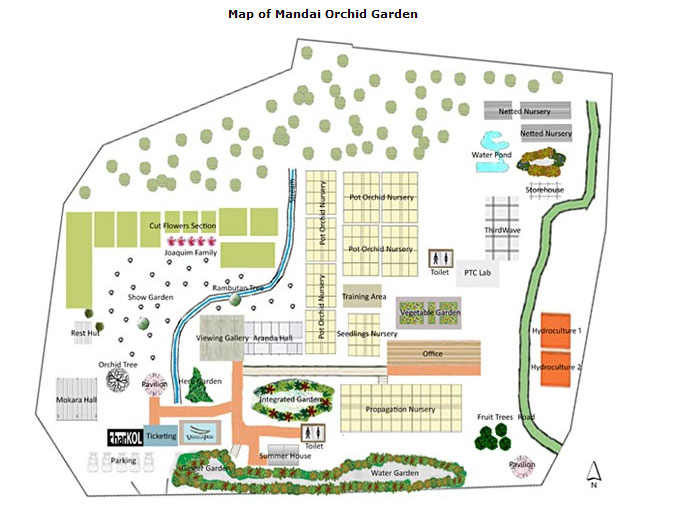
A change in management of MOG occurred in 2002, and facilities like a fine-dining F&B outlet and more feature gardens were added. The MOG currently sits on a 4Ha site along Mandai Lake Road and is adjacent to the Night Safari.


Map of Mandai Orchid Garden, © Mandai Orchid Garden

MOG is a favourite venue for nature photographers as well. It is no secret that many newbie bird photographers cut their teeth at MOG, learning the ropes of bird photography amongst the lush landscaping at the Water Garden. The Crimson Sunbird and Little Spiderhunter are favourites with bird photographers, as these birds love the Torch Ginger flowers and return again and again to feed on them. Over time, these birds seem to have gotten used to the flashes of the nature paparazzi and appear to be much braver than their counterparts seen in other places. There was a time when I was even able to shoot a full-frame shot of a Crimson Sunbird with my 180mm macro lens! There are also other rare resident birds at MOG.


A signature shot of a Crimson Sunbird on the flower of the Torch Ginger

For more bird shots by nature photographers, please see this thread set up at local photography forum ClubSnap started to create awareness about the fate of MOG.


A newly-eclosed Atlas Moth - a common moth species found at MOG

Macro photographers and particularly butterfly photographers will also sorely miss MOG if it were gone. There are also many dragonfly species at the Water Garden, as there are species of butterflies that are not often found elsewhere in Singapore.


The Metallic Caerulean found at MOG, where a small but local colony of this butterfly can be found

Of special mention is the recently re-discovered Metallic Caerulean (Jamides alecto ageladas). The caterpillars of this species depend on the flowers of the Torch Ginger. The life history, as recorded by ButterflyCircle early stages expert, Horace Tan, can be found here on this blog. Although clusters of the Torch Ginger plants can be found elsewhere in Singapore, the special habitat at MOG somehow makes them stay for all these years.


Two rare skippers found at MOG - Top : Dark Banded Ace (Halpe ormenes vilasina) and Bottom : Pugnacious Lancer (Permara pugnans)

Also, because of the various bamboo species and the proximity to the Night Safari's rather pristine rain forest habitat, many rare Hesperiidae can also be found on the grounds of MOG. Once in a while many rare Lycaenidae can also be observed. Indeed, it was near MOG (just outside its boundaries) where Steven Neo our ButterflyCircle veteran, first discovered the Chocolate Sailor (Neptis harita harita) in the early 1990's. This species is a new taxon to the Singapore checklist at that point in time.


The rare Chocolate Sailor, Palm King and Bamboo Tree Brown are species that can be found at MOG. Bottom shot : A mating pair of the Dark Brand Bush Brown

ButterflyCircle is already working with the NParks' National Biodiversity Centre to start translocation efforts for the butterfly species for which their caterpillar host plants are known.

Another shot of the Metallic Caerulean on the flowers of Leea rubra at MOG

Habitat duplication is being attempted at undisclosed locations to start the process, whilst consideration is being given on the techniques of translocating species like the Metallic Caerulean before the imminent destruction of its favoured habitats give way to the developers' exacavators and cranes.


To the ordinary Singaporean, MOG is all about orchids. The nature loving and nature photography communities have added another dimension (and value) to MOG that is not often known or appreciated by most. The rich biodiversity at MOG cannot be ignored, and once habitats are destroyed, the birds, dragonflies, butterflies and other taxonomic groups of animals may not return again.


Even if the Water Garden at MOG can be preserved as development of a "potential gated nature attraction" proceeds, a careful study of the phasing and the impact to biodiversity has to be done before work starts. Whilst there are no delusions that Singapore's infrastructural development and improvements will carry on, with or without damage to the biodiversity, consideration for our natural heritage and their sustainability should be given their appropriate place in any future development of a "nature attraction". It is hoped that the Singapore Tourism Board, the Singapore Land Authority, Urban Redevelopment Authority and the future tenants of the 30Ha site will give due consideration and attention to the biodiversity that is already found at the site, and not destroy what we have, in the name of progress.


So whilst the nature community waits with bated breath for the decision on the fate of MOG, here are photographs of the site, and a sample of the butterfly diversity that can be found at the site for all to enjoy. For it may be the last time that we may see some of these species of our winged jewels in Singapore.

Text by Khew SK : Photos by Sunny Chir, Khew SK, Horace Tan, Johnny Wee & Mark Wong